Mr. Nelms will address Discover's strong position in the current state of the economy and the credit crisis. Prior to the downturn, Discover was reinventing itself with changes to its business model, a strategic acquisition strategy and a revised risk-management philosophy. He will also address positive steps the company has taken during this crisis and offer his observations on employee relations and customer service during these challenging times.
David W. Nelms is Chief Executive Officer and a member of the Board of Directors of Discover Financial Services (NYSE: DFS). He is responsible for all Discover® branded financial services, including credit cards and banking products; the Discover Network, a comprehensive payments network that supports multiple card produces, issuers and processors; PULSE, one of the nation?s leading PIN debit networks; and Diners Club International, a global payments network. He is also Chairman of Discover Bank, the issuing bank for the Discover Card brands.
WHERE: Hyatt Regency Chicago, 151 East Wacker Drive ? Chicago, IL WHEN: Tuesday, December 2, 2008 Networking, 7:30am Breakfast, 8:00am
About The Executives Club of Chicago
The Executives Club of Chicago (ECC) is a business forum for thought leadership, education and best business practices. Founded in 1911, the ECC is one of the oldest and most prestigious business organizations in the Midwest. The Club serves the community by providing information and resources needed to establish effective global partnerships, enhance intellectual exchange, develop future diverse business leaders and promote Chicago as a world class business center.
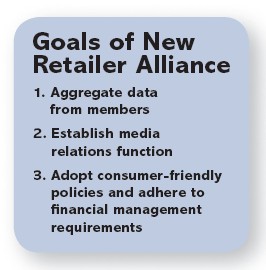
In what looks to be a very good move, several major US retailers led by founding members Amazon, Best Buy, Home Depot, Kohl's, Marriott International, Nike and Subway have announced they are joining together "to create an industry group whose goal is to ensure shoppers have only positive experiences with the gift cards they buy and use. Gift Card growth has been phenomenal over the last few years, but there is certainly an air of uncertainty on the part of consumers due to recent press regarding bankruptcies and their effect on gift card redemption. It also provides, from a marketing standpoint, a move designed to provide more of a consistent flavor. Some gift cards have no fees or expirations, some do. Membership will be limited...you can read about the formation of the RGCA in a PDF file here. New Retailer Gift Card Group to Protect Consumer Interest
The Retail Gift Card Association (RGCA) formed in October with a mission to create consumer-centered policies and procedures for members that will let consumers continue to confidently buy and use the cards that have become the #1 gift choice over last several years."
As gift cards have increased in popularity, many new product offerings have fallen under the gift card label; not all of these are consistent with stringent guidelines proposed for member retailers. Some gift cards have policies with respect to fees and expirations that are clearly not in the best interests of the consumer. Membership in the RGCA is limited to premier retailers with strong brands and longevity in the market, who place particular emphasis on their customers' satisfaction and agree to abide by a set of principles that place the consumer first. The RGCA will be calling on ALL retailers to follow a strict standard that will protect consumers. In addition to strong, consumer-oriented guidelines for merchants, the Association will investigate new initiatives that will provide increased security against fraud and greater protection in the event of business reorganization or bankruptcy. "The RGCA is committed to working with consumers, interest groups and the media to make sure that customers receive products that are effective, safe and still exciting to use," said Leigh Anne Ambrose, Sr. Director Global Incentives and Gift Cards for Marriott International, one of the founding members of the organization.
Dan Horne, a professor at Providence College who has been studying American gift giving for more than 20 years says that gift cards work well and that recent research confirms that they continue to be consumer favorites. "Data shows that gift cards have extremely high levels of satisfaction because they really fill a need," said Professor Horne. "Consumers love to give people the opportunity to go shopping, enjoy a meal out, or experience a night away. In difficult economic times, giving the ability to go out and buy or do the things that are most highly valued is better than taking a guess that someone needs a new sweater or pair of pants." For the top retailers to put together a consumer-focused group makes sense to Horne. "Their success as retailers depends on creating a positive experience and a long term relationship with their customers."
RGCA membership is limited to gift card retailers who have demonstrated commitment to customer friendly practices and significant longevity in the marketplace. For further information about the changing gift card marketplace or the Retail Gift Card Association please contact Carman Wenkoff at 786-270-1276 or carman.wenkoff@TheRGCA.org.
This will make it even easier to Swipe your Card Information! According to ZDNet, criminals can now upgrade (for only $8500) their ATM Skimmers with a SMS Notification built right into the unit. For those outside of the know, an ATM skimmer sits on credit/debit card machines and swipes information as unsuspecting civilians pass their cards through.
Why risk getting arrested during the retrieval process?
Now there's a better way.
In the days of old, scammers would have to physically retrieve the skimmer in order to acquire all that precious information; now, models with built-in SMS notification are becoming available, meaning that numbers, expiration dates and that easy-to-forget three digit code on the back can be shot out instantly after the data is snatched. Word on the street has these devices going for $8,500 a pop, and they can dish out around 2,000 texts. That's $17.50 per text if they're paying $8500 and getting 2000. Still...it costs less than bail!
Here's a snippet...
How does the device work, and how many SMS messages is it capable of sending without recharging the battery?
“Our skimmers read out the magnetic strip in two ways, there and back. The skimmer reads off the streap in both ways if thereis 2 tracks. The skimmers reads off the strip even if there is only 2tracks on the strip (that happens with electrons’). The data can beread off even if a holder passes the card changing speed or with a jerk. The skimmers fail-safely reads off data: 9,999 tries of 10,000 are successful. It works even if a holder passes the card fast and then slow it down. The only situation when the skimmers fails is when the card is stopped in the middle while being passed. It’s a typical error for all card reading devices linked to the magnetic stripes read off technology.
All devices are powered with Li-on batteries. The charger is delivered with devices. The battery can works fully 24 hours (when the temperature is 21 degrees centigrade). We conducted the test on the maximum number of SMS sent using one battery. The result is really great: 1,856 SMS were sent without any charging. The tester were passing a card permanently without any pauses from 03 a.m. to 5 p.m. Usually during a day the number of holders is less than 1,856 and the Skimmers is in the waiting mode, consuming less energy. So, in the normal mode one battery can work 24 hours.”
The manufacturer seems to be a group of experienced ATM skimmers that have applied a great deal of security measures in order to ensure that their customers don’t get caught while retrieving the data. For instance, in one of the cases they seem to have been observing how would the police react upon detecting the skimmer, and “just like they thought” while they were patiently waiting for someone to retrieve the device and bust him, the skimmed data has already been SMS-ed. Interestingly, not every average credit card thief will be able to purchase the device unless he has recommendations and is a known “usual suspect”(continue reading)
There's a company out of Palo Alto, CA with offices in Argentina and Chile, who has been making a lot of news lately. American Banker, MarketWatch, Digital Transaction News and CNBC have all written about this company since November 18th.
Yesterday, In an article written by Sarah Clark from "NRC World" she too talks about a company called Bling Nation, which provides a "local payments network." (Bling Local would seem to be a tad more proper, if that's what they were planning on limiting it to.)
Interesting approach, but will it work? Read on:
"A new payments service from Bling Nation offers local banks the chance to providea low-cost closed-loop payments system within their local community.
Smart stickers attached to customers' mobile phones and low-cost 'BlingTag' readers are at the heart of the system and NFC-based services will be added once handsets become widely available. A new payments platform from Bling Nation aims to enable local banks to provide a low-cost payments service to consumers and merchants within their community.
Because it is designed purely for local transactions Bling's closed loop payments solution can save money by cutting out the usual middle men involved in debit transactions (acquirers, processors and network operators).
Part of this saving is then passed on to merchants, in the form of lower transaction fees (typically 1.5% instead of 3%), and part is kept by the bank, which could expect to keep 38 cents on a $40 transaction instead of nine cents with a mainstream debit card. Editor's Note: This is an interesting approach, as it provides the bank with "4-times" the transaction fee revenue it would normally make.
FLASH CASH: How Bling Nation's NFC-based payments system works. Click image to enlarge.
At the heart of the solution are smart stickers, called 'Bling Tags', issued to consumers for attaching to their mobile phones. To make a purchase at participating merchants, the customer can then simply tap their phone at the dedicated Bling Tag Reader located in the store (currently this is a proprietary point-of-sale device but the company expects to see its reader integrated into existing contactless readers during the course of the next year).
Transaction details are then forwarded to the central 'Bling Link' processor which approves the transaction, debits the consumer's account and credits the merchants account — all in real time — and then sends the consumer an SMS text message confirming the transaction details.
Because this is a real-time platform, the consumer also receives up-to-date information on the balance of their account and a loyalty program is also available that lets the bank add points to a customer's account every time they carry out a transaction, and then redeem those points at any participating merchant.
Will it work? Near Field Communications World spoke with Bling Nation's vice president of sales and business development, Bjorn Ovick, and chief technology officer Federico Murrone about the founders' backgrounds, the security built into the system, the reception the company has had so far from local banks and future developments, particularly with regard to NFC:
The team behind the system has a pretty impressive pedigree. The company's advisory board includes John Reed, a former chairman of Citibank and of the New York Stock Exchange and Jeff Stiefler, a former chairman of Digital Insight and a former president of American Express. Co-CEOs Wences Casares and Meyer Malka have an impressive track record too, having founded Banco Lemon, a Brazilian retail bank, and Patagon, the largest online brokerage in Latin America.
The smart stickers are based on the Mifare protocol and are manufactured for Bling Nation in China.
Security is based around "proprietary algorithms based on industry standards".
The Bling Tags contain two identifiers, one static and one dynamic, enabling the system to work out which account is to be debited — they do not themselves include any account or personal data.
The real-time nature of the system means that any apparent spending abnormalities can prompt a request to the customer to enter their PIN for security.
With regards to NFC, "we will be taking advantage of it when it is deployed," says the team.
The company's technical team has already developed additional NFC-based functionality that could go live as soon as NFC handsets become available. The capability to offer both person-to-person payments and targeted marketing messages are already available, coupon delivery and redemption and the option of choosing between several accounts at the point--of-sale are under development.
Bling Nation is set to go live with its first pilot in the US during the first quarter of 2009. The company is in discussion with five interested banks and is currently in the process of choosing which one of the banks to partner with in one US community for the pilot.
According to a post on TechCrunch, Microsoft will relaunch Windows Live Search under a new brand sometime early next year and they ties that information to what they say is a source within the company.
Here's the post:
"What we don’t know is what that new brand will be, although a few names have been thrown around. According to our source, a “final” decision has been made, but very few people inside of Microsoft are aware of it, and it could change.
Now LiveSide is saying there’s evidence the new search brand will be Kumo, which means “cloud” or “spider” in Japanese.
Why would Microsoft go through yet another rebranding effort? Live.com has a lot of different services under its umbrella (some server software, some client software) in addition to search. It’s also a burgeoning social network.
Over time, we’ve heard, Live.com will become a pure social network and personal productivity portal. You’ll go there to access email, calendar, photos, activity streams, etc. But search belongs somewhere else, and it definitely needs a fresh start.
Microsoft won’t comment on the name change, or even if there is a name change. But our (TechCrunch) sources caution us that nothing has been finalized, and the fate of Yahoo could swing this one way or another as well. So Kumo may very well be the name Microsoft is planning to use, but that decision may change.
And in a post in LiveSide.net, they talk about this rebranding possibility some more...
Microsoft takes control of Kumo.com domain – watch out for the Live Search rebrand
A few months ago Mary Jo Foley got a tip about some new brand names that were being considered for Live Search. One of these, Kumo, jumped out at us due to the sheer scale of TLDs that had been acquired during 2008, aswell as the corporate owner hiding anonymously behind the registrar. Incidentally, Kumo means “cloud” or “spider” in Japanese.
Fast forward to this week and Microsoft suddenly showed its hand. Control of the Kumo.com domain was moved from the registrar to Microsoft, and is now pointing to an internal Microsoft test site (employees only). You can test this out at home by firing up the command prompt (type “cmd” in the Vista start box) and then type “tracert kumo.com”. You’ll see the route to the end location go through a few msn.com servers, and then suddenly you’ll notice all those asterisks, which is where Kumo.com becomes available for internal use only.
We’re guessing that the internal sites are probably similar to the user interface testing versions that had screenshots leaked last month. These are used to run various permutations of the search UI to see how they perform against a control version. While Microsoft employees have admitted publicly that there are branding issues around Live Search, we’re not quite ready to stick our heads above the parapet and say that Kumo will be the new brand name to be announced in a 2009 update. For a start Microsoft and search branding has been a mess for a while and so who outside the company knows where they will actually end up in 6 or 12 months from now. Then there has been separate chatter about a rebrand back to Windows Live Search, which would tie the search engine back to the other Windows Live properties and Windows as a whole. Given the $300m ad campaign – Windows, Life Without Walls – seeks to link Windows + Live + Mobile together, this could make sense. However for the conspiracy theorists out there, which includes us, this could be one way of hiding the real new brand name internally. Perhaps more importantly, a floundering Yahoo, minus Jerry Yang, really does offer some good acquisition incentives for Microsoft. How much should you pay for a few hundred million eyeballs that you hope will turn into search volume? Yahoo shares ended trading on Friday at $9.39, 70% down on the original Microsoft bid of $31 per share. On a random aside, the first trademark request for Kumo as a search engine was filed by a Venezuelan individual. Yet another reason why this name might not ever make it out into the public eye on a Microsoft product. So technical issues around results, relevancy and features aside, would Kumo make a better brand name than Live Search? Does Kumo have the potential marketing strength that is needed to challenge Google? We’re not sure, but hey these Live Search branding posts definitely give us food for thought.
The Hyatt Regency Woodfield, located in Schaumburg, Illinois, has selected SuiteLinq, Inc. to deploy its digital entertainment solution in all of the property's 470 rooms.
SuiteLinq, a provider of broadband and on-demand solutions for hospitality and extended-stay environments, will be deploying its SuiteCast(TM) and SuiteVOD(TM) services, with the goal of creating a truly home-like experience in each guest room.
The combined solution provides free TV channels and a variety of Video-On-Demand content, delivered in standard and high definition, on 37" and 42" Sharp LCD HD televisions. According to Jim Gould, GM of The Hyatt Regency Woodfield, the decision to deploy SuiteLinq's solution is part of the property's continuing efforts to be totally customer centric.
"It is clear that guests are now ahead of the hospitality industry in terms of their digital entertainment expectations. At home, most of them have hundreds of TV channels, including high-definition ones, as well as access to Video-On-Demand services," states Gould. "But too many other properties are content to give guests an antiquated in-room video entertainment service that contributes nothing to the guest experience. That simply won't do for our customers. Our property and The Hyatt brand are all about creating memorable, personalized experiences that generate true customer satisfaction and guest loyalty. We've realized that solutions like SuiteCast and SuiteVOD are quite simply mandatory. Guests are demanding them and we are listening," he states.
Amidst a challenging economic environment, Joseph Mustilli, SuiteLinq's CEO, actually sees a growing need for integrated guest room digital solutions like those offered by SuiteLinq. "As consumers become more discerning about their travel behavior and purchases, it is critical that properties differentiate themselves from their competitors. SuiteLinq provides a very powerful 'suite' of services designed to make an impact on guests by creating an in-room environment that is just like home - only better. The net effect is that guests check-out with a positive memory of their stay and a stronger intent to return. We are proud to add The Hyatt Regency Woodfield to our expanding list of clients."
For more information about SuiteLinq, contact Darrin Davis at 703-953-2624, or via email at ddavis(at)suitelinq.com
NEW YORK, November 26 /PRNewswire/ -- Retail Decisions (ReD), a payment card issuer and world leader in payment card fraud prevention and payment processing, predicts a bustling Black Friday on November 28 with 10.00 am - 11.00 am being the busiest online shopping hour of the year, with the peak shopping moment at 10.25 am.
December 1, Cyber Monday's busiest hour will be between 9.00 am - 10.00 am. This will be the second busiest online shopping hour of the year with a peak shopping moment at 9.49 am.
ReD is forecasting that volumes will rise by 18% on a like-for-like basis vs. 2007. The Average Transaction Value in the United States will fall by 9%.
"A change in consumer behavior is evident with more and more consumers spending their dollars on 'stay at home' items such as fast food and "Pay As You Go" TV, as vacations are replaced by staycation. The recession has brought a new found frugality that is causing people to shop smarter, budget better and exploit sales," said Carl Clump, CEO of Retail Decisions.
As a global leader in real-time card payment fraud prevention, ReD processes some 16 billion transactions annually, providing a unique perspective on sales, volumes and trends around the world.
As they brace for the worst holiday shopping season in decades, major "bricks and mortar" merchants are ramping up their Internet promotions more than ever in hopes their websites will drive people to shop their brands.
"When times are desperate, this is the cheapest way to try to drive sales," said Sucharita Mulpuru, an e-commerce analyst at Forrester Research Inc. "It's the easiest message that you know is going to work, and certainly retailers are going to try it."
In October, retail sales suffered the largest percentage decline since 1992 - 2.8 percent. And forecasts are just as bleak for the holiday shopping season, the roughly month long period between the Thanksgiving and Christmas holidays when many retailers get as much as a third of their annual sales.
The Brazilian e-commerce market is expected to register a turnover of USD 3.48 billion (BRL 8.5 billion) at the end of December 2008, up 35 percent from the year-earlier period, when the e-commerce market reached USD 2.58 billion (BRL6.3 billion).
The increase is attributable to the rapidly growing population of online buyers and to the convenience of shopping on the internet. Almost 39 percent of surveyed consumers plan to purchase electronics online this year, spending USD 349 (BRL 850) per purchase, while IT products are to account for 36 percent of total expenditure. The number of online shoppers has increased from 2.6 million in 2003 to 7 million in 2006 and to 9.5 million in 2007. As far as online payment methods are concerned, almost 49.5 percent of Brazil's online shoppers use a credit card for their purchases, as compared to 39 percent who use a banking ticket to buy online and 10 percent who turn to debit or electronic transfer, and payment on delivery.
In France, more than 70% of internet users have visited an e-commerce website in Q3 2008 - study
In Q3 2008, 70.8 percent of French internet users, representing more than 22 million customers, visited one of the country's top 15 online shops every month in Q3 2008.
eBay ranks highest in terms of unique visitors (12.36 million) for the period under review, followed by online retailer PriceMinister with 8.89 million visitors, voyages-sncf.com (a website for online reservations for train tickets) with 8.19 million visitors, Fnac and La Redoute with 7.06 million and 7.01 million visitors respectively. Amazon came sixth, with 6.79 million visitors. As far as online travel agencies across France are concerned, during Q3 2008, voyages-sncf.com was the most visited one, followed by lastminute.com, with 2.9 million visitors, Promovacances with 2.68 million visitors and Nouvelles Frontieres 2.52 million visitors.
South Korean online transactions hit record numbers in Q3 2008: USD 110 billion, up 34%
According to data released by the National Statistical Office, in the period ending September 2008, South Korean e-commerce registers a record of USD 110 billion (KRW 167 trillion) in turnover, growing by 34 percent year-on-year and by 6 percent over Q2 2008.
This is the highest increase since data began to be gathered in 2001. The growth is attributable to a climb by 33 percent in business-to-business (B2B) transactions from Q3 2007 to USD 100 billion (KRW 151 trillion), representing more than 90 percent of all e-commerce.
Business-to-government (B2G) deals have registered a higher increase (53 percent), while business-to-consumer (B2C) transactions have jumped 17.5 percent to USD 3.05 billion (KRW 4.6 trillion).
80% of Asia Pacific internet users make online purchases - study
Within the past 12 months, almost 80 percent of internet users across Asia Pacific have made an online purchase and spent more than USD 3.000 on average for this purpose, a study indicates.
Of these, almost 60 percent preferred to pay via Visa credit and debit cards. When asked about the advantages of making purchases on the internet, 88 percent of those involved in the study mentioned the ability to shop at any moment, 83 percent referred to best prices and 82 percent cited the possibility to shop easily. In terms of e-commerce categories, digital entertainment ranks highest in terms of consumers' preferences, with 59 percent of Asia Pacific internet users purchasing such products online, followed by travel (51 percent) and fashion (49 percent). Indian internet users were the most avid buyers of digital entertainment, with 76 percent of them buying such products and services. For the period under review, Asia Pacific internet users have spent the highest amount of money (USD 812 on average) for online travel services, such as airline and rail tickets, hotel accommodation and travel packages.
The countries with the most frequent online buyers for the last 12 months are Japan (99 percent) and Korea (93 percent), while Australian and Singaporean internet shoppers have spent the highest amount of money in the region: an average spending of USD 4.160 and USD 3.480 respectively for online purchases. I
n Japan, South Korea and India the average online spending reached USD 3.175, USD 3.027 and USD 2.147 respectively. In terms of cross-border transactions, Hong Kong registers the highest percentage of internet users who have made a purchase on a website from another country (75 percent). Average online spending in the past 12 months 1. Australia - US $4,160 2 . Singapore - US $3,480 3. Japan - US $3,175 4 . South Korea -US $3,027 5. India - US $2,147 6. Hong Kong -US $1,698 The survey is titled 'E-Commerce Tracking Survey' and it was conducted by Visa.
The new 3V Visa Internet Shopping Gift Card means that present givers everywhere can get it right this Christmas. It's the first gift card in the UK that lets the lucky recipient shop on the internet and choose the present that they really want, because the 3V Visa Internet Shopping Gift Card lets you buy anything anywhere online that accepts Visa.
And in these times of economic recession it gives everyone the opportunity to make the most of the great deals that can be had online, so 'present money' goes that little bit further. And because you can pool the money on these gift cards together, recipients can get that dream present they really wanted.
The 3V Visa Internet Shopping Gift Card, with GBP25 of value, is available in high street retailers including, The co-operative, Martin's Newsagent, Martin McColl's and Borders. The card comes in four funky designs ...
Here come the girls ... a fab Sparkly Shoes card for those special, 'can't live without' treats
A sports car model for the Boys Toys card goes straight to the heart of the male psyche
The Space Hopper fun retro-style card is great to bring a smile to anyone's face
Wrapped up with a silver bow image, the Celebration card is the ideal gift for any special occasion, including a simple 'thank you'
3V Visa Internet Shopping Gift Cards can be used to shop online, through mail order or over the telephone, wherever Visa is accepted.
The joy of the 3V Visa Internet Shopping Gift Card is that recipients don't need a credit or debit card, or even a bank account to use it. There is no interest to pay - ever and it's really simple to use. All you need to do when shopping is go to the checkout, click on Visa and then enter the unique Visa number and security details that are sent to you. It's just like using a Visa card to shop online.
The 3V Visa Internet Shopping Gift Card also provides complete security when shopping online because once the Gift Card has been activated a unique Visa number is issued to the recipient and, simultaneously, the security details (3 digit security code and expiry date), so when you shop online you don't reveal any sensitive personal or financial data.In addition, the 3V Visa Internet Shopping Gift Card is backed by Alliance & Leicester.
How to use the 3V Visa Internet Shopping Gift Card. You can use a 3V Visa Internet Shopping Gift Card as soon as you have paid for it in the shop and activated it at http://www.3Vgiftcards.com.
The activation process consists of two simple steps whereby you enter the activation and pin codes on the reverse of the gift card along with a few personal details. It does not take long to complete - about two minutes. Once you have clicked 'activate' at the end of this process you will receive your unique Visa number and at the same time security details (3 digit code and expiry date) will be emailed to you. You can then shop online, over the phone or via mail order, wherever Visa is accepted.
Fed insures open loop cards but leave closed loop alone
In November 2008, the Federal Deposit Insurance Corp.'s board of directors approved its General Counsel's Opinion No. 8 requiring the funds held in FDIC-insured banks that secure open loop, stored value cards be secured up to $250,000. According to the FDIC ruling, "All funds underlying stored value products will be treated as deposits and subject to assessments."
The opinion was proposed in August 2005. Following a comment period required by regulatory agencies to allow feedback from consumers, merchants and financial institutions, the final ruling was implemented after all comments were considered.
Additionally, the approval comes in the wake of three large retailer bankruptcies during 2008 in which consumers lost over $100 million in nonused and invalidated gift cards.
"It's a very good opinion," said Gail Hillebrand, spokeswoman for Consumers Union, the advocacy group that publishes Consumer Reports magazine. "It makes it very clear there is a way now for banks to set up prepaid cards so consumers can get FDIC insurance."
Closed loop left out
According to Holli Targan, Attorney and Partner with the Jaffe, Raitt, Heuer & Weiss law firm, funds covered under FDIC insurance include network-branded payroll and gift card products only. Private label (merchant-branded) cards issued and funded by retailers are exempt.
"Explicitly excluded are funds backing closed loop cards, such as cards usable at a specific merchant or cluster of merchants," Targan said. "This Opinion says that FDIC insurance doesn't cover merchant branded cards, so if that merchant goes under, the consumer has no way of recouping their money.
"On the other hand, open loop cards – under the FDIC's definition – that are issued by a bank are covered if the bank fails. The cardholder could then make a claim and not lose the money that was on the card," she added. Cardholder funds for stored value cards held by an insured bank – as opposed to the pool of funds held by the card distributor with closed loop cards – are individually insured to FDIC limits.
New standards right on
"If you think about these new standards for open loop cards, it's just like a savings account at a bank," Targan said. "Banks sometimes go under, but when they are FDIC insured, you have confidence that your money is protected. Consequently, I think generally this opinion will make prepaid cards more attractive to consumers, which is a good thing for the ISOs and MLSs out there selling them."
Federal regulators, according to Targan, have normally been "sort of hands off" in relation to stored value products and have attempted to allow the market to develop without imposing too many regulatory burdens. However, the failings of Sharper Image Corp., CompUSA Inc. and Linens 'N' Things Inc., coupled with a petition filed by the Consumers Union with the Federal Trade Commission, got regulators' attention.
Consumers caught in between
In September 2008, the Consumers Union asked the FTC to protect consumers from losing money on gift cards when retailers filed for bankruptcy. "Gift cards shouldn't be the gift that stops giving when retailers go bankrupt," said Michelle Jun, Senior Attorney for Consumers Union.
Bankruptcy courts treat unused gift card funds as a debt and determine whether a bankrupt retailer must pay it. The retailer must then petition the court to allow it to continue to accept its gift cards. Consumers may lose the value of their cards if the retailer does not make such a request or if the court denies it. The only remaining option for consumers is to file a claim as an unsecured creditor to the bankruptcy proceeding.
"Gift cards have exploded in popularity in recent years, but consumer protections haven't kept pace with the record sales," Jun said. "With more retailer bankruptcies on the horizon, the FTC should make sure that consumers with gift cards are protected when companies go bust."
Prepaid center of attention
Targan believes the General Counsel's opinion is an indication the FDIC and other government entities know what is going on in the marketplace and will impose regulations when they think it's important to do so. Additional regulations recently imposed in several states require securitization of stored value card funds as well as more transparency with banking regulatory agencies.
"Since the last time the Counsel issued an opinion on this topic in 1996, the banking industry has developed new types of stored value products, and therefore they thought it was time to readdress it," Targan said. "I think this should be good for [financial services] because it will give some comfort to people holding or distributing open loop cards that now have the benefit of federal insurance."
LML Patent Corp. (``LML''), a wholly-owned subsidiary of LML Payment Systems Inc. (the ``Corporation'') filed suit in the U.S. District Court for the Eastern District of Texas against all the payment companies who provide equipment, systems and services that convert paper checks into electronic transactions, including:
JP Morgan Chase
Wells Fargo Company
Wachovia Corp
Citigroup, Inc.
Bank of New York Mellon
HSBC Holdings plc
Capital One Financial Corp.
ABN AMRO Holding N.V
Northern Trust Corp
Regions Financial Corp
National City Corp.
Fifth Third Bank
Citizens Financial Group, Inc. (subsidiary of Royal Bank of Scotland)
M&T Bank Corp.
UnionBanCal Corp.
First National of Nebraska, Inc.,
Deutsche Bank Trust Company Americas (subsidiary of Deutsche Bank AG (Germany)
and PayPal, Inc. (subsidiary of eBay Inc).
In the suit, LML alleges that the defendants infringe U.S. Patent No. RE40220. LML is seeking damages, injunctive and other relief for the alleged infringement of these patents.
"The filing of this lawsuit is consistent with our strategic objective to protect our intellectual property,'' said Patrick H. Gaines, chief executive officer and president of LML Patent Corp. and LML Payment Systems Inc. ``We have awarded several licenses to industry participants in the past and what we will not allow is these defendants to use our intellectual property without a proper license.''
LML is represented by the law firms McKool Smith LLP, Gillam & Smith, L.L.P. and Ward & Olivo.
About LML Payment Systems Inc. (http://www.lmlpayment.com )
LML Payment Systems Inc., through its subsidiaries Beanstream Internet Commerce Inc. in Canada and LML Payment Systems Corp. in the U.S., is a leading provider of financial payment processing solutions for e-commerce and traditional businesses. We provide credit card processing, online debit, electronic funds transfer, automated clearinghouse payment processing and authentication services, along with routing of selected transactions to third party processors and banks for authorization and settlement. Our intellectual property estate, owned by subsidiary LML Patent Corp., includes U.S. Patent No. RE40220, No. 6,354,491, No. 6,283,366, No. 6,164,528, and No. 5,484,988 all of which relate to electronic check processing methods and systems. Source: Company press release.
Vietnamese customers can now pay online via local PayPal version: PayNet
An online payment portal called PayNet has been made available to customers across Vietnam.
In Vietnam, there are over 60 million mobile subscribers, 15 million bank accounts and more than 20 million people using the internet.
Based on technology provided by electronic payment systems company OpenWay’s Way4, the service allows online shoppers to make transactions without the need for bank accounts or Visa and MasterCard-branded cards.Way4 is a payment processing framework for banks, processors and mobile operators, incorporating WAY4 Switch, WAY4 Card and Merchant Management, WAY4 Smart Card Personalisation, WAY4 Loan Management, WAY4 Behaviour Loyalty services.
Customers who are interested in paying online with PayNet must set up an account with a private code number. The money that shoppers have put into such an account is to be transferred to sellers and then deposited into banks. All the money that buyers put into the account will be deposited into banks after being transferred to sellers. All transactions are to be followed up with an email or SMS mobile phone message.
Nov 25, 2008 (Kerrville Daily Times - McClatchy-Tribune Information Services via COMTEX) --
Don't give out personal information to an unknown source. That's the message from Bank of the Hills Regional CEO Harold Wilson after area cell phones owners were inundated with text messages stating that Bank of the Hills debit cards had been deactivated.
According to Wilson, the text messages were sent out beginning Friday to Verizon and Sprint customers, and blanketed the area.
The Kerrville Police Department received two reports of the scam as of Monday afternoon. The text message reads: "Bank of the Hills alert. Your debit card has been deactivated. Please contact us at (830) 448-0088 to reactivate your card." Callers to the number are offered two options -- to activate the card or to change the PIN number. After choosing an option, callers are prompted to give personal information, such as their debit card and personal identification numbers.
KPD spokesman Paul Gonzales said one of the victims' bank accounts was cleared out the day after responding to the text.
"After providing both the debit card and PIN number and further research, it was discovered that the text was a fraud, also known as a phishing scam," Gonzales said. "One victim's account was changed immediately resulting in no loss, while the second victim's account was depleted of approximately $1,500."
Bank of the Hills posted a warning on its Web site Friday about the scam, and Wilson said steps are being taken to identify from where the texts originated. "Scammers usually do this kind of activity on a Friday so they can have all weekend to use the information," Wilson said. This is the second phishing scam this year to use Bank of the Hills' name. In May, bank customers were targeted by both e-mails and phone calls asking for account information. Wilson said Bank of the Hills or any other bank would never try to solicit account information over the phone or by e-mail, especially PIN numbers.
"The advice is simple. No bank would ever ask anybody to reveal their PIN number," he said. "We don't know it, and we don't want to know it.
"Anytime someone is asking for a PIN number, it's a scam," Wilson added. Gonzales advised that text messages, e-mails, telephone calls or letters requesting bank account or other personal ynformation should be ignored and turned over to the police.
Yesterday, in a Finextra article, it was announced that PayPal has introduced it's 6 digit SMS program. Now Bank of America has announced the release of the SafePass(R) Card - a "new wallet-sized card essentially builds on SafePass, a one-time-use, six-digit code sent as a text message to consumers' mobile devices to authorize and help safeguard sensitive transactions."
"The introduction of the SafePass Card extends this additional layer of security to customers who prefer to receive it through a card instead of their mobile phone," said Lance Drummond, e-Commerce and ATM executive for Bank of America. "Now, customers have an additional way to access security products that help them to manage their finances safely on-the-go."
The SafePass Card is available for a one-time fee of $19.99, while the mobile-phone-based SafePass is still a free service to all customers.
Retail E-Commerce Growth Drops Sharply NOVEMBER 24, 2008
Online sales are still growing, but far more slowly.
2008 had already been shaping up to be the weakest holiday season yet for retail e-commerce. Based on just-released Q3 e-commerce data from the US Department of Commerce (DOC), eMarketer is predicting even more anemic growth—both for the holiday and the year.
The DOC estimated that e-commerce sales grew only 4.6% in Q3 2008, compared with Q3 2007.
In May 2008, eMarketer projected that retail e-commerce sales growth would drop to 14.3% this year compared with 2007. Benchmarked against the new DOC data, eMarketer predicts 2008 will now be the first year of single-digit growth of the decade.
Online sales (excluding travel) will total nearly $137 billion in 2008, up 7.2% year-over-year, compared with last year’s 19.8% growth rate.
eMarketer expects that consumers will spend only $30.3 billion online in November and December this year. Its May number was a mere 10.1% growth over last year’s holiday spending. But the new estimate is for just 4% growth.
The weak economy is placing downward pressure on e-commerce sales this season. Online shopping growth had already been slowing naturally as part of the channel’s maturation; the economy is slowing growth even more.
“Hopefully, we’re nearing the bottom of this,” says Jeffrey Grau, eMarketer’s e-commerce analyst. “People are going to be more frugal this holiday season."
Terrorists are increasingly turning to credit cards, according to an expert on terrorist financing...
Credit cards serve two key terrorist functions, providing both operational funding and as a means of distributing money to group members. “Credit card exploitation and fraud has become a growth industry for terrorists,” writes IPSA International’s Dennis Lormel in a white paper entitled, “Terrorism and Credit Card Information Theft - Connecting the Dots
Lormel is a managing director with investigative consulting services provider IPSA. According to Lormel: “Credit card information theft and fraud represents a lucrative funding stream for terrorists and consequently poses a serious threat to our national security.”
While Lormel writes that there is no exact data on the amount of credit card use by terrorists, there are “ample” reports showing that terrorists do rely on credit card information in helping to reach their goals.
Terrorist reliance on credit cards appears to be on the rise. “I think it’s taken an upward path over the last few years,” Lormel says via phone, meaning “a limited number of people can do an incredible amount of damage.”
Terrorism and Credit Card Information Theft - Connecting the Dots Summary of Key Points, Issues, Conclusions:
Although no empirical statistical data establishes a connection between credit card exploitation and terrorism, there are ample anecdotal case studies demonstrating terrorist reliance on credit card information to further heinous acts. Within this white paper, two cases are presented. Terrorist groups require financial support in order to achieve goals and credit card information theft and fraud represents a lucrative funding stream for terrorists and consequently poses a serious threat to our National Security. Lormel suggests that terrorist financing training should focus on factors to include:
• Types of terrorist groups • Funding capacities • Mechanisms for fundraising and operations • Individuals and cells
At least twelve areas of systemic weaknesses allow for terrorist exploitation to raise and move funds. Of those, at least five of those areas involve credit card information and fraud: identity theft and fraud, credit cards, criminal activity, internet, and cyberfraud.
Lormel recommends best practices for detection and prevention of credit card information theft and fraud by terrorists: • Identifying risk • Understanding terrorists adaptability • Vigilance • Training
Name of Researcher: Natalie Prendergast
Institution: Integrated Center for Homeland Security, Texas A&M University

 Credit Card's in a Credit Crisis?
![Reblog this post [with Zemanta]](https://lh3.googleusercontent.com/blogger_img_proxy/AEn0k_u1t5SoFci3RQ9XrehwEqX3NuGM8oQyqtMA_2M4ajvyUYBWGBilTJX1bSZu2aP8OHjC-oOnSFVj3lkXametnTQ7kupe0PqD7PgdAVT3mgjnsesU4FUbI5DZfVv1sKyZHS--z5RJhqxx0ghCxVVESNba=s0-d)


 In what looks to be a very good move, several major US retailers led by founding members Amazon,
  Dan Horne, a professor at Providence College who has been studying American gift giving for more than 20 years says that gift cards work well and that recent research confirms that they continue to be consumer favorites. "Data shows that gift cards have extremely high levels of satisfaction because they really fill a need," said Professor Horne. "Consumers love to give people the opportunity to go shopping, enjoy a meal out, or experience a night away. In difficult economic times, giving the ability to go out and buy or do the things that are most highly valued is better than taking a guess that someone needs a new sweater or pair of pants." For the top retailers to put together a consumer-focused group makes sense to Horne. "Their success as retailers depends on creating a positive experience and a long term relationship with their customers."
![Reblog this post [with Zemanta]](https://lh3.googleusercontent.com/blogger_img_proxy/AEn0k_stP8Og690NTCOGszB1u5sscaiTax7232ZxUz2vu1FCGZ4_H2ZbW0oQK1-D8RGinmK1lEiylpNOxT39V0a21uPIj5Sq5mtRn5tXxSxIzRhZ9rURtIGE4Y0uoFHoLWDU5muIJg3cs4UJsGt3O_NX8Jbv=s0-d)


![Reblog this post [with Zemanta]](https://lh3.googleusercontent.com/blogger_img_proxy/AEn0k_tNZqYoCRKsHpnOFnaaOJSmtfyaOASkhrfTwHBUlFCwSDplqYIGZS9gP7JURunCvjWhux4-pcb51Y_DwEmAR7hzl9E2_VDyrxxqdEb4B5wP5l3DthqohEI4kVQskVpG1zpVwhhtJyS1oHgTfjrcreIU=s0-d)


![Reblog this post [with Zemanta]](https://lh3.googleusercontent.com/blogger_img_proxy/AEn0k_s8sr6dPwCnz8ArwvcYKpHoEA3Q7sK11C9vGS9Qn3FOiDAMJmwF-7RgmWOvHy7md2q6Qmc2qbmXE73p4KcwStMTO1x7bXbpnTSQxWYawX7JCSJNOtBZepYb8noAvGG1iNA4wmq8JUSlu9afunwy3_gt=s0-d)
 The Hyatt Regency Woodfield, located in Schaumburg, Illinois, has selected SuiteLinq, Inc. to deploy its digital entertainment solution in all of the property's 470 rooms.
 Amidst a challenging economic environment, Joseph Mustilli, SuiteLinq's CEO, actually sees a growing need for integrated guest room digital solutions like those offered by SuiteLinq. "As consumers become more discerning about their travel behavior and purchases, it is critical that properties differentiate themselves from their competitors. SuiteLinq provides a very powerful 'suite' of services designed to make an impact on guests by creating an in-room environment that is just like home - only better. The net effect is that guests check-out with a positive memory of their stay and a stronger intent to return. We are proud to add The Hyatt Regency Woodfield to our expanding list of clients."
![Reblog this post [with Zemanta]](https://lh3.googleusercontent.com/blogger_img_proxy/AEn0k_sRIN0Spp3yegOMnkOz0KVp0WFJtiXm3FUDX_lXCG-VHwacblcnONAeduT8xYFqtIgYOOOT8iXaJPYcq9GEt7Tk4epZTtQJiiWdaz3eVEdoA2CDYMrtKeheJF85dHgQJBuDdwlPl2jhJtkNvE_v-lPD=s0-d)

 NEW YORK, November 26 /PRNewswire/ -- Retail Decisions (ReD), a payment card issuer and world leader in payment card fraud prevention and payment processing, predicts a bustling
 ![Reblog this post [with Zemanta]](https://lh3.googleusercontent.com/blogger_img_proxy/AEn0k_tfNnT6y65af_e4uwV4fdtIEbG8CkirH-5yjlS-3x-WLsHmyeWtRNnJRaIHk3GMzuFyF7XEQtLETE1GhlgW00Cw6SFnCuqG85IZd7xbrf6RfIrGD9NuTs3QDlOZUa1lNDpVKQ8A6GNS_A2-OvxXpMsQ=s0-d)

![Reblog this post [with Zemanta]](https://lh3.googleusercontent.com/blogger_img_proxy/AEn0k_ttm5Y28JeePU9_OXfYp90Z7m_-Sgk76hUppoBPcuj6LPJf5vf3QOwy-mWQVDfMyRwC_WQ0dsi7yL7B4l3GUOirkYennCeqSXRimNb_wBur_E4uD55PVFcmarFVniByxYqSVSerZh8mWSA61pCgERDy=s0-d)
 The Brazilian e-commerce market is expected to register a turnover of USD 3.48 billion (
![Reblog this post [with Zemanta]](https://lh3.googleusercontent.com/blogger_img_proxy/AEn0k_vLvdOeFpP-_8TQTeA49fusGeH1tfjGQPbLIa98MTLPYqu5lwiCHjTyQVb1V_ai7QNcOSioWTy_0AZfjuzpHJucz0XQtG4lUSAQEU1UTzdBU5Iu4-rfziXFv1AdBxWZgwVHrFyPLnJR5oYbschK5kOd=s0-d)

![Reblog this post [with Zemanta]](https://lh3.googleusercontent.com/blogger_img_proxy/AEn0k_vYUyMGySh1ZHaOhTkYSQjIKxbWKa1hcoYlFrH__CP8ENB30BhGfBcZQHrzL_YN1gAV3CWqiudNULOXGx5J9FYCdn6pSHb3RrZq2EYvNS3_TaM-DO9bOBLhbXvRJi5V9i8a2maPnRhq_7CNWI_sBQrU=s0-d)

![Reblog this post [with Zemanta]](https://lh3.googleusercontent.com/blogger_img_proxy/AEn0k_sNGZLLpwPw7uQVUHW10jK4B3gZIWzFyLUd2FAC35k9pw2uTBQ0yetHWLd_pSNEeLu-QWoYkMr1mtd381YUp7AQ7nBNLa-FNfrLp30U3JcLYHG7aTtoYq6owQxMcJLRQpg_FkVEF-49bKMicjI2Ax6c=s0-d)

![Reblog this post [with Zemanta]](https://lh3.googleusercontent.com/blogger_img_proxy/AEn0k_uEW7PHwWhNEEi220QHiM9BfwMd2viTFZulUsxRI0HMKgzkR0t_lZFQcnd33o_Rpa2VSMcf3TXlsFcUqeOOVzogg7pjrPnscdronSdrJCrV0QbPi-n_AOMq_qssiM4JRbcscUxsdeBHAxhPz6gvxkWH=s0-d)

 The new 3V Visa Internet Shopping Gift Card means that present givers everywhere can get it right this Christmas. It's the first gift card in the UK that lets the lucky recipient shop on the internet and choose the present that they really want, because the 3V Visa Internet Shopping Gift Card lets you buy anything anywhere online that accepts Visa.
 The 3V Visa Internet Shopping Gift Card also provides complete security when shopping online because once the Gift Card has been activated a unique Visa number is issued to the recipient and, simultaneously, the security details (3 digit security code and expiry date), so when you shop online you don't reveal any sensitive personal or financial data.
![Reblog this post [with Zemanta]](https://lh3.googleusercontent.com/blogger_img_proxy/AEn0k_sCFgUt8ExdSrsmsBDpzHk1PtZgtB2eOfzO8dRaN_U2LEjd6hsYdPYtMTjVIT_w1DvVqujopKxZPD7XFHwmBdZsidCqL5CDTQKhAqesrWVGeJNsurcXJWshXMUBFrp8Xlbwy1W9rL2UOnJoDRJUxQ=s0-d)

![Reblog this post [with Zemanta]](https://lh3.googleusercontent.com/blogger_img_proxy/AEn0k_vfJ7jLqawLrKMOY1wB1eplNKTMFxnWvaexzC0Kw4E1aPkQjRXbILdn3gaKqxGDVYdpjxW2aV2NLhGMFapl3hlg9jLUHBwvkuuPMXh9rOiURpS7SyXAEayYaoTmEeM9RqcC20NdNWQ1Y8yjvoD6sNS7=s0-d)


![Reblog this post [with Zemanta]](https://lh3.googleusercontent.com/blogger_img_proxy/AEn0k_uEmXuzyyvurVs4bMlZvLJ8GqtrbwGgrl8dUpLJsv9h2iYtoeaRKOM4dYXtv3WtOyvuSamOzi392i3SDOSgn4AJjmGUQ8vjCVyAbjzKakm3nj0AXCZ_sMzrIgVWRB4VBUwBijhzX7zmdi3Zf6KzPRA=s0-d)
 An online payment portal called PayNet has been made available to customers across
 ![Reblog this post [with Zemanta]](https://lh3.googleusercontent.com/blogger_img_proxy/AEn0k_vh4ZEPOIsVjXtIp3Jg6zA36mq0_gQjGfCLs_MgaU-OKXXYWEAUIMqWi2tAzcNQ0uG3LMhbz2q0mfuAtHd3havg6R29IhIN0dvDZJlKHxJj5wAzZUmuzPgw_Ai9x74Qf5pADz-lvw3llidzePRlqdZi=s0-d)
 Nov 25, 2008 (Kerrville Daily Times - McClatchy-Tribune Information Services via COMTEX) --
![Reblog this post [with Zemanta]](https://lh3.googleusercontent.com/blogger_img_proxy/AEn0k_tWQkPOZdrPqbCPI1l4mxAuzg4bXCY1IwpEaF4LAsumizZ21_BiSz7td5Lo4806XDEh5MF37peXPO5Nx1Lm2vNJNgvnQexVKWxV6LOjd5LjB6qnykslW8yFeP6Dow4r-nfMuGBhNZ1cjBe937456nXJ=s0-d)
 Bank of America Introduces SafePass
 Yesterday, in a Finextra article, it was announced that PayPal has introduced it's 6 digit SMS program. Now Bank of America has announced the release of the SafePass(R) Card - a "new wallet-sized card essentially builds on SafePass, a one-time-use, six-digit code sent as a text message to consumers' mobile devices to authorize and help safeguard sensitive transactions."
 Retail E-Commerce Growth Drops Sharply
![Reblog this post [with Zemanta]](https://lh3.googleusercontent.com/blogger_img_proxy/AEn0k_t2bowJQ5hVl8aOVK1Cwouh6i78spqtcL4yH7ypAKIU_9dGHrsjJIykK1yUMmCtVaakP0b9K373hrbgCnOX9EJpRTfm69ayaBD6XNgJobkXkrnnnlvBbhtre_qvExq4A4gvIZDfXzVrJMJ3e84smYKo=s0-d)

![Reblog this post [with Zemanta]](https://lh3.googleusercontent.com/blogger_img_proxy/AEn0k_uvHrNcEG15Lk8psLp0D4SiV14vR05MEs4PEUCuWaHKhPGXb81aczbbdyq8zLbNY4501_WPxmMYrTVcRdZ_8OiTt0UPfsL9e21asMwNr7GDGSP3BhUxGF8IKFynomj9ig2qjCMt_PIHaDQbCaw8pSLx=s0-d)