Saturday, March 14, 2009

E-Commerce Takes Toll on Home Depot

Large hardware stores have capitalized upon th...Image via Wikipedia

Home Depot Posts $54M Loss, Facing E-Commerce Competition

HomeDepot posted their first quarterly loss in over 25 years as competitionfrom smaller e-commerce firms like Exterior Solutions heated. HomeDepot expects sales to decline 9% this year, while smaller Internetrivals anticipate revenue increases.

St. Charles, Illinois (PRWEB)March 14, 2009 -- Home Depot posted a $54M dollar loss during thefourth quarter and said that they expect sales to decline 9% during theyear, despite e-retailers revenue increases. "We are anticipating atough year", said Home Depot CEO Frank Blake, while online nicheretailers such as Exterior Solutions are experiencing rapid revenuegrowth.

Exterior Solutions specializes in exterior vinyl shutters, wood shutters, vinyl window headers, sunbursts, and other siding accessories.

One of Exterior Solution's fulfillment centers in Illinois in mid-February.

Exterior Solutions recently revamped their e-commerce website to expandtheir product line and make their site easier to use. The MarketingManager at the company, Ken Clark, said "We wanted to take the sitefrom a place where people come just to transact to a site that promotesbrand loyalty".
Although Exterior Solutions is much smaller than box retailers likeHome Depot they are still able to compete in some areas. The Internetretailer offers customers customized products that would not typicallybe available at stores like Home Depot. There simply isn't enough shelfspace in a brick and mortar store. For example, Home Depot stocksexterior vinyl shutters in three or four colors and just a hand full ofsizes. Exterior Solutions offers vinyl shutters in 23 colors and anycustom size.
We are anticipating a tough year


Prices at e-retailers are often more competitive than box stores due tosales tax laws, reduced overhead at internet stores, and free shippingpolicies offered by many e-commerce stores.

Our customers are pleased said Clark. "Thank you so much for theexcellent service. My husband and I were very impressed with thequality of our shutters and the professional service we received," saidCarrie from San Diego, CA.

For additional information on the news that is the subject of thisrelease (or for a sample, copy or demo), contact Ken Clark or visit http://www.ExteriorSolutions.com.

About Exterior Solutions:
Exterior Solutions is an innovative specialty electronic retailingcompany who supplies residential building products that improve thequality and performance of homes to the building, contracting, andconsumer markets. These products include exterior shutters, sunbursts& ellipticals, window headers, door surrounds, and accessories.Exterior Solution's industry leading technologies enhance the qualityof consumer experience and add value to our services, while alsoreducing our impact on the environment.

Contact:
Ken Clark, Marketing Manager
Exterior Solutions
866-760-2846
http://www.ExteriorSolutions.com

Reblog this post [with Zemanta]

New "Breach Driven" Compliance Rules for HIPAA

Newly Enacted HIPAA Security Breach Notification Requirements Raise New Risks For Employers


Employershave good reason to re-evaluate their HIPAA compliance efforts. Recentenforcement actions by the U.S. Department of Health and Human Services(HHS) that resulted in large settlement payments signal more pronouncedefforts to enforce HIPAA’s compliance requirements. These enforcementactions were driven by publicly disclosed security breaches thatbrought compliance lapses to HHS’ attention.

Recent amendments to the HIPAA Privacy Rule, enacted as part of themassive federal economic stimulus legislation, will fuel this“breach-driven enforcement.” Under existing law, the HIPAA Privacy Rulecontains no security breach notification requirement. EffectiveFebruary 17, 2010, however, employers will be required to take thefollowing steps when they learn that the “unsecured” protected healthinformation (PHI) of participants in HIPAA-covered plans has beensubjected to unauthorized access, use or disclosure:

• Notify major media outlets and HHS if a breach involves 500 or more plan participants
• Notify affected individuals within 60 days of becoming aware of the breach
• Provide in the notice to individuals, at a minimum, five specific categories of information
• Deliver the notice by first-class mail to each affected individual’s last known address

This notice obligation applies regardless of whether the employer ora third-party service provider, such as a benefits administrator,pharmacy benefits manager, or insurance broker is responsible for thebreach.

Continue Reading...

Reblog this post [with Zemanta]

Friday, March 13, 2009

Reminder: ProPay's 2009 Data Security Summit

Data Security Summit Spring 2009 - Hosted by ProPay
March 18th -19th Cliff Lodge at Snowbird Resort, Little Cottonwood Canyon, Utah


I posted about this a month ago (Propay Security Summit) but as the event quickly approaches, (March 18th and 19th) I thought I'd do a refresher post. ProPay has put together quite an impressive lineup of featured speakers. HomeATM's Chariman and CEO, Ken Mages will be attending the event, which takes place at the Snowbird Resort in Salt Lake City, Utah.

FOR IMMEDIATE RELEASE
ProPay Gathers Industry Experts to Address Payment Industry Trends at 2009 Data Security Summit

Bob Russo, Chris and Dr. Heather Mark, and Michael Dortch among featured speakers to discuss PCI compliance, risk mitigation and data security

Orem, Utah -February 9, 2009- ProPay is gathering the brightest minds in the digital transaction industry to educate attendees about the latest trends and best practices to protect sensitive customer data at the 2009 Data Security Summit on March 18-19, 2009, at the Snowbird Resort in Salt Lake City, Utah.

Headlining the Summit’s speakers are Bob Russo, General Manager, PCI Security Standards Council; Chris and Dr. Heather Mark, Founders, Society of Payment Security Professionals; and Michael Dortch, former Senior Research Analyst, Aberbeen Group. Speakers will address the latest in PCI compliance, risk mitigation, security, and other relevant topics pertaining to the payment industry.

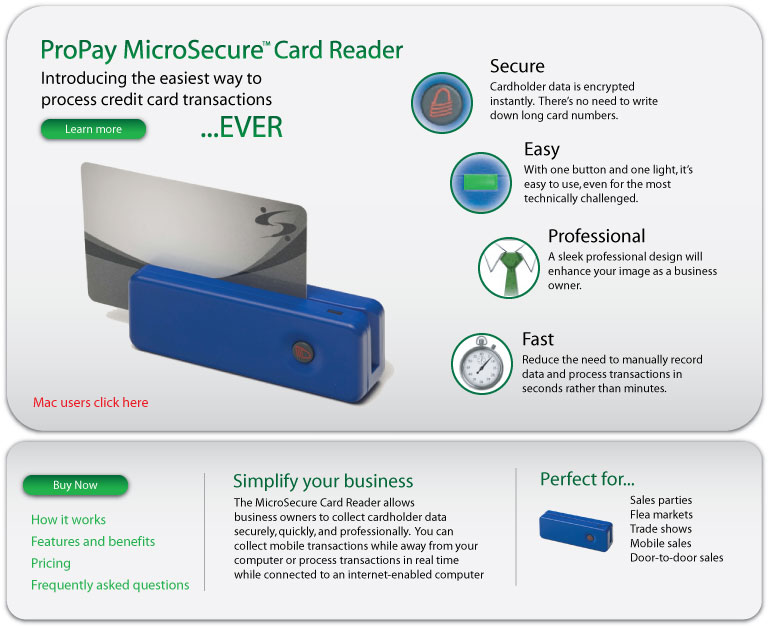
Editor's Note: See if you can find the common denominator between what HomeATM is doing with their SwipePIN PED device and what ProPay is doing with it's MicroSecure® Magnetic Stripe Card Reader. If you said Hardware vs. Software in order to protect Cardholder data then you've been paying attention!

Below the graphic there's a quick Bio on the featured speakers:


Bob Russo, General Manager, PCI Security Standards Council


Mr. Russo brings more than 25 years of high-tech business management, operations and security experience to the PCI Security Standards Council. Most recently, he served as the vice president of Commercial Sales for Secure Info, a provider of security, risk and compliance services and software. He was also a founder of a number of software and security companies including Network-1 Software & Technology and ATC Security, a security compliance company created to assess compliance of payment industry stakeholders, later acquired by Ambiron LLC.

Chris Mark, Founder, Society of Payment Security Professionals


Chris is an experienced information security professional and recognized payment card industry security expert. Chris is a co-founder of The Aegenis Group and the Society of Payment Security Professionals. From 2007-2009, the Aegenis Group was the worldwide trainer for all Qualified Security Assessors (QSA) and trained over 2,800 QSA. Additionally, the company contracts with Visa Inc. to conduct PCI related training internationally to merchants and banks. Chris has conducted PCI and payment security training in over 10 countries on 5 different continents.

Dr. Heather Mark, Founder, Society of Payment Security Professionals


Dr. Mark is an experienced information security and privacy professional that is both well known and respected within the Payment Services industry. Prior to joining Halcyon Dr. Mark co-founded a Qualified Security Assessment Company and worked at various technology companies supporting PCI efforts. Dr. Mark helped to develop a variety of assessment methods and practices that assisted companies in achieving compliance in a cost-effective, timely manner.

Michael Dortch, Founder and Managing Editor, DortchOnIT.com


Michael Dortch is Founder and Managing Editor of DortchOnIT.com, and has been an IT industry analyst, consultant, evangelist, speaker, writer, and "information entrepreneur" for more than 30 years, focused on enabling and emerging technologies and their effects on business value. Before starting DortchOnIT.com, Michael was a Senior Research Analyst at Aberdeen Group, and Director of IT Infrastructure Management Strategies and Executive Editor for Robert Frances Group. Michael has worked with IT users and both established and start-up vendors to help them align their strategies with business goals. He has been widely quoted and is a frequent and popular speaker at industry events. He began his career in the 1970s at The Yankee Group after attending the Massachusetts Institute of Technology (M.I.T.). He lives and works in Santa Rosa, CA, approximately an hour north of San Francisco.

John Verdeschi - VP of Sales and Standards - MasterCard Payment System Integrity Group


John Verdeschi is Vice President of Sales and Standards, in the MasterCard Payment System Integrity group. In this role, he is responsible for managing MasterCard's global risk product sales team, the Payment Card Industry (PCI) Data Security Standard and MasterCard SecureCode. Mr. Verdeschi is a member of the PCI Security Standards Council executive committee which is comprised of MasterCard and other leading payment brands. Since joining MasterCard in 1999, Mr. Verdeschi has concentrated on programs which help secure transaction data and manage fraud within the electronic payments channel.

Representatives from the various card brands and payment industry companies, as well as experts from law enforcement agencies and the F.B.I will be on hand to network with attendees and talk about the latest from their businesses and organizations.


"The landscape of the payment industry is ever-changing and the need to educate the market on best practices and the latest technology to protect businesses is essential to the survival of every company,” said Greg Pesci, ProPay Executive Vice President of Business Strategy. “This Summit is a great opportunity to bring experts and non-experts together to educate each other on the trends in the market and the pains customers and businesses are experiencing in regards to digital transactions."

For more information about the 2009 Data Security Summit and how to register, please visit www.propay.com/summit or e-mail Jennifer McClintock at events@propay.com.


About ProPay


Since 1997, ProPay has led the market in providing simple, safe and affordable credit card processing and electronic payment services for businesses ranging from the small, home-based entrepreneur to multi-billion-dollar enterprises.

ProPay understands the unique needs of these businesses and has created merchant services specifically for them. With ProPay, merchants can set up accounts online and begin accepting credit cards without buying special equipment or making long-term commitments or investments. ProPay leads out in educating merchants about how to reduce or eliminate the risk of touching or holding sensitive cardholder data. The company also leads the payments market in the development of secure end-to-end solutions for protecting sensitive data and of alternative payment options that significantly reduce business costs.

ProPay is a privately held company, headquartered in Orem, Utah. For information, visit
www.propay.com/pressroom.


Reblog this post [with Zemanta]

Apple iTunes Card's Codes Cracked?


In a non-surprising development,  (Acculynk: Where's the PIN Offset?  My PVV) someone got their hands on data they weren't supposed to... Oh well...it's not like they hacked the PIN numbers to our debit cards or anything!  What was that 100% Guarantee that our CEO was talking about yesterday?  Something about PIN numbers being breached...Click here to refresh YOUR memory...in the meantime...

On to the next breach...

From MacMod.com


Apple's iTunes Gift Card algorithm has been cracked in China. Apparently you can order a $200 gift card for about $3 USD on someChinese online stores.  The store owner says that he has bought thecodes from a generator supplied from people who have cracked Apple'scode.  77,593 codes were available on the taobao shop.

Right nowyou can buy up to 10 cards a day.  No response from Apple yet, but I'msure that an improved algorithm has already been developed and newcards are hitting the press as I type this.


Get a $200 iTunes gift card for $3
In the early 2000s, Internet file-sharing in the form of Napster andsimilar services put the brakes on the music industry's profits. Butlegislation and alternative purchasing methods, such as the iTunes giftcard, helped alleviate some of the monetary pain felt by bands andtheir labels by funneling legitimate money to the legitimate creators.
Here comes more pain. Chinese hackers recently unveiled another wayto hit the record industry: Buy a $200 iTunes gift card for $3

itunes-gift-card-fraud.jpg

Here's a still from the online auction site taobao.com that showsmultiple iTunes gift cards for sale. As of March 13, 1 USD is equal to6.8 CNY, which is the currency used in China. CNY is also known as RMB.
Hackers in China are selling the gift cards for mega cheap because theydiscovered the algorithm Apple uses to generate the card's numbers. According to multiple accounts,the fake numbers are created by a key generator, which are also used tocreate serial numbers for pirated software, and then are sold on onlineauction sites, such as Taobao.com, the Chinese equivalent of Ebay.

Outdustry, a blog covering the Chinese music industry, verified that the counterfeit card numbers work.A blogger for the Web site went to Taobao.com, purchased a $200 iTunesgift card from a seller who was online, and redeemed the card numbervia instant message. The blogger also talked to the seller via onlinechat. The seller flat out admitted the gift card numbers were createdusing a key generator, and that he or she had to pay money to use thegenerator. The seller also said the phony card numbers went on themarket about a year ago, when a $200 iTunes card sold for about $46.But the prices have dropped due to the growing number of customers andan infinite amount of numbers to generate.

Continue Reading at Taking Charge...The CreditCards.com Blog


Reblog this post [with Zemanta]

M-Banking to Hit 900 Million by 2014 - Study

Newsflash from Finextra.com.

13/03/2009

M-BANKING USERS TO HIT 900 MILLION BY 2014 - STUDY

Global mobile banking take up is set to soar over the next five years, with the number of people using the technology growing from 20 million in 2008 to 913 million in 2014, a CAGR of 89%, (Compound Annual Growth Rate) according to Berg Insight.

The research suggests Asia Pacific will be become the most important regional market, accounting for 65% of the total user base, whilst the technology will also pick up in Africa and the Middle East, bring financial services to people currently unbanked.

Continue Reading at Finextra: http://www.finextra.com/fullstory.asp?id=19769


Reblog this post [with Zemanta]

Google Checkout Adjusts Pricing Upward - Matching PayPal


Yesterday, Google Checkout announced that it was changing its fee structure beginning May 5 - eliminating the previous credit that Google AdWords customers got that reduced their Google Checkout fees.

Instead, the new Google Checkout fee structure essentially parallels that of PayPal’s - a long-standing fee structure that the online payments leader has had in place for many years.  Below are the two fee tables:


Monthly Sales
Google Checkout
fee per transaction
Less than $3,000
2.9% + $0.30
$3,000 - $9,999.99
2.5% + $0.30
$10,000 - $99,999.99
2.2% + $0.30
$100,000 or more
1.9% + $0.30


Monthly Sales
PayPal fee
per transaction
$0.00 - $3,000
2.9% + $0.30
$3,000.01 - $10,000
2.5% + $0.30
$10,000.01 - $100,000
2.2% + $0.30
> $100,000
1.9% + $0.30

Google Checkout continues to only support funding via the four major payment card brands for US sellers: Visa, MasterCard, American Express and Discover. Unlike PayPal, Google Checkout continues not supporting funding directly (via ACH) from checking accounts.


Both Google Checkout and PayPal have a 1% surcharge to US sellers on all cross-border transactions.

What about Amazon Checkout (or Amazon SimplePay)? You guessed it - the fee structure is essentially the same - starting at 2.9% + $0.30 per transaction in the lowest tier and going down to 1.9% + $0.30 per transaction for monthly sales over $100,000. Sound familiar? Amazon allows buyers to pay using Visa, MasterCard, Discover, American Express, JCB, or Diner’s Club credit cards.

Amazon does have a subtle difference - those fees apply to transactions of $10.00 or more. For transactions of less than $10.00, Amazon’s fees are 5.0% + $0.05 for all transactions - with no tiering based on monthly sales.

So, that’s where things stand today. With Google’s just announced changes, all of the three major online payment players have priced their services essentially the same - for US sellers. However, there are more differences “under the covers” between these services than just the pricing would seem to indicate.


Reblog this post [with Zemanta]

Citibank Launches Citi Mobile In-dia

Source: Citi

Citibank Launches Citi Mobile
Everyday Banking on Your Mobile Phone Made Effortless

New Delhi, Delhi, India, Thursday, March 12, 2009 -- (Business Wire India)


Citibank today announced the launch of Citi Mobile, its mobile banking solution that combines the consumer need for convenient, on-the-go banking with advanced mobile technology that is compatible with popular mobile devices across most GSM operators. Through Citi Mobile, customers can check account balances, send money, issue drafts, pay bills, make credit card payments, register for services like e-Statements, request for a cheque book, stop payments and much more.

Citi Mobile can be quickly downloaded onto a mobile phone, making mobile banking for Citibank customers as fast and effortless as banking online. The requirements for accessing Citi Mobile are a Citibank Banking/Credit Card account, an active Internet PIN, a mobile number that is registered with the bank, and a Java-enabled mobile phone with a GPRS connection.

Customers can SMS MBANK followed by the last 4 digits of their Debit/Credit Card number to 52484. An SMS response will be delivered to the customer’s mobile phone indicating the URL for Citi Mobile. This URL can be used to download Citi Mobile onto the mobile phone. On Citi Mobile, all customer interaction is https secure and encrypted using 128-bit SSL; further, no customer data is stored on the mobile phone, making this one of the most secure access channels.

Announcing the launch of Citi Mobile in India, N. Rajashekaran, Country Business Manager, Global Consumer Group, Citi India, said, “Citibank has always been a forerunner in putting technology to work for our customers. With Citi Mobile, we are happy to address our customers' emerging lifestyle needs and support them in accessing their money in a fast, convenient and secure manner through something they always have with them – their mobile phones. Given the recent growth trends in mobile phone usage in India, we expect this to grow into a significant channel for customer service and contact.”

About Citi:

Citi, the leading global financial services company, has approximately 200 million customer accounts and does business in more than 140 countries. Through its two operating units, Citicorp and Citi Holdings, Citi provides consumers, corporations, governments and institutions with a broad range of financial products and services, including consumer banking and credit, corporate and investment banking, securities brokerage, and wealth management. Additional information may be found at www.citigroup.com or www.citi.com.


Reblog this post [with Zemanta]

Retailers Form Association to Defend Closed-Loop Gift Cards


The Retail Gift Card Association is recruiting new members with the aim of building a positive image of closed-loop gift cards, getting members to follow an ethics code, and countering the bad publicity directed at gift cards in recent months by consumer groups and legislators monitoring marooned cards whose sponsor retailers have failed.

The RGCA announced its birth in early December, but waited until Tuesday to outline its growth plans at the Prepaid Card Expo trade show in Orlando. The group has nine members and is looking to grow to about 40 in its first year, according to association spokesperson Carman Wenkoff, president of Value Pay Services LLC, a prepaid card firm owned by franchisees of the Subway sandwich chain. Wenkoff and Tom Boucher, senior program manager of gift cards at consumer-electronics retailer Best Buy Co. Inc., gave a progress report at the conference.

Continue Reading at Digital Transactions


Founding Members of the RGCA


Reblog this post [with Zemanta]

Fraud Continues to Increase Across Canada


March is Fraud Prevention Month in Canada and leading fraud prevention expert, Equifax Canada Inc., is joining lenders and others in raising consumer awareness of the issue.

Figures show that true identity theft rose in Canada by over 20% in 2008 compared to 2007.

This rise illustrates the need to intensify efforts to reduce this threat to both consumers and lending institutions.

A good defense to combating identity theft is found in Equifax's fraud database.

"With true identity and fictitious identity frauds continuing to increase, it is crucial that the lending industry maximize the benefits of fraud data sharing", said Carol Gray, President Equifax Canada.

"Fraudsters are clearly becoming more inventive and lenders need to deploy more sophisticated data-sharing solutions than they have traditionally used. Today's solutions need to deliver flexible cross-matching techniques that can be fine-tuned by users to try to stay ahead of the curve."

The good news for consumers and businesses alike is that fraud solutions, such as Equifax's web-based fraud prevention database Citadel, are addressing even the most sophisticated fraud threats.

With Citadel, credit applications are submitted and compared to a national syndicated database containing historic suspicious information.

"The Citadel solution is aimed at stopping fraud dead in its tracks", Gray added.

For decades, Equifax has been in the business of fraud detection and prevention with products and services like Safescan ID, eID, Synthetic File Indicator, Deposit Alert and most recently, Citadel. As Equifax continues to innovate and deliver modern fraud solutions, top priorities include detecting fraud at the first possible opportunity, minimizing the number of legitimate consumers impacted by fraud and improving analytics to help organizations stay nimble when preventing and responding to fraud.

For consumers, Equifax encourages them to remember to be diligent and pay attention to signs that their identity may have been stolen and/or compromised. Some of the signs include:

  • A financial institution or cell phone company contacts you regarding
  • application activity in your name;
  • You start receiving suspicious contacts where the person or alleged
  • company is seeking more information about you;
  • A collection agency contacts you about a debt that is unknown to you;
  • Unknown transactions appear on a statement;
  • Bills or statements are not arriving in the mail; and
  • Bills or statements arrive in your name for unknown accounts.

How can you help prevent identity theft?
  • Disclose personal information discretely and to trusted parties only;
  • Dispose of information securely;
  • Monitor your mail closely;
  • Shield your PIN and keep your card in sight;
  • Review statements and report discrepancies immediately;
  • Create strong on-line passwords and change them periodically; and
  • Do not send confidential information over email.

SOURCE: Equifax Canada Inc.


,

Society of Payment Security Professionals Welcome 50 New CPISM/CPISA's

Society of Payment Security Professionals Welcomes 50 New CPISM/CPISAs


PARK CITY, UT--(Marketwire - March 12, 2009) - The Society of Payment Security Professionals(SPSP) is pleased to announce that they have now certified more than 200people as Certified Payment-Card Industry Security Managers (CPISMs). Inaddition, the SPSP has certified 50 Certified Payment-Card IndustrySecurity Auditors (CPISA). The enthusiasm with which the new certificationshas been adopted is further proof of the industry's need to identify thoseindividuals that have both security and payment card industry expertise.The rapid adoption of security regulation at the state and federal level,coupled with the dynamic nature of the payment card industry, make thecertifications appealing to a wide range of industry participants.

"We've seen individuals representing almost every business model in theindustry take the CPISM or CPISA courses," said Chris Mark, CPISM/A, CISSP,CIPP and Founder of the Society of Payment Security Professionals. "Thecertifications were designed specifically to create a level playing fieldfor everyone from merchants, to acquiring and issuing banks to QualifiedSecurity Assessors. The materials covered in the course go far beyondsimple compliance with the PCI DSS, to include risk management, state andfederal regulations and other vitally important topics. In addition tooffering education, the courses offer an opportunity for Payment SecurityProfessionals™ to share ideas and experiences. Ultimately, suchdiscourse can only be a positive influence on the security practices of theindustry."


The CPISM and CPISA certifications have been developed with the goal ofenabling the certificate holder to demonstrate proficiency andunderstanding of the Payment-Card Industry, fraud and data theft trends,the relevant regulations that impact the industry, and application of theregulations to various business models that are unique to the industry.The certifications were carefully developed to adhere to educationalpedagogy and instructional design theory. In addition, the certificationexams and the training were vetted by veteran Payment SecurityProfessionals to ensure that the materials were accurate, relevant, andtimely.

According to co-founder Mike Dahn, "As former QSAs, and QSATrainers that currently provide PCI related training worldwide for a majorcard brand, we understand the needs of the industry and the challenges ofsecuring data within the payment card industry. These certifications havebeen designed to allow individuals to more effectively manage risk andcomply with the PCI DSS and other related standards."

The Society is offering a public CPISM and CPISA Training and exam seminarin the San Francisco area in June 2009. For more information, or toregister for the event, please visithttps://www.paymentsecuritypros.com/training-dates/.

About the Society of Payment Security Professionals

The Society of Payment Security Professionals' objective is to provideindividuals and organizations involved in payment security with an onlinecommunity to share information, and access education and certificationopportunities. Society members come from a variety of businesses includingcard brands, merchants, acquirers, ISOs, and more. Though theirorganizations may vary, they all share one purpose: to protect sensitivecustomer data using the most current, viable technologies and processes.The SPSP is managed by The Aegenis Group. For more information about theSociety of Payment Security Professionals, please visitwww.paymentsecuritypros.com.

Contact:
Heather Mark
Company Name: Society of Payment Security Professionals
Telephone Number: 888-616-3330
Fax Number: 435-608-6403
Email Address: Email Contact
Web site address: www.paymentsecuritypros.com


Reblog this post [with Zemanta]

Perils of Prepaid


The Pitfalls of Prepaid Cards - SmartMoney

Credit-card issuers are cracking down on cardholders, slashing their credit limits and even closing their accounts. As a result, many skittish consumers are turning to prepaid cards.

On the surface, prepaid cards seem like a "safer" way to spend. Backed by major issuers, such as Visa (V: 52.59*, -1.50, -2.77%), MasterCard (MA: 156.08*, -0.99, -0.63%) and Discover (DFS: 5.90*, -0.72, -10.87%), these cards can be used just like regular credit cards -- with the exception that holders can only spend up to the amount they've deposited into their account.

There's no risk of overcharging (and getting hit with an over-the-limit fee) or potential damage to a credit score since the cards don't represent a line of credit. In fact, parents have long turned to prepaid cards as a tool to teach teenagers how to spend responsibly.

But there are drawbacks to this convenient shopping option. Among them: hefty fees that can add up to hundreds of dollars if you're not careful. Here's what you need to know:

Fees, fees and more fees

Prepaid cards may not come with the sky high late-payment fees or APRs of traditional credit cards, but they do carry a slew of other charges. “[Prepaid card issuers are] pretty creative with coming up with random fees,” says Curtis Arnold, founder of credit-card information site CardRatings.com. Cardholders can get hit with a fee when they activate their card, call customer support, withdraw money from an ATM, refill their card or order a replacement card.

Continue Reading at SmartMoney.com


,

Disqus for ePayment News