Wednesday, May 20, 2009

The Mentor Factor "The 25 Most Powerful Women in Banking"

The Mentor Factor


The Mentor Factor


The Mentor Factor
Event
is
a leadership development one-day
workshop
for women who are pursuing successful careers in financial
services. The workshop, taking place June 9, at the Union League Club in NYC,
features
presentations
by successful female
leaders
from financial institutions around the country who will
share their experiences and talk about how they achieved positions of seniority
and influence within their organizations and within their communities.


View Agenda Here.


The participants will not only benefit from interacting
with their peers at other financial institutions but will receive practical,
no-nonsense
guidance
on the qualities of leadership: how to nurture them, how
to apply them and how to pass them on to others.


Register Here.


Please
forward this email to your female team members.


June 9 | New York | Union
League Club

Special rate: $295
With Promo Code: 
SUCCEED100


Register Now for the Mentor Factor, June 9, NYC


To become a partner of the
Women in Banking franchise which includes the Mentor Factor career development
workshops and honoree events in October, contact Melissa Buono at 212.803.6067
or melissa.buono@sourcemedia.com.


The Corporate Participation Package entitles your organization to a
block of seats to the Mentor Factor workshops; table seating at the 25 Most
Powerful Women in Banking awards gala in October; and two complimentary passes
for senior female executives to attend the National Leadership Workshop.


  Presented by:


US Banker


*SourceMedia cancellation policies
apply. All special offers are valid for NEW registrants only and


Amazon CounterSues Over eCommerce Patents

Amazon Countersues Discovery Over E-Commerce Patents

By David Kaplan - Tue 19 May 2009 03:01 PM PST
imageNow it’s Amazon’s turn: the online retailer is suing Discovery (NSDQ: DISAB) Communications (NSDQ: DISCA) over four patents related to e-commerce, TechFlash reported (via WSJ).Amazon’s suit, which was filed in U.S. District Court in WesternWashington on Friday, specifically concerns patents for search andrecommendation.

In March, Discovery initiated legal action against Amazon (NSDQ: AMZN)over e-commerce patents. In particular, that initial suit alleged thatAmazon’s sale of the Kindle and its electronic book delivery infringeson one of the patents owned by Discovery and its founder John S.Hendricks on a digital content and delivery system that was filed inthe 1990s, but wasn’t issued until Nov. 20, 2007. The Discovery suitwas filed in a U.S. District Court in Delware.

Amazon did not specify what damages or penalties it is seekingagainst the cable TV operator. In its suit, Discovery did not seek tohalt sales of the Kindle, and so is likely expecting to get a cut ofits sales, assuming Amazon is able to build on the enormous momentumgenerated around the e-reader so far.

Dubai with Contactless...Don't Buy with Confidence

Is this not one of the coolest buildings in the world?  Here's a story from Finextra about Dubai's contactless mpay trial, which gave me an excuse to post this picture.  I will go inside that building one day!  I did an earlier post on Sheetz' NFC pilot earlier and this looks like kind of the same deal.  Wave your phone and NFC will take care of the rest.  Could have sworn I've read several articles on the insecurity of NFC.  Maybe this is NFC 2.0 or something. 

Finextra: Dubai set for contactless m-payments trial
Middle Eastern consumer finance outfit Dubai First and local telco du are teaming to launch the UAE's first contactless mobile payments pilot ahead of a commercial roll out later in the year.

The six month trial will involve around 250 Dubai First Platinum MasterCard customers in the Jumeirah Beach Residence area.

Trial participants will be able to download their credit card functionality to specially equipped mobile phones over du's network before using the handsets to make contactless purchases at retailers with MasterCard PayPass enabled terminals.

Ibrahim Al Ansari, CEO, Dubai First, says: "The launch of the NFC payment programme is a landmark in our efforts to bring innovation to credit card customers in the UAE. The programme will help us evaluate how customers use this new technology. We believe that mobile payments will play a major role in the future of credit cards."


Reblog this post [with Zemanta]

FBI: U.S. Banks Have Lost "Hundreds of Millions" of Dollars to Cyberthieves

According to Reuters,  The FBI is reporting that cyberthieves  have stolen hundreds of millions of dollars from U.S. banks.   The bureau says one bank's security system was breached leading to a loss of $10 million in cash in one day and another lost $5 million which was enough to put it out of business.  Wow.  You would think that would be a story that would make the nightly news. 
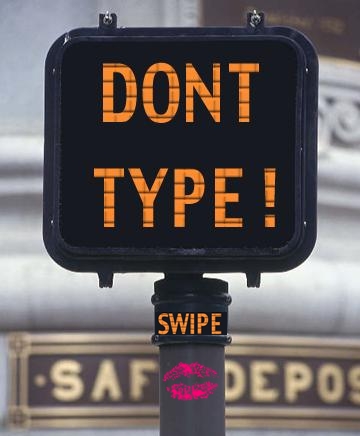
You'd also think banks would be supremely interested in shoring up the holes in their security.  There's one that's easy to fix.  You know, that big gigantic hole called "username"/"password"?  The one which opens the door for "phishing, DNS Hijacking, Cloned Web Sites etc. 
Those types of attacks are on the rise and I guarantee you that you'll be reading or hearing about a "sophisticated and highly organized scheme" whereby a bank had their website's DNS hijacked and while unsuspecting online banking customers were busy "typing" in their "username" and "passwords" into a brilliantly cloned bank website, the fraudsters were busy going to the real website and taking control over banking accounts resulting in the loss of millions of dollars. 


Mark my words.  It's coming.  It's too easy to do, in fact,  it's already been done, just not on a grand scale yet.  When it happens I'll provide a hyperlink back to this post.  But it CAN be EASILY prevented! I'll Keep It Simple...If you "DON"T TYPE" the "Bad Guys" can't swipe.

Here's a scenario: The "Good Guys" do the Swiping.  Swipe your bank issued card, and enter your bank issued PIN into HomeATM's PCI 2.0 Certified PED and you've got yourself some 3DES End-to-End Encrypted, "Protected by DUKPT" 2FA secure log-in.  No phishing allowed!  Cloned Websites are useless AND you're enabled to do some secure online shopping, secure money transfers and more.  It's so simple its stupid simple. 

You know what I love?  It's when I hear an objection that goes something like this: "Oh...then we've got to get a device into all our online banking customers hands!"  Here's my standard response: "Well you did it with toasters throughout the 50's, 60's and early 70's before you moved on to other stuff and none of those promotional items did a thing to secure your banking.  Can you imagine back in the early 80's if banks had said, "Switch to electronic POS devices?"  Are you nuts?  Oh...then we'd have to get a device into the hands of every retailer.

I just don't get it.  It is what it is and what it is (the web browser space)...is insecure.  Hardware isn't an option...it's a necessity.

HomeATM (on a perfect 1.0 correlation) has replicated a brick and mortar transactions for the internet.  In the brick and mortar world, the retailers have the POS device because that's where consumers go to shop.  But where do consumers shop online?  Right, their computer.  So our PCI 2.0 Certified PIN Entry Device plugs into their laptop/PC and they've got their own personal POS device at home.  Same difference right?  Card Present, TRUE PIN Debit and Secure Two Factor Authenticated Log-In for online banking.  It doesn't get any simpler and it doesn't get any more secure than that.

Here's the Reuters story:
WASHINGTON, USA: U.S. banks have lost hundreds of millions of dollars to cyberthieves who have electronically broken into ATMs and forged electronic transfers, a top FBI agent said on Tuesday.

"Particularly in the last couple of years, the threats have spiked," said Shawn Henry, the agency's assistant director of its cyber division. "Attacks on our financial sector are significant, to the tune of hundreds of millions of dollars."

The bureau knew of one bank whose security system was breached and which lost $10 million in cash in a day, while another lost $5 million, enough to put it out of business.

"The bank was in business on Friday (and) was out of business on Monday," he said. Henry did not identify either bank.


President Barack Obama's proposed fiscal 2010 budget, announced in late February, included $355 million for the Department of Homeland Security to make private- and public-sector cyber infrastructure more resilient and secure.  The administration also said it would put "substantial" funding for cybersecurity efforts into the national intelligence program, but gave no details.

Obama had asked for a cybersecurity audit that was due in mid-April.

"The intent is to release that report," Henry said. "I think it's imminent, in the next couple of weeks."


When it comes out, the PIN Payments Blog will bring it to you here.  In the meantime, there's a Cyber War going on and the best defense is: Don't Type...Swipe.


Reblog this post [with Zemanta]

Sheetz NFC Testing Done

ViVOtech and Wright Express Done with Pilot

ALTOONA, Pa. -- Sheetz Inc., Wright Express Corp. and ViVOtech have completed a multi-city NFC mobile payment pilot. During the trial, drivers used their Sheetz Fleet Business Advantage card loaded into their specially enabled near-field communication (NFC) mobile phones to make fuel and convenience store purchases at hundreds of Sheetz locations by just waving their NFC mobile phones at contactless-enabled readers. Wright Express was able to authorize and process the mobile transactions as easily as those done by drivers using plastic cards.

"The mobile payment pilot was a huge success, meeting and exceeding our initial objectives," said Russ Lamer, Wright Express manager of emerging technologies. "It helped us gain insight into the benefits of using a mobile phone as a payment device, document fleet driver usability at the pump and inside the store and also better understand the mobile payments operating systems."

Continue Reading at CSP


Reblog this post [with Zemanta]

Multi-Million ATM Fraud Scheme in Australia

Online Gambling in California by January after Emergency Budget Fails? You Betcha!

Californian online poker edges closer as budget fix fails - eGaming Review
California has rejected emergency budget measures designed to fix the state's budget crisis, providing a major fillip to a framework bill proposing to legalize intrastate online poker as early as next year.

In a special budget referendum yesterday, state voters rejected five of six budget measures centred on tax raises, social spending cuts and borrowing from the state lottery that were designed to plug a major hole in the US state’s finances.

The failure to pass the measures could see California, the world's sixth largest economy, go more than $25 Billion into debt by the end of this financial year, providing a boost to a framework bill proposing licenses for legal, taxed intrastate online poker to help prop up state coffers.

Jim Tabilio, president of grassroots gaming advocacy group Poker Voters of America (PVA), which sponsored a framework bill in 2008 which passed the state's lower house, told eGaming Review: “The framework bill has a majority in support of the concept in both the Assembly and the Senate, and has a group of legislators including people in the leadership in both houses ready to take it forward.”

The bill was introduced by California Assemblyman Lloyd Levine last year, but dropped down the legislative agenda when the economic downturn diverted attention elsewhere and Levine left office at the end of his maximum of two terms.  However Jim Tabilio said that he had been instructed by members of the California legislature to continue working on this bill so it meets its goals of consumer protection and raising state revenue.  Tabilio said the proposal to only allow the roughly 60 native Indian tribes with gaming compacts and 91 licensed land-based card clubs in the state to apply for licenses remains in the framework bill.

He said he was confident provisions could be quickly drafted working alongside these stakeholders to lend potential licensees the ability to compete in the online poker space, given the urgency of the budget problem.

Tabilio added: “It’s a case of writing the bill so it maximizes revenue to the state and participating tribes and clubs. Once that is successful, it becomes a simple matter of having the vote because if everyone is in favor of it, it will pass. This means we’re probably going to be able to get the bill through in mid-summer.”


Given the mounting financial pressure it finds itself under, Tabilio thinks the state goverment would then opt to file for temporary regulatory structures to push the initiatives through, so license holders could be offering online poker to California residents from as early as January 2010.

Speaking to EGRmagazine.com yesterday, California-based independent gaming lawyer Martin Owens said: “The state of California now can’t afford to ignore anything that might turn into a reasonable source of revenue, and here you have a multibillion dollar industry that is volunteering to be taxed.”


, , , ,

RBS WorldPay Back on PCI DSS Validated List for V/MC

RBS WorldPay Returns to Visa's and MasterCard's List of PCI DSS Validated Services Providers
ATLANTA, May 20 /PRNewswire/ -- Following the successful completion of its Payment Card Industry Data Security Standard (PCI DSS) assessment, RBS WorldPay has returned to both Visa's and MasterCard's list of PCI DSS Validated Service Providers. RBS WorldPay has successfully validated its compliance with PCI DSS, conducted by Verizon Business/Cybertrust, one of a select group of companies approved by the PCI Security Standards Council as a Qualified Security Assessor (QSA). RBS WorldPay is now certified on PCI DSS version 1.2. The Visa list can be found at www.visa.com/cisp.

About RBS WorldPay US

RBS WorldPay is a leading, single-source provider of electronic payment processing services - including credit, debit, EBT, checks, gift cards, e-commerce, customer loyalty cards, fleet cards, ATM processing and cash management services.

RBS WorldPay is the US-based payment processing division of the Royal Bank of Scotland Group plc. For more information, please visit www.RBSWorldPay.us.

About The Royal Bank of Scotland Group (RBS)

The RBS Group is a financial services company providing a range of retail and corporate banking, financial markets, consumer finance, insurance, and wealth management services. The RBS Group operates in the Americas, Asia and the Middle East serving more than 40 million customers.

For More Information Contact:
Dawn M. Thompson
RBS WorldPay US
Phone: 678.587.1652
Fax: 678.587.2652
e-mail: Dawn.Thompson@RBSWorldPay.us

www.RBSWorldPay.us


,

Smart Card Alliance White Paper Says Collaboration Key for Secure Proximity Mobile Payments

Contact: Deb Montner, Montner & Associates Tech PR Agency, 203-226-9290, dmontner@montner.com


PRINCETON JUNCTION, N.J., May 20, 2009 –
(PIN Payments News Blog) The ability to pay for transit, groceries, and other products by simply waving a cell phone near a point-of-sale (POS) device represents an exciting new era of payment in the United States and Canada.  But how will security be managed in an ecosystem where financial institutions, mobile network operators (MNOs), and others need to come together to manage their own unique aspect of the payment process? 

The Smart Card Alliance answers this question in a new white paper, “Security of Proximity Mobile Payments,” available for download at
http://www.smartcardalliance.org/pages/publications-security-of-proximity-mobile-payments. 

The white paper focuses on a "collaboration model," where financial institutions, MNOs, trusted third parties and other stakeholders in the mobile payments ecosystem cooperate in the management and deployment of mobile applications.  The white paper introduces the players, their roles, and their responsibilities in assuring the security of sensitive data.  It explains how the payment application, consumer credentials, and consumer account information (such as a credit card number) are securely delivered to, loaded on, and stored in a mobile device.  It also identifies risks present during the lifecycle of the payment information stored on the mobile device and suggests appropriate countermeasures.

“There is no question that consumers love mobile technology and view it as a necessity in their daily lives, so it makes sense for the next step to be paying with cell phones,” said Randy Vanderhoof, executive director of the Smart Card Alliance.  “This white paper explains how industry stakeholders can take advantage of this love of mobile technology and introduce secure proximity mobile payments by collaborating and leveraging proven technology and a merchant infrastructure that is already in place.”

Proximity mobile payments
are defined as payments to a merchant that are initiated from a mobile phone that uses Near Field Communication (NFC) technology and is held close to the merchant's POS equipment.  NFC will soon be available as standard functionality in many mobile phones, allowing consumers to perform secure contactless transactions, access digital content, and connect electronic devices simply.  NFC-enabled mobile phones use the existing ISO/IEC 14443 standard – the same standard used for contactless financial payments -- for communicating payment information from the phone to the merchant’s POS terminal.  From the consumer's perspective, the proximity mobile payment looks just like a contactless credit or debit card transaction.  Payments are processed over the current secure financial networks, with all of the layers of robust security used with traditional financial payment transactions. 

Participants involved in the development of this report included: Booz Allen Hamilton,  Collis America, Cubic, Discover Financial Services, Giesecke & Devrient (G&D), IBM Global Business Services, IfD Consulting, Infineon Technologies, Keypoint Consulting,
MasterCard Worldwide, VeriFone, Visa, and ViVOtech.   

About the Smart Card Alliance Contactless and Mobile Payments Council

The Contactless and Mobile Payments Council is one of several Smart Card Alliance technology and industry councils. The Council was formed to focus on facilitating the adoption of contactless and mobile payments in the U.S. through education programs for consumers, merchants and issuers. The group is bringing together financial payments industry leaders, merchants and suppliers. The Council’s primary goal is to inform and educate the market about the value of contactless and mobile payment and work to address misconceptions about the capabilities and security of contactless technology. Council participation is open to any Smart Card Alliance member who wishes to contribute to the Council projects.

About the Smart Card Alliance

The Smart Card Alliance is a not-for-profit, multi-industry association working to stimulate the understanding, adoption, use and widespread application of smart card technology.

Through specific projects such as education programs, market research, advocacy, industry relations and open forums, the Alliance keeps its members connected to industry leaders and innovative thought. The Alliance is the single industry voice for smart cards, leading industry discussion on the impact and value of smart cards in the U.S. and Latin America. For more information please visit http://www.smartcardalliance.org.

###


Reblog this post [with Zemanta]

RBS Says Goodbye to Online Gambling Operators

Elijah O'Connor writes that RBS Closes it's Doors to Online Gambling Operators in a NewOnlineCasinsos.org post.  The timing is interesting.  I didn't know they were involved and now that Barney Frank has promoted a bill to legalize online gambling in the U.S.  they're pulling.

Royal Bank Of Scotland Says Goodbye To Online Gambling Operators
At a time when online gambling is reaching the height of its popularity, and when more countries than ever are legalizing Internet gambling, one bank is walking away from the action. One of the biggest banks in the world, Royal Bank of Scotland, is closing their doors to the online gaming industry.

The gaming operators have been given the choice to stay with RBS, but the gambling transactions will no longer be processed. That leaves the companies with the decision to use two separate banks or to switch banks altogether.

The Swiss government has been pushing banks to stop processing gambling transactions from Swiss residents. RBS has recently announced the merger of their business with ABN AMRO, a banking group in the Netherlands.

"What is seems like from the outside is that this was a decision that was made to both please the Swiss government, and to satisfy the demands of the merger," said observer Keith Frans.

The Dutch government has been proactive in attempting to stop Internet gambling transactions. Their banks have been asked to comply with their wishes, and being that ABN AMRO is a Dutch bank, that could be the reason for RBS's decision.

"At the end of the day, what the Swiss and Dutch governments are doing is trying to protect their gambling monopolies. I'm not sure these type of actions are going to work under European Union agreements," said Frans.


, ,

Tuesday, May 19, 2009

HomeATM Featured in "The Nilson Report"

PIN Payments News Blog - May 19th 2009


As daily reports surface (i.e. see today's post: "63% of Websites have "Critical Vulnerability Issues") industry insiders are starting to take notice of our mantra that the web is NOT safe for financial transactions and the slow realization that a software application is not the answer is starting to take a foothold. 

Therefore...we expect 2009 to be a year of migration from the belief that software (inside the browser) is "secure enough" to hardware (outside the browser) is "necessary" for online transactions. There is no other way to "secure" the transaction.  

Hence, HomeATM is starting to make some noise in the Payments Industry.  Here's a quick review of what has transpired since February:


  • Several other publications covered our PCI 2.0 Certification, including but not limited to: CNET, The Paypers, ISO & Agent, BusinessWeek and Fortune


This time, HomeATM is being featured by the respected Payment News Authority, "The Nilson Report" 

HomeATM is awaiting approval to bring you what The Nilson Report had to say about HomeATM's secure 2FA (two factor authentication) 3DES end-to-end encrypted, protected by DUKPT PCI 2.0 Certified Pin Entry Device.

Upon approval, look for The PIN Payments News Blog to bring you the coverage right here....


Reblog this post [with Zemanta]

63% of Websites Have Critical Vulnerabilty Issues

Report: Over 60 Percent of Websites Contain Serious Vulnerabilities - DarkReading

Newly released client data from White Hat Security finds organizations are slow to close known security holes in their Websites  By Kelly Jackson Higgins | DarkReading

Most Websites harbor at least one major vulnerability, and over 80 percent of Websites have had a critical security flaw, according to new data released today by WhiteHat Security.

The Website vulnerability statistics, based on Website vulnerability data gathered from WhiteHat's own enterprise clients, show that 63 percent of Websites have at least one high, critical, or urgent vulnerability issue, and there's an average of seven unfixed vulnerabilities in a Website today.
"What we know from this report is that the Web is at least this insecure," says Jeremiah Grossman, CTO of WhiteHat.

Editor's Note:  I know I've been saying this for about a year now on this blog, but the web is NOT secure.  So why are we "Typing" our PAN's and soon to be "clicking" our PINs into boxes located on merchants websites?
  If 63% of websites have a "critical" security flaw/vulnerability, then financial transactions should be done "outside" the browser space right?  Take into account that 70% of websites were the victim of a hack attempt, and that leaves us with a 30% chance our "supposedly valuable financial information" WON"T get stolen.  Financial Transactions, "especially" PIN transactions MUST be End-to-End Encrypted and the only way to do that is via a hardware device which "transacts" OUTSIDE the browser space. 

Does that make sense to anyone else besides myself?  Chime in!  
The article continues:
The top ten classes of vulnerabilities hasn't changed much from WhiteHat's findings in the fourth quarter of 2008. The pervasive cross-site scripting (XSS) flaw still leads the pack as the most likely vulnerability in a Website, with a 65 percent chance that a Website has XSS bugs, followed by information leakage, with 47 percent.

And the average number of vulnerabilities per Website over its lifetime is 17, according to WhiteHat's data.

"Customers are fixing large swaths of vulnerabilities, but it's really tough to wipe out 100 percent of vulnerabilities, even by class and severity," Grossman says. "And even if you fix nine of 10 cross-site scripting vulnerabilities, you still have one. That's why the percentage of sites likely to have cross-site scripting vulns is" so high, he says.

And all it takes is one XSS vulnerability for an attacker to do his dirty work, he says.


Around 30 percent of Websites are likely to contain content spoofing bugs; 18 percent, insufficient authorization; 17 percent, SQL injection; 14 percent, predictable resource location; 11 percent, session fixation; 11 percent, cross-site request forgery (CSRF); 10 percent, insufficient authentication; and 9 percent, HTTP response-splitting flaws, according to WhiteHat's latest counts.

Continue "Dark Reading"


Reblog this post [with Zemanta]

Trends in Debit, Credit and Prepaid Report Available from VRL

Also Available: "Cards and Payments in Asia-Pacific" (see below)

With prepaid card use expanding throughout Europe, and continued innovation in debit cards issuance despite the financial crisis, are you making the most of your card products?

Penny pinching at the payment networks

Visa and MasterCard's latest quarterly results starkly illustrate how debit is continuing to take a bigger share of payments worldwide, with Visa's debit volumes in the US surpassing credit volumes for the first time. Both networks have offset drops in volumes by cutting costs, with marketing being one of the key activities hit in this quarter.

Are you expected to pick up more of the work? Are you following best practice? Trends in debit, credit and prepaid direct marketing report uses case studies from the industry to illustrate how to use your engagement channels for maximum ROI.

Standard Chartered launches 'JustOne' card in Asia-Pacific.

The 'JustOne' card, a debit, credit and ATM card, is targeted at consumers under 30, a demographic covering over 30% of the Malaysian population. The bank has said that it expects the card to bring in 50,000 new cardholders within the next 12 months and help expand its market share from 5 to 7% over the next 24 months.

Learn more about best practice in our Cards and payments in Asia-Pacific report.

Union Bank, Travelex issue prepaid Visa card.

Designed so international travellers can take money abroad in card form, the Travelex Cash Passport, a prepaid Visa currency card, aims to improve the quality and utility of the card experience for both existing customers and non-customers, allowing users to travel without the hassle of carrying cash, travellers cheques and cards.

Discover how to maximise your prepaid potential in our report today.

Women Hit Hardest by ID Theft

Amount of Money Lost by US Identity Theft Victims, by Gender, January-February 2009 (% of respondents)

Identity Theft Hits Women Hardest

Who is most affected by identity theft, who commits the crime and how can people protect themselves?  When it comes to the theft of personal information, women beware.  According to a study by Affinion Security Center, 17% percent of female identity theft victims have lost $1,000 or more due to the crime, versus only 10% of males.
In addition, more men (61%) avoided losing money than women (53%).
The good news is that most of the cases of identity theft were solved, although some were solved faster than others.
Forty-two percent of cases were closed in less than one week, 20% took between one week and one month and 13% took two months to six months.


Even so, if you are a victim of identity theft, chances are you will never know who did it.
A survey from the Identity Theft Assistance Center (ITAC) found that 72% of victims had no idea know who stole their personal information.
Of those that did, most cases (26.5%) were committed by friends, relatives or in-home employees who had access to personal information. Next came computer-related fraud (21.6%), lost or stolen wallets, checkbooks and credit card accounts (15.1%) and mail fraud (11.6%)


How can consumers protect themselves?

Amount of Time It Took to Get Their Identity Restored According to US Identity Theft Victims, by Gender, January-February 2009 (% of respondents)

Measures taken by respondents to the Affinion survey to keep their identities secure included:
  • Shredding documents before disposal
  • Monitoring credit card accounts
  • Keeping personal information locked in a safe
Anne Wallace, ITAC president, suggests keeping data in the home and workplace in secure locations, monitoring accounts for unusual activity, updating anti-virus software and upgrading browser and operating systems.
Protect your brand. Get the digital marketing and media information you need. Look into an eMarketer Total Access subscription today. 


eCommerce Forecast: Cloudy with Data Not in the Clear

Editor's Note:  I read this article and it occurred to me that these "type" of articles are part of the problem.  They tell you to pick a "secure" password and "never give out your password" to phishers.  I suppose that's good advice, but that won't help you if someone either "keylogs" your username/password or fools you into thinking you are at the real online banking site when, in reality, you are at a "cloned" one.  Why does a blatantly clear problem need to be "magnified" in order to "see" that the best way to log-in to an online banking site is to swipe your card and enter your PIN outside the browser space whereby it is 3DES end-to-end encrypted by the ONLY PCI 2.0 Certified PIN Entry Device specifically designed for eCommerce and authentication use.  Average Cost of a Phishing Attack.  $350...Average Cost of our device: $12  Do the math.  At the end of the day, passwords are obsolete and articles like the one below need to start messaging that fact...in the meantime, I guess that's my job!

Source: msokorea
Complete item: http://www.msokorea.com/personal-finance/0,6600,404400,00.html

Description:
It is now possible to pay bills, move money between accounts, set up direct debits and standing orders, and even apply for overdrafts and credit all from your own home, all online and on your own PC.

Despite this convenience, for many people there is still a lingering mistrust of the technology involved : will your money be safe if you bank online? The answer is, for the most part, yes - so long as you follow a few basic principles.

Firstly, if you have the option to choose your own password for online services, then make sure that the password you decide on is secure. (Editor's Note: Since "secure password" is an oxymoron, a good password might be "Jumbo Shrimp" )This means that it shouldn't be easily guessable - avoid using the name of your pet or child, for example, and don't use the numbers of your birthday. An ideal password should be easily memorable, but hard to guess, and using a combination of letters and numbers is highly recommended. For example, a good password could be the name of a food you hate, along with a number that is significant in some way to you - e.g. mushrooms37. Such a password would be almost impossible for someone to guess, but will also be very easy for you to remember.

One the subject of passwords, it's vital that you never give out your personal details in response to a 'phishing' attack. (Editor's Note:  I would say "never give out your personal details period, and the best way to make sure you don't is by swiping, not typing)  Phishing is a subject worthy of it's own article, but in brief: if you receive an email purporting to be from your bank, asking you to reconfirm your details or to log into your account urgently, then ignore it. It will NOT have been sent by your bank, but by fraudsters attempting to steal your identity.

Another important security measure is to avoid logging in to your online banking service on a publicly accessible computer - for example, at work or in an internet.   You can never be sure what details about your internet use are being stored on a PC you don't own, and even if you log out of the service when you've finished it's highly possible that the next user of the machine could, with effort, discover your details and log on to your account.  (Editor's Note:  EVERY computer is "publicly accessible" even the one in your house.  It's just that the "pubic" is more accurately defined as "hackers".)

Remember:  When it comes to hackers:  You type, they swipe...but when "You" swipe, you're nt their type."

Reblog this post [with Zemanta]

American Express Eliminates 4000 Jobs to Save $800M

AmEx Targets $800 Million in Cost Cuts - WSJ.com
American Express Co., reeling from rising defaults and delinquencies on its credit cards, unleashed its second big round of job cuts in a move aimed at saving $800 million this year.

The New York company said it would eliminate 4,000 jobs, or 6% of its work force, mostly though layoffs. The layoffs, which will save $175 million, come on top of 7,000 job cuts AmEx announced in late October.

About $500 million in additional savings will come from cutbacks in marketing and business development. ...

Continue Reading at WSJ (subscription required)


US eCommerce Climbs 0.7% in Q1 2009 to USD $31.7 billion


Notice of Revision
:Quarterly retail e-commerce estimates were revised based on the resultsof the 2007 Annual Retail Trade Survey. Not adjusted and adjustedestimates were revised for fourth quarter 1999 through fourth quarter2008.


TheCensus Bureau of the Department of Commerce announced today that theestimate of U.S. retail e-commerce sales for the first quarter of 2009,adjusted for seasonal variation, but not for price changes, was $31.7billion, an increase of 0.7 percent (±1.1%)* from the fourth quarter of2008. Total retail sales for the first quarter of 2009 were estimatedat $909.6 billion, a decrease of 1.8 percent (±0.4%) from the fourthquarter of 2008. The first quarter 2009 e commerce estimate decreased5.4 percent (±2.5%) from the first quarter of 2008 while total retailsales decreased 10.2 percent (±0.4%) in the same period. E-commercesales in the first quarter of 2009 accounted for 3.5 percent of totalsales.

On a not adjusted basis, the estimate of U.S. retail e-commerce sales for the first quarter of 2009 totaled $30.2 billion, a decrease of 17.7 percent (±1.1%) from the fourth quarter of 2008. The first quarter 2009 e-commerce estimate decreased 5.7 percent (±2.5%) from the first quarter of 2008 while total retail sales decreased 11.6 (±0.5%) in the same period. E-commerce sales in the first quarter of 2009 accounted for 3.6 percent of total sales.
Estimated Quarterly U.S. Retail E-commerce Sales as a Percent of Total Quarterly Retail Sales:
4th Quarter 1999–1st Quarter 2009

Percent of Total
The Quarterly Retail E-Commerce sales estimate for the second quarter of 2009 is scheduled for release on August 17, 2009 at 10:00 A.M. EDT.

For information, visit the Census Bureau's Web site at <http://www.census.gov/mrts/www/ecomm.html>. For additional information about Census Bureau e-business measurement programs and plans visit <http://www.census.gov/estats>.

* The 90% confidence interval includes zero. The Census Bureau does not have sufficient statistical evidence to conclude that the actual change is different from zero.
Table 1.     Estimated Quarterly U.S. Retail Sales: Total and E-commerce1
(Estimates are based on data from the Monthly Retail Trade Survey and administrative records.)
(p) Preliminary estimate. (r) Revised estimate.
1E-commerce sales are sales of goods and services where an order is placed by the buyer or price and terms of sale are negotiated over an Internet, extranet, Electronic Data Interchange (EDI) network, electronic mail, or other online system. Payment may or may not be made online.
2Estimates are adjusted for seasonal variation, but not for price changes. Total sales esimates are also adjusted for trading-day differences and moving holidays.
Note: Table 2 provides estimated measures of sampling variability. For information on confidentiality protection, sampling error, nonsampling error, sample design, and definitions, see www.census.gov/mrts/www/nrely.html.
Table 2.     Estimated Measures of Sampling Variability for Quarterly U.S. Retail Sales Estimates: Total and E-commerce
(Estimates are shown as percents and are based on data from the Monthly Retail Trade Survey.)
(p) Preliminary estimate. (r) Revised estimate. (Z) Estimate is less than 0.05%.
Note: Estimated measures of sampling variability are based on data not adjusted for seasonal variation, trading-day differences, ormoving holidays, and are used to make confidence statements about both adjusted and not adjusted estimates. For information on confidentiality protection, sampling error, nonsampling error, sample design, and definitions, see www.census.gov/mrts/nrely.html.

 Table 3.    Estimated Quarterly U.S. Retail Sales (Adjusted1): Total and E-commerce2
(Estimates are based on data from the Monthly Retail Trade Survey and administrative records.)
NA Not Available. (p) Preliminary. (r) Revised
1Estimatesare adjusted for seasonal variation, but not for price changes. Totalsales estimates are also adjusted for trading-day differences andmoving holidays.
2E-commerce sales are sales of goods and services where an order is placed by the buyer or price and terms of sale are negotiated over an Internet, extranet, Electronic Data Interchange (EDI) network, electronic mail, or other online system. Payment may or may not be made online.
Note: For information on confidentiality protection, sampling error, sample design, and definitions, see www.census.gov/mrts/www/nrely.html.
Table 4.     Estimated Quarterly U.S. Retail Sales (Not Adjusted): Total and E-commerce1
(Estimates are based on data from the Monthly Retail Trade Survey and administrative records.)
NA Not Available. (p) Preliminary.
1E-commerce sales are sales of goods and services where an order is placed by the buyer or price and terms of sale are negotiated over an Internet, extranet, Electronic Data Interchange (EDI) network, electronic mail, or other online system. Payment may or may not be made online.
Note: For information on confidentiality protection, sampling error, nonsampling error, sample design, and definitions, see www.census.gov/mrts/www/nrely.html.


Survey Description
Retail e-commerce sales are estimated from the same sample used for the Monthly Retail Trade Survey (MRTS) to estimate preliminary and final U.S. retail sales. Advance U.S. retail sales are estimated from a subsample of the MRTS sample that is not of adequate size to measure changes in retail e-commerce sales.

A stratified simple random sampling method is used to select approximately 12,500 retail firms whose sales are then weighted and benchmarked to represent the complete universe of over two million retail firms. The MRTS sample is probability based and represents all employer firms engaged in retail activities as defined by the North American Industry Classification System (NAICS). Coverage includes all retailers whether or not they are engaged in e-commerce. Online travel services, financial brokers and dealers, and ticket sales agencies are not classified as retail and are not included in either the total retail or retail e-commerce sales estimates. Nonemployers are represented in the estimates through benchmarking to prior annual survey estimates that include nonemployer sales based on administrative records. E-commerce sales are included in the total monthly sales estimates.

The MRTS sample is updated on an ongoing basis to account for new retail employer businesses (including those selling via the Internet), business deaths, and other changes to the retail business universe. Firms are asked each month to report e-commerce sales separately. For each month of the quarter, data for nonresponding sampling units are imputed from responding sampling units falling within the same kind of business and sales size category. Responding firms account for approximately 85 percent of the e-commerce sales estimate and about 80 percent of the estimate of U.S. retail sales for any quarter.

For each month of the quarter, estimates are obtained by summing weighted sales (either reported or imputed). The monthly estimates are benchmarked to prior annual survey estimates. Estimates for the quarter are obtained by summing the monthly benchmarked estimates. The estimate for the most recent quarter is a preliminary estimate. Therefore, the estimate is subject to revision. Data users who create their own estimates using data from this report should should cite the Census Bureau as the source of the input data only.

France eCommerce Growth for Q1 = 26%

View of the Eiffel TowerFrance Sees Q1 eCommerce Growth 

France's Q1 2009 eCommerce market grew 26 percent to EUR 5.6 billion.   2008 Q1 growth was 30 percent according to statistics released by trade associationFevad. 


There are currently 52,000 French eCommerce websites, with 12,000 sites being added to the 40,000 they counted in their numbers last year. 

Online shoppers instigated 55 million card-based transactions up 35 percent, with an average of EUR 89 spent pertransaction which was down 5 percent over EUR 94 last year.


Reblog this post [with Zemanta]

Disqus for ePayment News