The Cyber Holiday Pulse Index is an index based on order activity at 25 large Internet retailers. Chase Paymentech is a payment solution provider serving online retailers, restaurants andother businesses.
E-commerce order volumes rose yesterday on one of the most important online shopping days of the year, according to a major payment processing company. However average order sales were significantly down. The result: Overall sales volume on Cyber Monday was essentially flat, growing less than a half-percent compared with the same day in 2007.
The "Holiday Pulse Index" found transaction volume at 25 major retailers rose by 14.5 percent Monday. However the average value of each transaction fell 12 percent compared with last year's Cyber Monday.
Aaron Press, director of market analysis for Chase Paymentech, said in a statement that the lower order totals for individual purchases are consistent with payment activity during much of November. "For the entire holiday season, the slower rise in sales volume compared to the steeper increase in transactions has resulted in the average ticket being lower on most days," he said. Ticket prices is defined as the average dollar spent per transaction.
Yet spending for the season to date has been a little more aggressive than the Cyber Monday snapshot. Since the beginning of November, transaction count has climbed 25 percent, and sales volume has increased 11 percent. The average ticket has come in 12 percent below last year's level, according to Chase Paymentech.
Separately, content infrastructure provider Akamai says traffic volume to retail sites in North America spiked yesterday. By 10 a.m. on December 1, online visits to Akamai retail customer sites had already surpassed 2007's peak visits per minute. The heightened traffic continued well into the evening.
There are some indications that higher traffic volume may not be a sign of higher spending, but rather an indication that people are investing more time in hunting for coupons, discounts, and other deals. According to Google keyword trends, consumers are conducting more searches for such promotions than in past years. Among the queries that climbed significantly this season are "coupons," "Black Friday ads," "discounts," and "free shipping."
ComScore and Nielsen plan to report their Cyber Monday spending and traffic estimates tomorrow. The HomeATM Blog will highlight the data in a follow-up report.
Alltel Wireless to launch Alltel Wallet with mFoundry
US wireless network Alltel Wireless will launch a mobile wallet service called Alltel Wallet based on mFoundry’s mobile wallet platform in early 2009.
Alltel Wallet is to include various mobile banking services, offering customers access to a large variety of US financial institutions. Alltel Wireless recently launched a free mobile banking service called Alltel Mobile Banking, offering customers mobile access to accounts from many financial institutions. The Alltel Wallet will provide its customers access to the same financial institutions as well as access to a series of other payment services.
mFoundry will provide Alltel with the necessary platform to plug in enhanced financial services and other advanced functions from selected third party developers. mFoundry’s mobile wallet platform comes with pre-built modules for peer-to-peer remittances and other payment services to help developers deploy new features.
mFoundry’s mobile financial services platform is based on Mojax technology which allows Alltel to offer third party developers the ability to add modules to the wallet. Mojax is an Ajax application framework. Unlike traditional frameworks, Mojax applications (Moblets) do not run within a browser and are not subject to the availability and quality of a network connection. Mojax is a plug-in capable mobile development framework that offers developers additional access to core device capabilities like Camera API, Location Services, Contacts and more.
I've posted quite a few times on the subject of gift cards over the past 30 days. There's a lot of things to consider when purchasing a gift card. Here's some good advice from SmartMoney if you're considering buying one this holiday season...
7 Things to Know About Buying Gift Cards
Just look at how the mighty have fallen. Sales of gift cards -- typically the most-requested holiday gift – have fallen dramatically this holiday shopping season as budget-crunched consumers hunt for ways to save.
“Consumers are putting all their focus into finding bargains,” says Daniel Horne, an associate professor of marketing at Providence College in Rhode Island. Instead of going straight to the cash register to buy a $25 gift card, a shopper is more prone to spend $20 on an item marked down from $25, he explains. Add to that concerns about the growing number of retailers that are going out of business and gift cards become even less of an attractive option for shoppers.
As a result, gift card sales are expected to fall 6% this holiday season to $24.9 billion, according to the National Retail Federation. (Over the four-day Black Friday weekend, gift card sales were down 10%, with just one in five shoppers buying one).
Yet, shoppers don’t have to abandon gift cards altogether -- especially when the alternative is taking a blind guess at what someone on your shopping list really wants. Just proceed with caution. Here's what you need to know to guarantee that buying a gift card will be worthwhile. Steer clear of troubled retailers
Avoid buying a gift card from a retailer that has filed for bankruptcy protection, or may do so soon, warns Sally Greenberg, executive director of the National Consumer League, a consumer advocate. While stores in Chapter 11 may continue to sell and accept gift cards, they can also put restrictions on their use. Sharper Image, which filed for Chapter 11 bankruptcy protection in February, stopped accepting cards temporarily, then required shoppers to make purchases worth at least double the value of their gift cards. Linens ‘N Things, which filed for bankruptcy protection in May, will only accept cards in its store during its liquidation.
If a retailer files for Chapter 7 bankruptcy protection -- which liquidates the company rather than allowing it to reorganize -- the card balance is almost certainly a lost cause, says Greenberg. “You’re in a long line behind other unsecured creditors,” she says. Most claims return just pennies on the dollar, if anything at all. Look for FDIC coverage
Your safest bet is to buy a gift card issued by a bank, says Gwenn Bézard, research director for Aite Group, an independent financial services market research company. In mid-November, the FDIC expanded its coverage of consumers’ assets at insured financial institutions to include prepaid gift cards. Should the bank go under, the card balance is covered up to $250,000.
Weigh the fees
Although they offer better protections than store gift cards, bank-issued gift cards do have one pitfall: purchase fees. Discover (DFS: 9.43*, -0.54, -5.41%) and American Express (AXP: 20.43*, -0.33, -1.58%) both charge $3.95 per card, for example, and Chase (JPM: 28.16*, -0.37, -1.29%) charges $3.50. U.S. Bank (USB: 25.80*, +0.03, +0.11%) charges $3.95 if you buy at a bank branch, or $6.95 plus shipping when you purchase one online. Skip these cards if the charges are more than 10% of the balance, says Greenberg. Fees that high aren’t a good deal for the giver or the receiver.
Swap out unused cards
Still hanging on to unwanted cards from last year? Sell or trade them before any dormancy fees kick in. Gadget and home goods retailer Brookstone is letting consumers exchange gift cards of any value (even a penny) from any other retailer for a 15% in-store discount. And on gift card swap sites such as CardAvenue.com and SwapAGift.com, users often receive bids just a few dollars below the face value of their cards. Take advantage of promotions
To entice consumers to spend more, many retailers are offering discounts with a gift card purchase. Papa John’s offers a free medium one-topping pizza ($10 value) with every $25 card purchased. Through Dec. 8, chain B.R. Guest Restaurants is offering 20% off gift cards purchased online.
Wait until the last minute
Plenty of gift cards carry expiration dates and some even have maintenance fees that kick in after as little as six months of inactivity. To help give your recipients a little more time on the clock -- nearly half of consumers still haven't redeemed the gift cards they received over the holidays by the end of January, says Bézard -- save your gift card purchase until the last minute.
Spend in January
Fewer gift card purchases now mean fewer shoppers redeeming them in January, which could pose a problem for cash-strapped retailers looking to extend their holiday season profits into the new year. Postholiday, retailers may start extending discounts to shoppers who use gift cards, says Horne. (Last year, both Best Buy (BBY: 20.03*, +0.08, +0.40%) and clothing retailer New York & Company offered such incentives.) American Express also routinely extends special discounts for using its cards at participating retailers, such as 15% off a purchase of $75 or more at Virgin Megastore.
Leslie Parker writes in the Sydney Morning Herald about Prepaid Cards and talks about the differences between Closed Loop and Open Loop Prepaid Cards. Look for Open Loop cards to become more popular in the future...
The prepaid card that helps consumers set spending limits is challenging its credit and debit rivals.
The mounting popularity of debit cards is one indication that Australians are losing their appetite for credit. But there's another alternative for consumers who like the convenience of a card but find debt distasteful - prepaid cards.
Many consumers will have come across prepaid cards in the form of gift cards - cards with a set value that are branded by a retailer to be used in its particular outlets.
These are known in the industry as "closed loop" cards because you can't use them outside that store. They're also described as "disposable" cards because once you've used up the face value - $50, say - you throw the card away.
But there's another prepaid card, the reloadable "open loop" card, which can be used almost anywhere and replenished with further funds. These have been in Australia for a couple of years. These cards look and feel like a Visa or MasterCard credit or debit card but don't provide access to borrowed money and aren't linked to a bank account. You don't need a bank account to get one and generally no credit check is required. That makes them useful for people who wouldn't qualify for a credit card but who need a plastic card to pay bills, shop online or travel.
You load a prepaid card with funds, usually by transferring money online or via phone banking.
Of course, there are costs involved and these vary depending on the card issuers and the way they've structured their product. You may be up for an application fee plus transaction fees for withdrawals and deposits and possibly fees for services such as balance inquiries. Check the fine print. You'll also need to confirm that the card is reloadable and what happens if you lose it. While losing gift cards is like losing cash, reloadable cards can usually be cancelled in the same way you'd cancel a lost credit or debit card.
There has been huge growth in prepaid cards in the US - by one estimate the number of cards on issue soared from 25 million in 2004 to 1.1 billion by the end of 2006 - but that's partly because they're used for social security payments there. Also, the US has a larger population of the "unbanked" - people who by choice or otherwise don't have a bank account.
In Australia, Heritage Building Society has carved out a business running prepaid card programs with partners such as Visa and has issued 500,000 prepaid cards since 2006.
Retail Finance Intelligence business development director Charles Green says all the major banks have open-loop cards. "So, as long as [merchant] acceptance doesn't continue to be an issue, familiarity with them should grow," he says, referring to the fact Coles and Woolworths don't allow you to pay for your groceries with a prepaid card.
MWE Consulting principal Mike Ebstein says the open-loop prepaid card is in its infancy as a method of payment. However, he says, the use of the Visa-MasterCard type will probably grow.
"They're for people who want the convenience of a plastic card but without the exposure that comes from having an associated line of credit or access to deposited funds," Ebstein says. That makes them useful for giving children pocket money, "where you don't want to put temptation in their way".
Green says research shows the most common uses of open-loop cards are shopping generally, online shopping in particular and personal travel.
Travelex's prepaid card, the Cash Passport, is available in five currencies. Travelex's website says the PIN-protected card allows you to lock in an exchange rate before you travel and you can use the card in ATMs overseas.
Visa's general manager for Australia, New Zealand and the South Pacific, Chris Clark, gives the example of a young person heading overseas for a "gap year" after school. He or she can load a travel card with as much as $25,000 in funds, depending on the product, and live off that while moving around. Alternatively, parents might help their travelling offspring by feeding a prepaid card each month with, say, $1000 to help with budget control.
Ebstein says prepaid cards appeal to the budget-conscious. "You could have a number of cards for specific uses, allocating money to various 'silos'," such as holidays, clothing or entertainment.
Heritage Building Society chief executive John Minz says prepaid cards also have benefits in limiting fraud. "One of the risks when travelling is card skimming," he says. "The contents of a credit card's magnetic strip can be copied. But purchase one of these Visa cards with a certain value and . . . there are no personal details on that card, no card numbers, no account information."
Canada's leading On-Demand eCommerce provider announces partnership with CardinalCommerce to enable alternative payment brands to its customers.
Toronto, ON (PRWEB) December 3, 2008 -- OrderDynamics Corporation, Canada's leading on-demand eCommerce solution provider, is pleased to announce its partnership with CardinalCommerce, the worldwide leading enabler of payment brands. The partnership will leverage CardinalCommerce's universal merchant platform, Cardinal Centinel®, to enable multiple payment brands for the Order Dynamics customer base.
OrderDynamics Customers, through a single integration, can now immediately provide over fifteen branded payment methods on their front-end web eStores. The OrderDynamics platform now maintains a single, secure interface to Cardinal Centinel® to enable payment brands such as: Verified by Visa & MasterCard® SecureCode™, Amazon Payments™, Bill Me Later®, Ebates™, eBillme™, eLayaway™, Google™ Checkout, Green Dot® MoneyPak®, MyEcheck, PayPal™, RevolutionCard™, Mazooma™, ClickandBuy®, and more.
"Our Customers can access these services though their management dashboard and automatically integrate the payment services with their current eCommerce shopping cart solution." explains Steven Berkovitz, VP Development. "Providing alternative payment methods to shoppers is an important way for online merchants to gain new customers, increase sales conversions, and make the eCommerce shopping experience more secure and convenient." Berkovitz continues "Through our Dynamic Merchandising concepts we aim to provide the best eCommerce tactics to help our Customers drive revenues and control costs. This is how we evaluate and prioritize enhancements to our eStore websites, eCommerce shopping cart, Fulfillment & Inventory Control, email Marketing, and all aspects of our on-demand eCommerce platform." The development and integration of the Cardinal Centinel platform is part of an overall new feature release strategy that OrderDynamics maintains as part of their services. About CardinalCommerce Corporation
CardinalCommerce Corporation is the global leader in enabling authenticated payments, secure transactions, and alternative payment brands for both eCommerce and mobile commerce. Cardinal Centinel® enables payment brands such as Verified by Visa, MasterCard® SecureCode®, PayPal™, eBillme™, Bill Me Later®, Google™ Checkout, MyECheck, NACHA® Secure Vault Payments (SVP), Green Dot® MoneyPak®, Ukash™, eLayaway™, Ebates™, Amazon Payments™, RevolutionCard™, Mazooma™, ClickandBuy®, and more to a network of over 30,000 merchants and merchant service providers. Headquartered in Cleveland, Ohio, with facilities in the United States, Europe and Africa, Cardinal services a worldwide customer base.
About OrderDynamics Corporation
OrderDynamics Corporation is a privately owned company that has provides turn-key eCommerce solutions to businesses looking to grow their online sales solutions. The success of OrderDynamics is highly attributed to its response to real Client requirements and Dynamic Merchandising concepts which provide superior control and help drive revenue. The OrderDynamics solution is designed for online merchants and services different business such as retail, manufacturing, business-to-business, complex online retail, and more. OrderDynamics officially launched its on-demand eCommerce solution in 2006 after 2 years of research and development.
According to Internet Retailer, CyberMonday was a good day. One etailer (eBags.com) even posted 50% sales growth over last year...
The Monday after Thanksgiving was better than expected, retailers say
The doom and gloom of the economy continues, and online sales on Friday, the big shopping day after Thanksgiving, barely registered growth, up a mere 1%, according to web measurement firm comScore Inc. But yesterday appears to have brought better news, based on reports from several online retailers about sales Monday, the day after Thanksgiving weekend that’s typically the first of the big online shopping days of the holiday season.
Retailer eBags.com posted an all-time record day, with sales yesterday growing 50% compared with the same Monday last year, says Peter Cobb, co-founder and senior vice president. The retailer offers numerous products, including more than 12,000 handbags. It placed nearly all of them on sale and realized 51% sales growth in handbags yesterday compared with the same day last year. The merchant also ran a 20% off promotion on all products, and $10 cash back on all purchases made with PayPal.
Target Corp. had a good day yesterday, a spokesperson says. “Sales were up a solid double-digit percentage this year versus the same day in 2007. And we have found the average order size is slightly higher than last year,” she says. “We have continued our focus on emphasizing our value message as well as our biggest free shipping offers ever and deeply discounted items.” (continue reading)
Visa looks to expand worldwide presence with payments processing JV
Visa has formed a payments processing joint venture with India-based Yalamanchili Software Exports in a bid to tap fast developing regions like Asia Pacific and Latin America.
The card network holds a controlling interest in Visa Processing Service (VPS), which is headquartered in Singapore and begins operations this week serving existing clients.
The firm will specifically target business outside of Europe and the US, notably Asia Pacific, Latin America, Central Europe, the Middle East and Africa.
Initially, it will focus on providing financial institutions, processors and other payment companies with pre-paid and debit processing. However it will also offer credit, ATM, money transfer and private label processing, as well as a range of payments services, including risk and fraud management, mobile applications, loyalty and cardholder support.
As part of the agreement Yalamanchili will provide its suite of Narada software products - a multi-currency, multi-language platform for debit, prepaid and credit payment transactions, gateway services for international and domestic networks, and acquiring applications, including ATM terminal driving.
US e-commerce registers first year-over-year drop: down 4% in November 2008 - study
US online shopping dropped 4 percent to $8.19 billion during the first 23 days of November as compared to $8.51 billion posted during the corresponding period of the previous year, according to a study.
This is the first-ever year-over-year drop in e-commerce spending in US since the e-commerce category was established, the same study reveals. Such a drop is the result of low consumer confidence in online shopping, as well as a "tight disposable income". For this holiday shopping season, the study predicts that online retail spending is to be in line with the holiday sales during November-December 2007, namely $29.2 billion.
The research firm which conducted the study, comScore, says that holiday online retail spending for the last months of 2008 is to remain flat as a result of a volatile stock market, declining housing prices, inflation and the instable job market.
According to a second survey conducted by the same company between 21 and 24 November, 33 percent of US consumers claim they have not started to make purchases yet. The respondents who are willing to make online purchases this holiday season have expressed their intention to reduce holiday spending by taking advantage of various promotions or free services (39 percent), spending more time looking for deals on the internet (37 percent), making use of online coupons or those received via emails (31 percent), turn to comparison shopping engines (25 percent) or make purchases on online auction sites (21 percent).
Launched last May, after six months, FPS can process 717 transactions per second and is "fast" approaching 60 million total transactions...
Faster Payments reach GBP 25 billion in only six months
UK Faster Payments Service (FPS) has processed GBP 24.9 billion of transactions in its first six months. The Faster Payments Service enables electronic payments, typically made via the internet or phone, to be processed in hours rather than days.
Two thirds of all phone and internet payments are now processed through the FPS, announces UK payments association APACS. FPS can process 717 transactions per second, according to VocaLink, UK payments processor which supplies the central network for the FPS. Since it was launched in 27 May 2008, VocaLink has processed 59.7 million faster payment transactions.
The types of payments that can be made through FPS include single immediate payments, forward-dated payments and standing orders. At present, 13 banks and building societies are utilising the new service. FPS was developed in response to the Office of Fair Trading (OFT) calling for an alternative to the existing systems Bacs and CHAPS. FPS is a joint project between VocaLink, APACS and the UK banks. The financial institutions involved in delivering the system account for 97 percent of all payments made.
Police are urging London businesses to be cautious after arresting two Montreal men from "a very organized group" tampering with debit-card pads and ATM machines.
On Nov. 11, police said a local business discovered the store's debit pad had been tampered with and called police. The next day, police arrested two suspects at the Greyhound Bus terminal on York Street as dozens of people and media waited for the demolition of the Brunswick Hotel. Police handcuffed and searched the suspects, who were taken away in a police van. A warrant has been issued for the arrest of a third suspect.
"This is a very organized group which travels between cities targeting unsuspecting victims by compromising their debit and bank cards at ABMs and retail terminals," said Const. Amy Phillipo. "This is accomplished by installing additional readers to capture the information on the magnetic stripe on debit cards and the PIN number used by the consumer."
Meanwhilie, Phillipo said merchants can help by treating debit-card pads like cash by ensuring they are secure and not left unattended.
Over 80% of UK buyers to make purchases on the internet for Christmas
A study indicates that 25.17 million customers across UK representing 81 percent of the UK's online population (which stands at 33.06 million) have expressed their intention to make online purchases for Christmas.
The main reasons online shoppers give for their decision are the ability to make purchases at any time of the day and smaller prices. The number of those willing to purchase at least one Christmas gift online reaches 29.09 million, accounting for 88 percent of the UK online population, while over a quarter of those involved in the study announced plans to buy eleven or even more gifts on the internet.
Price is the main reason which prompts UK online adult males to buy products online instead of from a brick-and-mortar shop, while for women, the most important factor is the fact that they can buy online at any hour of the day or night. The same study reveals that 96 percent of UK online customers aged between 18 and 24 are planning to buy one or more Christmas gifts on the internet in 2008.
Online shoppers' greatest fear is that of never receiving the products, followed by security concerns and being exposed to online fraud when buying from a website they have never used before.
The study was conducted by GfK NOP on behalf of Ivobank, among 1,000 UK adults.
Malaysia Airlines selects Wirecard payment services for ticket sales on the internet
Malaysia Airlines selects German electronic payment services provider Wirecard's platform for airline ticket sales on the company's website.
Customers who do not own a credit card can use the Wirecard internet payment service, which allows them to make internet purchases via a virtual MasterCard-branded card. The online payment service Wirecard allows consumers to make payments at millions of locations across the world which accept MasterCard. In addition, registered users can receive or send money orders to one another.
Wirecard has partnered with more than 10,000 companies active in various industries to automate their payment processes.
Canadian two-factor authentication technology developer CRYPTOCard launches its new CD-1 Credit Card Display token, a combined two-factor authentication (2FA) payment card aiming to secure card-not-present online and telephone transactions.|
The CD-1 combines authentication and payment card technologies into a credit card-sized device which generates one-time passwords, thus allowing customers to log into their online or telephone banking accounts. CRYPTOCard representatives indicate that the new CD-1 Credit Card Display token seek to help users fight online banking fraud by securing card-not-present based transactions via an integrated device for consumers combined with an integrated software service for banks.
US online shoppers spend USD 534 million on Black Friday, up 1% as compared to 2007
Statistics indicate that US online spending during Black Friday hit USD $534 million in 2008, which represents a 1 percent increase as compared to the USD $531 million reported in the corresponding period of 2007.
For the first 28 days of the November - December 2008 period, online buyers have spent USD 10.41 billion, a decline of 4 percent over the same period of the previous year, when e-commerce spending reached USD 10.83 billion. During Thanksgiving Day, online sales have grown by 6 percent from USD 272 million in 2007 to USD 288 million in 2008.
Data released by internet marketing research company comScore reveals that the busiest part of Black Friday as far as online sales are concerned was the period between 12:00 hrs and 16:00 hrs, when the highest share of Black Friday online sales was recorded, namely 24 percent, while between 8:00 hrs and 12:00 hrs the share of money spent reached 23.1 percent.
Fraud losses on UK credit and debit cards are 14 times higher overseas than they are in this country, a report claims.
The introduction of anti-fraud measures in the UK, such as chip and pin, has pushed card fraud into countries where the system has not yet been introduced and fraud protection is weaker. A similar pattern is being seen in other European countries, such as France and Spain, according to a report by industry consultant Peter Welch.
He said losses from overseas fraud accounted for 40% of total losses on UK credit and debit cards in 2007, rising to 43% in France and around half of all losses in Spain.
But he said because international card usage is much lower than domestic usage, overseas fraud losses are far higher as a proportion of the amount being spent, with international losses on UK cards actually 14 times higher than ones in this country relative to turnover.
Figures from payments group APACS show that card fraud rose by 25% in the UK to £535 million during 2007, despite the introduction of chip and Pin leading to a 67% fall in losses on the UK high street during the past three years to £73 million.
Counterfeit fraud rose by 46% last year to £144.3 million, mainly due to fraudsters copying UK cards and then using them abroad.
Mr Welch said card providers were also facing a growing threat from so-called card not present fraud, with the fraudulent use of credit and debit cards to buy items over the internet, telephone or by post accounting for three-quarters of domestic losses in the UK in 2007, compared with only around a third in 2004.
Overall, credit and debit card fraud losses in the UK are far higher than in France and Spain at 0.094% of card turnover in 2007, nearly twice as high as France's 0.049% and almost four times greater than Spain's 0.024%.
The higher losses in the UK are likely to reflect the fact that more cards are in issue in this country and there is also a greater use of credit cards.
Mr. Nelms will address Discover's strong position in the current state of the economy and the credit crisis. Prior to the downturn, Discover was reinventing itself with changes to its business model, a strategic acquisition strategy and a revised risk-management philosophy. He will also address positive steps the company has taken during this crisis and offer his observations on employee relations and customer service during these challenging times.
David W. Nelms is Chief Executive Officer and a member of the Board of Directors of Discover Financial Services (NYSE: DFS). He is responsible for all Discover® branded financial services, including credit cards and banking products; the Discover Network, a comprehensive payments network that supports multiple card produces, issuers and processors; PULSE, one of the nation?s leading PIN debit networks; and Diners Club International, a global payments network. He is also Chairman of Discover Bank, the issuing bank for the Discover Card brands.
WHERE: Hyatt Regency Chicago, 151 East Wacker Drive ? Chicago, IL WHEN: Tuesday, December 2, 2008 Networking, 7:30am Breakfast, 8:00am
About The Executives Club of Chicago
The Executives Club of Chicago (ECC) is a business forum for thought leadership, education and best business practices. Founded in 1911, the ECC is one of the oldest and most prestigious business organizations in the Midwest. The Club serves the community by providing information and resources needed to establish effective global partnerships, enhance intellectual exchange, develop future diverse business leaders and promote Chicago as a world class business center.
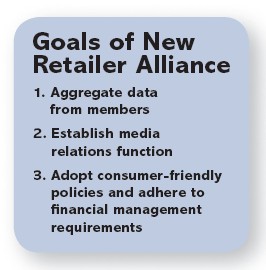
In what looks to be a very good move, several major US retailers led by founding members Amazon, Best Buy, Home Depot, Kohl's, Marriott International, Nike and Subway have announced they are joining together "to create an industry group whose goal is to ensure shoppers have only positive experiences with the gift cards they buy and use. Gift Card growth has been phenomenal over the last few years, but there is certainly an air of uncertainty on the part of consumers due to recent press regarding bankruptcies and their effect on gift card redemption. It also provides, from a marketing standpoint, a move designed to provide more of a consistent flavor. Some gift cards have no fees or expirations, some do. Membership will be limited...you can read about the formation of the RGCA in a PDF file here. New Retailer Gift Card Group to Protect Consumer Interest
The Retail Gift Card Association (RGCA) formed in October with a mission to create consumer-centered policies and procedures for members that will let consumers continue to confidently buy and use the cards that have become the #1 gift choice over last several years."
As gift cards have increased in popularity, many new product offerings have fallen under the gift card label; not all of these are consistent with stringent guidelines proposed for member retailers. Some gift cards have policies with respect to fees and expirations that are clearly not in the best interests of the consumer. Membership in the RGCA is limited to premier retailers with strong brands and longevity in the market, who place particular emphasis on their customers' satisfaction and agree to abide by a set of principles that place the consumer first. The RGCA will be calling on ALL retailers to follow a strict standard that will protect consumers. In addition to strong, consumer-oriented guidelines for merchants, the Association will investigate new initiatives that will provide increased security against fraud and greater protection in the event of business reorganization or bankruptcy. "The RGCA is committed to working with consumers, interest groups and the media to make sure that customers receive products that are effective, safe and still exciting to use," said Leigh Anne Ambrose, Sr. Director Global Incentives and Gift Cards for Marriott International, one of the founding members of the organization.
Dan Horne, a professor at Providence College who has been studying American gift giving for more than 20 years says that gift cards work well and that recent research confirms that they continue to be consumer favorites. "Data shows that gift cards have extremely high levels of satisfaction because they really fill a need," said Professor Horne. "Consumers love to give people the opportunity to go shopping, enjoy a meal out, or experience a night away. In difficult economic times, giving the ability to go out and buy or do the things that are most highly valued is better than taking a guess that someone needs a new sweater or pair of pants." For the top retailers to put together a consumer-focused group makes sense to Horne. "Their success as retailers depends on creating a positive experience and a long term relationship with their customers."
RGCA membership is limited to gift card retailers who have demonstrated commitment to customer friendly practices and significant longevity in the marketplace. For further information about the changing gift card marketplace or the Retail Gift Card Association please contact Carman Wenkoff at 786-270-1276 or carman.wenkoff@TheRGCA.org.
This will make it even easier to Swipe your Card Information! According to ZDNet, criminals can now upgrade (for only $8500) their ATM Skimmers with a SMS Notification built right into the unit. For those outside of the know, an ATM skimmer sits on credit/debit card machines and swipes information as unsuspecting civilians pass their cards through.
Why risk getting arrested during the retrieval process?
Now there's a better way.
In the days of old, scammers would have to physically retrieve the skimmer in order to acquire all that precious information; now, models with built-in SMS notification are becoming available, meaning that numbers, expiration dates and that easy-to-forget three digit code on the back can be shot out instantly after the data is snatched. Word on the street has these devices going for $8,500 a pop, and they can dish out around 2,000 texts. That's $17.50 per text if they're paying $8500 and getting 2000. Still...it costs less than bail!
Here's a snippet...
How does the device work, and how many SMS messages is it capable of sending without recharging the battery?
“Our skimmers read out the magnetic strip in two ways, there and back. The skimmer reads off the streap in both ways if thereis 2 tracks. The skimmers reads off the strip even if there is only 2tracks on the strip (that happens with electrons’). The data can beread off even if a holder passes the card changing speed or with a jerk. The skimmers fail-safely reads off data: 9,999 tries of 10,000 are successful. It works even if a holder passes the card fast and then slow it down. The only situation when the skimmers fails is when the card is stopped in the middle while being passed. It’s a typical error for all card reading devices linked to the magnetic stripes read off technology.
All devices are powered with Li-on batteries. The charger is delivered with devices. The battery can works fully 24 hours (when the temperature is 21 degrees centigrade). We conducted the test on the maximum number of SMS sent using one battery. The result is really great: 1,856 SMS were sent without any charging. The tester were passing a card permanently without any pauses from 03 a.m. to 5 p.m. Usually during a day the number of holders is less than 1,856 and the Skimmers is in the waiting mode, consuming less energy. So, in the normal mode one battery can work 24 hours.”
The manufacturer seems to be a group of experienced ATM skimmers that have applied a great deal of security measures in order to ensure that their customers don’t get caught while retrieving the data. For instance, in one of the cases they seem to have been observing how would the police react upon detecting the skimmer, and “just like they thought” while they were patiently waiting for someone to retrieve the device and bust him, the skimmed data has already been SMS-ed. Interestingly, not every average credit card thief will be able to purchase the device unless he has recommendations and is a known “usual suspect”(continue reading)
There's a company out of Palo Alto, CA with offices in Argentina and Chile, who has been making a lot of news lately. American Banker, MarketWatch, Digital Transaction News and CNBC have all written about this company since November 18th.
Yesterday, In an article written by Sarah Clark from "NRC World" she too talks about a company called Bling Nation, which provides a "local payments network." (Bling Local would seem to be a tad more proper, if that's what they were planning on limiting it to.)
Interesting approach, but will it work? Read on:
"A new payments service from Bling Nation offers local banks the chance to providea low-cost closed-loop payments system within their local community.
Smart stickers attached to customers' mobile phones and low-cost 'BlingTag' readers are at the heart of the system and NFC-based services will be added once handsets become widely available. A new payments platform from Bling Nation aims to enable local banks to provide a low-cost payments service to consumers and merchants within their community.
Because it is designed purely for local transactions Bling's closed loop payments solution can save money by cutting out the usual middle men involved in debit transactions (acquirers, processors and network operators).
Part of this saving is then passed on to merchants, in the form of lower transaction fees (typically 1.5% instead of 3%), and part is kept by the bank, which could expect to keep 38 cents on a $40 transaction instead of nine cents with a mainstream debit card. Editor's Note: This is an interesting approach, as it provides the bank with "4-times" the transaction fee revenue it would normally make.
FLASH CASH: How Bling Nation's NFC-based payments system works. Click image to enlarge.
At the heart of the solution are smart stickers, called 'Bling Tags', issued to consumers for attaching to their mobile phones. To make a purchase at participating merchants, the customer can then simply tap their phone at the dedicated Bling Tag Reader located in the store (currently this is a proprietary point-of-sale device but the company expects to see its reader integrated into existing contactless readers during the course of the next year).
Transaction details are then forwarded to the central 'Bling Link' processor which approves the transaction, debits the consumer's account and credits the merchants account — all in real time — and then sends the consumer an SMS text message confirming the transaction details.
Because this is a real-time platform, the consumer also receives up-to-date information on the balance of their account and a loyalty program is also available that lets the bank add points to a customer's account every time they carry out a transaction, and then redeem those points at any participating merchant.
Will it work? Near Field Communications World spoke with Bling Nation's vice president of sales and business development, Bjorn Ovick, and chief technology officer Federico Murrone about the founders' backgrounds, the security built into the system, the reception the company has had so far from local banks and future developments, particularly with regard to NFC:
The team behind the system has a pretty impressive pedigree. The company's advisory board includes John Reed, a former chairman of Citibank and of the New York Stock Exchange and Jeff Stiefler, a former chairman of Digital Insight and a former president of American Express. Co-CEOs Wences Casares and Meyer Malka have an impressive track record too, having founded Banco Lemon, a Brazilian retail bank, and Patagon, the largest online brokerage in Latin America.
The smart stickers are based on the Mifare protocol and are manufactured for Bling Nation in China.
Security is based around "proprietary algorithms based on industry standards".
The Bling Tags contain two identifiers, one static and one dynamic, enabling the system to work out which account is to be debited — they do not themselves include any account or personal data.
The real-time nature of the system means that any apparent spending abnormalities can prompt a request to the customer to enter their PIN for security.
With regards to NFC, "we will be taking advantage of it when it is deployed," says the team.
The company's technical team has already developed additional NFC-based functionality that could go live as soon as NFC handsets become available. The capability to offer both person-to-person payments and targeted marketing messages are already available, coupon delivery and redemption and the option of choosing between several accounts at the point--of-sale are under development.
Bling Nation is set to go live with its first pilot in the US during the first quarter of 2009. The company is in discussion with five interested banks and is currently in the process of choosing which one of the banks to partner with in one US community for the pilot.
According to a post on TechCrunch, Microsoft will relaunch Windows Live Search under a new brand sometime early next year and they ties that information to what they say is a source within the company.
Here's the post:
"What we don’t know is what that new brand will be, although a few names have been thrown around. According to our source, a “final” decision has been made, but very few people inside of Microsoft are aware of it, and it could change.
Now LiveSide is saying there’s evidence the new search brand will be Kumo, which means “cloud” or “spider” in Japanese.
Why would Microsoft go through yet another rebranding effort? Live.com has a lot of different services under its umbrella (some server software, some client software) in addition to search. It’s also a burgeoning social network.
Over time, we’ve heard, Live.com will become a pure social network and personal productivity portal. You’ll go there to access email, calendar, photos, activity streams, etc. But search belongs somewhere else, and it definitely needs a fresh start.
Microsoft won’t comment on the name change, or even if there is a name change. But our (TechCrunch) sources caution us that nothing has been finalized, and the fate of Yahoo could swing this one way or another as well. So Kumo may very well be the name Microsoft is planning to use, but that decision may change.
And in a post in LiveSide.net, they talk about this rebranding possibility some more...
Microsoft takes control of Kumo.com domain – watch out for the Live Search rebrand
A few months ago Mary Jo Foley got a tip about some new brand names that were being considered for Live Search. One of these, Kumo, jumped out at us due to the sheer scale of TLDs that had been acquired during 2008, aswell as the corporate owner hiding anonymously behind the registrar. Incidentally, Kumo means “cloud” or “spider” in Japanese.
Fast forward to this week and Microsoft suddenly showed its hand. Control of the Kumo.com domain was moved from the registrar to Microsoft, and is now pointing to an internal Microsoft test site (employees only). You can test this out at home by firing up the command prompt (type “cmd” in the Vista start box) and then type “tracert kumo.com”. You’ll see the route to the end location go through a few msn.com servers, and then suddenly you’ll notice all those asterisks, which is where Kumo.com becomes available for internal use only.
We’re guessing that the internal sites are probably similar to the user interface testing versions that had screenshots leaked last month. These are used to run various permutations of the search UI to see how they perform against a control version. While Microsoft employees have admitted publicly that there are branding issues around Live Search, we’re not quite ready to stick our heads above the parapet and say that Kumo will be the new brand name to be announced in a 2009 update. For a start Microsoft and search branding has been a mess for a while and so who outside the company knows where they will actually end up in 6 or 12 months from now. Then there has been separate chatter about a rebrand back to Windows Live Search, which would tie the search engine back to the other Windows Live properties and Windows as a whole. Given the $300m ad campaign – Windows, Life Without Walls – seeks to link Windows + Live + Mobile together, this could make sense. However for the conspiracy theorists out there, which includes us, this could be one way of hiding the real new brand name internally. Perhaps more importantly, a floundering Yahoo, minus Jerry Yang, really does offer some good acquisition incentives for Microsoft. How much should you pay for a few hundred million eyeballs that you hope will turn into search volume? Yahoo shares ended trading on Friday at $9.39, 70% down on the original Microsoft bid of $31 per share. On a random aside, the first trademark request for Kumo as a search engine was filed by a Venezuelan individual. Yet another reason why this name might not ever make it out into the public eye on a Microsoft product. So technical issues around results, relevancy and features aside, would Kumo make a better brand name than Live Search? Does Kumo have the potential marketing strength that is needed to challenge Google? We’re not sure, but hey these Live Search branding posts definitely give us food for thought.

 The Cyber Holiday Pulse Index is an index based on order activity at 25 large Internet retailers. Chase Paymentech is a payment solution provider serving online retailers, restaurants and other businesses.
The "Holiday Pulse Index" found transaction volume at 25 major retailers rose by 14.5 percent Monday. However the average value of each transaction fell 12 percent compared with last year's Cyber Monday.

![Reblog this post [with Zemanta]](https://lh3.googleusercontent.com/blogger_img_proxy/AEn0k_vQszjEaktpCMpGDCyqIYjfiWAbBdP3VqyBfjcve4pfNenW8bIByRsx-68HwN9JJYTUOrSm4TaxS65JdG3oK7qUHLW-MT6Al_DK8vYep1_P8a6ybbhRmQp1Pm21hXs9oTw9hljxAR9Vx1nVHpHIPbfm=s0-d)


![Reblog this post [with Zemanta]](https://lh3.googleusercontent.com/blogger_img_proxy/AEn0k_tx7hs3BMcdBwhqFVFvsLx611l7sMS8rEk8tH52C-MjX3KUMKPCz0wHLhoNvFFFVPHVgOvl5ER3t4p3rKpKgCZEJrbr42ihVHONwwbxGvz0DFQ6YAZH4MDMgjKTd-2miZmZChsHayJkzoCbgOmL2zIK=s0-d)
 7 Things to Know About Buying Gift Cards
![Reblog this post [with Zemanta]](https://lh3.googleusercontent.com/blogger_img_proxy/AEn0k_ulTvHC3tokKnkSbRRg3nMx8zhlAu3zE1qaJar4Ny8GVWNYaIiJ6ICbTi6Vueal5Tjcta2lSceCsz5EUaD508q1ECb11_M386yx_cVNTMFo-AVfWnvg3cMUcHRWBUGulANzSkCixJn3TORooiwqeA_c=s0-d)

![Reblog this post [with Zemanta]](https://lh3.googleusercontent.com/blogger_img_proxy/AEn0k_tmFQUda-cWAFjrS0nJhXjciutju5YdHT6oSH1cgfIXkVvj9iDWNHp84cSdgMmiTlW1QW50LjdA6dH1EUIcDke1-_u5_WY6McTBq-XZv6MJglcJ9XgMWvedP12oZoUYnvMiEwwk7Daq2sA6PEBoNykY=s0-d)


![Reblog this post [with Zemanta]](https://lh3.googleusercontent.com/blogger_img_proxy/AEn0k_tKIuqEGZwyHFG3cfO9yusPJSi9GIpsZ-_EwNB5HFNg66RaDOrO5hfUqxhRA-8-SOENygeF0a8C1DhG3ahq9dFvVTRmLoEWpbeGSANCunwQ2D1v5MXvRtUeF4MObN5Ll5pO4RvNFs9QTUklgKUWf5QH=s0-d)
 According to Internet Retailer, CyberMonday was a good day. One etailer (eBags.com) even posted 50% sales growth over last year...
![Reblog this post [with Zemanta]](https://lh3.googleusercontent.com/blogger_img_proxy/AEn0k_tO6BzasK7lLtnTHgQiqtkpWUP_3dCGFaiQwVEbjFDaWxwpMRoEO71O2ppZDWEiPsnMlG9OoyjC2Tu9395z7Cq9cyUDVsedKuQZCyoiC3LQ07p5rM1L_9S-yAi9gQzxEqF3y33n9DForLJn3RT6w-W1=s0-d)
 US e-commerce registers first year-over-year drop: down 4% in November 2008 - study
![Reblog this post [with Zemanta]](https://lh3.googleusercontent.com/blogger_img_proxy/AEn0k_uhefTduiuXUOjrYG7_3mwWm9tH0abDuqAQxTMte5zJHg3HEvnRI_S50EvTdYTPrZvVNwN35lql4rJRMUVNBXBFkmGvvb_bp6OhBs5gUExdEpX9eYZNAMvPAus4qKbxLK4953KF4zydKu1ePg_famI=s0-d)

![Reblog this post [with Zemanta]](https://lh3.googleusercontent.com/blogger_img_proxy/AEn0k_sxsHFBzHQYIvE6V--Ax7IeE8fS9MHbhKdqs7YU_yhTs_NsDs_Wq_lxNCvXofxrBcrFrktAEMXJlcYyWviq6K9-PQAN9GokUQM-6QUKtgqcRxRcoJGcedaE3j1GJuMxJeUDXZptlm5jkfSd4caxhn0=s0-d)
 Police are urging London businesses to be cautious after arresting two Montreal men from "a very organized group" tampering with debit-card pads and ATM machines.
![Reblog this post [with Zemanta]](https://lh3.googleusercontent.com/blogger_img_proxy/AEn0k_ssUyy1hsoHrhN1d9FhpBD6HOEcV26iliJPMmn6hMRJ49eP3gqSw4o6KiPfRPswItZEhN8ppGlC_SWH4dC_DRwXtnHEBbG6w9XlBm2bUHMRTkzIuCJXStRY2AO688Tgjr1KU3vCyv7Aa8Eue3kLvUXB=s0-d)

![Reblog this post [with Zemanta]](https://lh3.googleusercontent.com/blogger_img_proxy/AEn0k_s6Orv5TmpF1wWQ27vg5hQJ8k-7Sja-shzCzQ861RP7S5iRde1MVfEtscbQvMW4rgRbFI4ETnOk4Z8GouJv_5V_3-G8A8ikGW-1Je7Ip1DSjoMDcxhd9-YpKjvPg_97W6-AGaa2S5L8sJh-1wBnfQw=s0-d)

![Reblog this post [with Zemanta]](https://lh3.googleusercontent.com/blogger_img_proxy/AEn0k_tuRdZlEszFdUhyGDqGLasx4-ldIN6AFEEH_kpz8ZFrVy5I2qU1gadaj8lvtsf15BGi7x040Yc-MgeVUwkes3txWoMtO81HZE5F60w6Iw_qoglHtj8YpKV5jmYiN9jQElQihsUwteUZjo7SxVA3WOKx=s0-d)

![Reblog this post [with Zemanta]](https://lh3.googleusercontent.com/blogger_img_proxy/AEn0k_tSsUthyh4lhJcq7zUAEfb0BE0CLFStj2gAnJ-tigwF4JMnk2RyDlLXVgvqXQiuRrkmTRyUQRnytc1zCG2WWJi49OkNcTghZSs9Dm6KTdbwJ5CByFMddloA6p7eVMGoIKGTV4MqrKo1ijTUMRhZmN4F=s0-d)

![Reblog this post [with Zemanta]](https://lh3.googleusercontent.com/blogger_img_proxy/AEn0k_tfkb9qM7yFiQjw7WF45mbDW2O10nU6Hb4MaKUuWS2bvYhShLlQiqVVahm6s_wB-V_2uKseN2toeZbb33tt6RYdDRQR2MBNhMsWi1AifOf2AAnB4EuyM3a5dj4ghFkkUyQ4gAUQuQDIEh0uVoT5_j4=s0-d)
 Fraud on UK cards 'higher overseas'
![Reblog this post [with Zemanta]](https://lh3.googleusercontent.com/blogger_img_proxy/AEn0k_vMgQY9pFXkIzEI14DT2AtqfsHwWRek8b1ZQ2Fb4-fJN6H90Qg8bSXBYLkWZ7PdZRzCF27xpXw6lIHEEM-3QJ7he17z1F6So4jBNWUhtnUeNFX5vcXc0m8j9nXQiPQi-_l_e8jlh4mYImN3VLdCZiKz=s0-d)

![Reblog this post [with Zemanta]](https://lh3.googleusercontent.com/blogger_img_proxy/AEn0k_vabAxP21w7iNSYV47vlfzGBawQtFa2HggIw_nQTk3lHthIlF_S4OBJ3c5cuNUmnTdfcBBu4Vzc9mJ0hPSuqtEj20AWYbAJ0vl22j6hAjhsh-8I9LvdHFB14xC766a4Wjefajpvdw7zDlUIq3pC6P_b=s0-d)
 In what looks to be a very good move, several major US retailers led by founding members Amazon,
  Dan Horne, a professor at Providence College who has been studying American gift giving for more than 20 years says that gift cards work well and that recent research confirms that they continue to be consumer favorites. "Data shows that gift cards have extremely high levels of satisfaction because they really fill a need," said Professor Horne. "Consumers love to give people the opportunity to go shopping, enjoy a meal out, or experience a night away. In difficult economic times, giving the ability to go out and buy or do the things that are most highly valued is better than taking a guess that someone needs a new sweater or pair of pants." For the top retailers to put together a consumer-focused group makes sense to Horne. "Their success as retailers depends on creating a positive experience and a long term relationship with their customers."
![Reblog this post [with Zemanta]](https://lh3.googleusercontent.com/blogger_img_proxy/AEn0k_sTvPhoil_yiStkflKGUlyHnhvTLbl-MW_2pULv5JAqtBFloHuwIH2OvDdeNztALPN4gEvXm-xPA8l_0ElhVBAA9bcd9EjDx2vpsOjcqdHTZ29cl4GQXVFBE2fxlQfUysXbqT7W7RZmUV_nq3j1GCgz=s0-d)


![Reblog this post [with Zemanta]](https://lh3.googleusercontent.com/blogger_img_proxy/AEn0k_s_Ce8DfnpXk5WDZvVFXhBzlf8b1nhCDTJjRU1tMxOIs0sQ44Pd9AEa5842nuM2WaOqTwF1ld3q4zT0JVD8bUR_xANFAdC8Q3zY2f5RdBVZd3QGkQ9we2VFWklAcKzfObkL7mtPeFPVCFEzZzEXK4HB=s0-d)


![Reblog this post [with Zemanta]](https://lh3.googleusercontent.com/blogger_img_proxy/AEn0k_s292fDF401rI2UiOo_yEySZVVoRQJJyL6MIEV7-7TF_RjczpuOA2wldkY87epD5oOxgQi0FZ_J1NDNtm_MilRfwSVQpYVdHQEQdtmjzgOuPFPOFJdd0euY4yappTrzJcO1DxicL2BtxrQ4_vMX9Qxo=s0-d)