Showing posts with label Anti-Phishing Working Group. Show all posts

Wednesday, June 2, 2010

Counter-ecrime Group Commits Resources to Goals of Multinational Day of Action Against Mass Market Fraud


APWG Proffers Response Tools for Online Consumer Safety Education and Unifying the Global Response to Electronic Crime
http://www.antiphishing.orgCAMBRIDGE, Mass.--(BUSINESS WIRE)--The APWG is joining law enforcement and regulatory authorities in five nations around the world in a multinational “Day of Action” against massmarket fraud, by committing its data logistics resources and consumer education programs to law enforcement efforts to engage this kind of fraud as an international threat deserving of a globally coordinated response.
Law enforcement and regulatory authorities in the United States of America, Australia, Canada, Netherlands and the United Kingdom have marked June 1 as a coordinated “Day of Action” to warn consumers worldwide about the dangers of mass‐market fraud, including its online variants.
The APWG, a global association of some 1800 technology, consumer and financial services companies, government agencies and research institutions working to coordinate industry and government’s effort against electronic crime, is committing three specific programs to the task of unifying the global response against electronic crime through its free data logistics resources and consumer education programs.
APWG/CMU Phishing Education Landing Page Program: The system, new operating in 20 languages, redirects a consumer who has clicked on a link in a phishing email to a page of instruction in his own language about how to avoid phishing in the future. It is freely available to any ISP to replace a phishing website with a redirection script to the resource at: http://education.apwg.org/r/ The full program description is here: http://education.apwg.org/r/about.html
The APWG/NCSA Online Consumer Safety and Security Messaging Convention: The Convention is crafting a public message to raise cybersecurity awareness and positively change how people secure their computers and networks and interact online, leading to more cybersecure societies. The Convention’s messaging, to be announced this Fall, will cut through the cluttered marketplace of information, tips and advice and give all stakeholding companies, government agencies and NGOs a common safety message to promote. The full program description is here:http://education.apwg.org/safety/about.html
The IODEF Extensions for eCrime Reporting: The APWG has developed and promoted extensions to a standardized data sharing format, the Internet Engineering Task Force’s Incident Object Document Exchange Format (IODEF), specifically to give ecrime responders and investigators a common, consistent data format to exchange and process electronic crime event reports. This XML-based schema is complete enough to give the community of ecrime responders and investigators a pupore-built mechanism for automating the processing of ecrime event reports, potentially enabling those responses to become contemporaneous with the execution of the crimes themselves. The full program description is here: http://www.antiphishing.org/iodefFormat.html A description of a test pilot program for the schema is here: http://www.antiphishing.org/reports/IODEF_Pilot_Program.pdf
APWG Secretary General Peter Cassidy said, “Electronic crime is different. It requires a response paradigm that hues closer to a public health agency collaboration than conventional law enforcement. Toward that vision, APWG members and research collaborators have been cultivating common resources that can pay large dividends in common safety at little or no cost. The APWG is honored to be able to participate in the ‘Day of Action’ and make its resources available to the community that is engaging ecrime worldwide.”
About the APWG:
The APWG, founded in 2003 as the Anti-Phishing Working Group, is a global industry, law enforcement, and government coalition focused on eliminating the identity theft and fraud that result from the growing problem of phishing, email spoofing, and crimeware. Membership is open to qualified financial institutions, online retailers, ISPs, the law enforcement community and solutions providers. There are more than 1,800 companies, government agencies and NGOs participating in the APWG and more than 3,300 members. The APWG's Web site offers the public and industry information about phishing and email fraud, including identification and promotion of pragmatic technical solutions that provide immediate protection. APWG's corporate sponsors are as follows:
AT&T(T), Able NV, Afilias Ltd., AhnLab, AVG Technologies, BillMeLater, BBN Technologies, Blue Coat, BlueStreak, BrandMail, BrandProtect, Bsecure Technologies, Check Point Software Technologies, Cisco (CSCO), Clear Search, Cloudmark, Cyveillance, DigiCert, DigitalEnvoy, DigitalResolve, Digital River, Easy Solutions, eBay/PayPal (EBAY), Entrust (ENTU), eEye, ESET, Fortinet, FraudWatch International, FrontPorch, F-Secure, Goodmail Systems, GeoTrust, GlobalSign, GoDaddy, Goodmail Systems, GuardID Systems, HomeAway, Huawei Symantec, IronPort, HitachiJoHo, ING Bank, Iconix, Internet Identity, Internet Security Systems, Intuit, IOvation, IronPort, IS3, IT Matrix, Kaspersky Labs, Kindsight, Lenos Software, LightSpeed Systems, MailFrontier, MailShell, MarkMonitor, M86Security, McAfee (MFE), MasterCard, MessageLevel, Microsoft (MSFT), MicroWorld, Mirapoint, MySpace (NWS), MyPW, MX Logic, NameProtect, National Australia Bank (ASX: NAB) Netcraft, NetStar, Network Solutions, NeuStar, Nominum, Panda Software, Phoenix Technologies Inc. (PTEC), Phishme.com, Phorm, Prevx, The Planet, SIDN, SalesForce, Radialpoint, RSA Security (EMC), RuleSpace, SecureBrain, Secure Computing (SCUR), S21sec, Sigaba, SoftForum, SOPHOS, SquareTrade, SurfControl, SunTrust, Symantec (SYMC), TDS Telecom, Telefonica (TEF), Trend Micro (TMIC), Tricerion, TriCipher, TrustedID, Tumbleweed Communications (TMWD), Vasco (VDSI), VeriSign (VRSN), Visa, Wal-Mart (WMT), Websense Inc. (WBSN) and Yahoo! (YHOO).

Contacts

Permalink: http://www.businesswire.com/news/home/20100531005262/en/Counter-ecrime-Group-Commits-Resources-Goals-Multinational-Day


Reblog this post [with Zemanta]

Counter-ecrime Group Commits Resources to Goals of Multinational Day of Action Against Mass Market Fraud


APWG Proffers Response Tools for Online Consumer Safety Education and Unifying the Global Response to Electronic Crime
http://www.antiphishing.orgCAMBRIDGE, Mass.--(BUSINESS WIRE)--The APWG is joining law enforcement and regulatory authorities in five nations around the world in a multinational “Day of Action” against massmarket fraud, by committing its data logistics resources and consumer education programs to law enforcement efforts to engage this kind of fraud as an international threat deserving of a globally coordinated response.
Law enforcement and regulatory authorities in the United States of America, Australia, Canada, Netherlands and the United Kingdom have marked June 1 as a coordinated “Day of Action” to warn consumers worldwide about the dangers of mass‐market fraud, including its online variants.
The APWG, a global association of some 1800 technology, consumer and financial services companies, government agencies and research institutions working to coordinate industry and government’s effort against electronic crime, is committing three specific programs to the task of unifying the global response against electronic crime through its free data logistics resources and consumer education programs.
APWG/CMU Phishing Education Landing Page Program: The system, new operating in 20 languages, redirects a consumer who has clicked on a link in a phishing email to a page of instruction in his own language about how to avoid phishing in the future. It is freely available to any ISP to replace a phishing website with a redirection script to the resource at: http://education.apwg.org/r/ The full program description is here: http://education.apwg.org/r/about.html
The APWG/NCSA Online Consumer Safety and Security Messaging Convention: The Convention is crafting a public message to raise cybersecurity awareness and positively change how people secure their computers and networks and interact online, leading to more cybersecure societies. The Convention’s messaging, to be announced this Fall, will cut through the cluttered marketplace of information, tips and advice and give all stakeholding companies, government agencies and NGOs a common safety message to promote. The full program description is here:http://education.apwg.org/safety/about.html
The IODEF Extensions for eCrime Reporting: The APWG has developed and promoted extensions to a standardized data sharing format, the Internet Engineering Task Force’s Incident Object Document Exchange Format (IODEF), specifically to give ecrime responders and investigators a common, consistent data format to exchange and process electronic crime event reports. This XML-based schema is complete enough to give the community of ecrime responders and investigators a pupore-built mechanism for automating the processing of ecrime event reports, potentially enabling those responses to become contemporaneous with the execution of the crimes themselves. The full program description is here: http://www.antiphishing.org/iodefFormat.html A description of a test pilot program for the schema is here: http://www.antiphishing.org/reports/IODEF_Pilot_Program.pdf
APWG Secretary General Peter Cassidy said, “Electronic crime is different. It requires a response paradigm that hues closer to a public health agency collaboration than conventional law enforcement. Toward that vision, APWG members and research collaborators have been cultivating common resources that can pay large dividends in common safety at little or no cost. The APWG is honored to be able to participate in the ‘Day of Action’ and make its resources available to the community that is engaging ecrime worldwide.”
About the APWG:
The APWG, founded in 2003 as the Anti-Phishing Working Group, is a global industry, law enforcement, and government coalition focused on eliminating the identity theft and fraud that result from the growing problem of phishing, email spoofing, and crimeware. Membership is open to qualified financial institutions, online retailers, ISPs, the law enforcement community and solutions providers. There are more than 1,800 companies, government agencies and NGOs participating in the APWG and more than 3,300 members. The APWG's Web site offers the public and industry information about phishing and email fraud, including identification and promotion of pragmatic technical solutions that provide immediate protection. APWG's corporate sponsors are as follows:
AT&T(T), Able NV, Afilias Ltd., AhnLab, AVG Technologies, BillMeLater, BBN Technologies, Blue Coat, BlueStreak, BrandMail, BrandProtect, Bsecure Technologies, Check Point Software Technologies, Cisco (CSCO), Clear Search, Cloudmark, Cyveillance, DigiCert, DigitalEnvoy, DigitalResolve, Digital River, Easy Solutions, eBay/PayPal (EBAY), Entrust (ENTU), eEye, ESET, Fortinet, FraudWatch International, FrontPorch, F-Secure, Goodmail Systems, GeoTrust, GlobalSign, GoDaddy, Goodmail Systems, GuardID Systems, HomeAway, Huawei Symantec, IronPort, HitachiJoHo, ING Bank, Iconix, Internet Identity, Internet Security Systems, Intuit, IOvation, IronPort, IS3, IT Matrix, Kaspersky Labs, Kindsight, Lenos Software, LightSpeed Systems, MailFrontier, MailShell, MarkMonitor, M86Security, McAfee (MFE), MasterCard, MessageLevel, Microsoft (MSFT), MicroWorld, Mirapoint, MySpace (NWS), MyPW, MX Logic, NameProtect, National Australia Bank (ASX: NAB) Netcraft, NetStar, Network Solutions, NeuStar, Nominum, Panda Software, Phoenix Technologies Inc. (PTEC), Phishme.com, Phorm, Prevx, The Planet, SIDN, SalesForce, Radialpoint, RSA Security (EMC), RuleSpace, SecureBrain, Secure Computing (SCUR), S21sec, Sigaba, SoftForum, SOPHOS, SquareTrade, SurfControl, SunTrust, Symantec (SYMC), TDS Telecom, Telefonica (TEF), Trend Micro (TMIC), Tricerion, TriCipher, TrustedID, Tumbleweed Communications (TMWD), Vasco (VDSI), VeriSign (VRSN), Visa, Wal-Mart (WMT), Websense Inc. (WBSN) and Yahoo! (YHOO).

Contacts

Permalink: http://www.businesswire.com/news/home/20100531005262/en/Counter-ecrime-Group-Commits-Resources-Goals-Multinational-Day


Reblog this post [with Zemanta]

Wednesday, May 12, 2010

APWG Report Finds a Single Electronic Crime Syndicate Responsible for Most Phishing Attacks in Second Half of 2009


SAO PAULO, Brazil--(BUSINESS WIRE)--A single electronic crime syndicate employing advanced malware was responsible for two-thirds of all the phishing attacks detected in the second half of 2009 -- and was responsible for the overall increase in phishing attacks recorded across the Internet, according to a report released today by the Anti-Phishing Working Group (APWG).
“Avalanche's relentless activities led to the development of some very effective counter-measures.”
The report authors found that the Avalanche phishing gang was responsible for some 66 percent of all phishing attacks launched in 2H2009. Avalanche successfully targeted some 40 banks and online service providers, and vulnerable or non-responsive domain name registrars and registries.
"Avalanche's impact was unprecedented," said Greg Aaron, Director of Key Account Management and Domain Security at Afilias and co-author of the study. "This one criminal group was responsible for two-thirds of the world's phishing, and also combined it with sophisticated crimeware distribution. The losses by banks and individual Internet users were staggering."
"Avalanche" is the name given to the world's most prolific phishing gang, and to the infrastructure it uses to host phishing sites. This criminal enterprise perfected a system for deploying mass-produced phishing sites, and for distributing malware that gives the gang additional capabilities for theft.
Rod Rasmussen, founder and CTO of Internet Identity and co-author of the study, said, "Avalanche's relentless activities led to the development of some very effective counter-measures." Rasmussen explained, "The data shows that the anti-phishing community -- including the target institutions, security responders, and domain name registries and registrars -- got very good at identifying and shutting down Avalanche's attacks on a day-to-day basis. Further, a coordinated action against Avalanche's infrastructure in November has led to an ongoing, significant reduction in attacks through April 2010."
Aaron and Rasmussen are reporting their findings today at the APWG's fourth annual Counter eCrime Operations Summit, an international conference for industry and law enforcement professionals who respond to electronic crime and protect consumers and businesses from electronic crime.
The new report also contains analysis of other phishing trends. Key findings and highlights include:
  • Phishing uptimes have dropped by a third since 2008. Uptimes are a vital measure of how damaging phishing attacks are, and the drop indicates the success of mitigation efforts.

  • The amount of Internet domain names and numbers used for phishing has remained fairly steady over the past two-and-one-half years, a period in which the number of registered domain names in the world has grown.

  • The great majority of phishing continued to be concentrated in certain name spaces -- just five top-level domains (TLDs).

The study is available at:


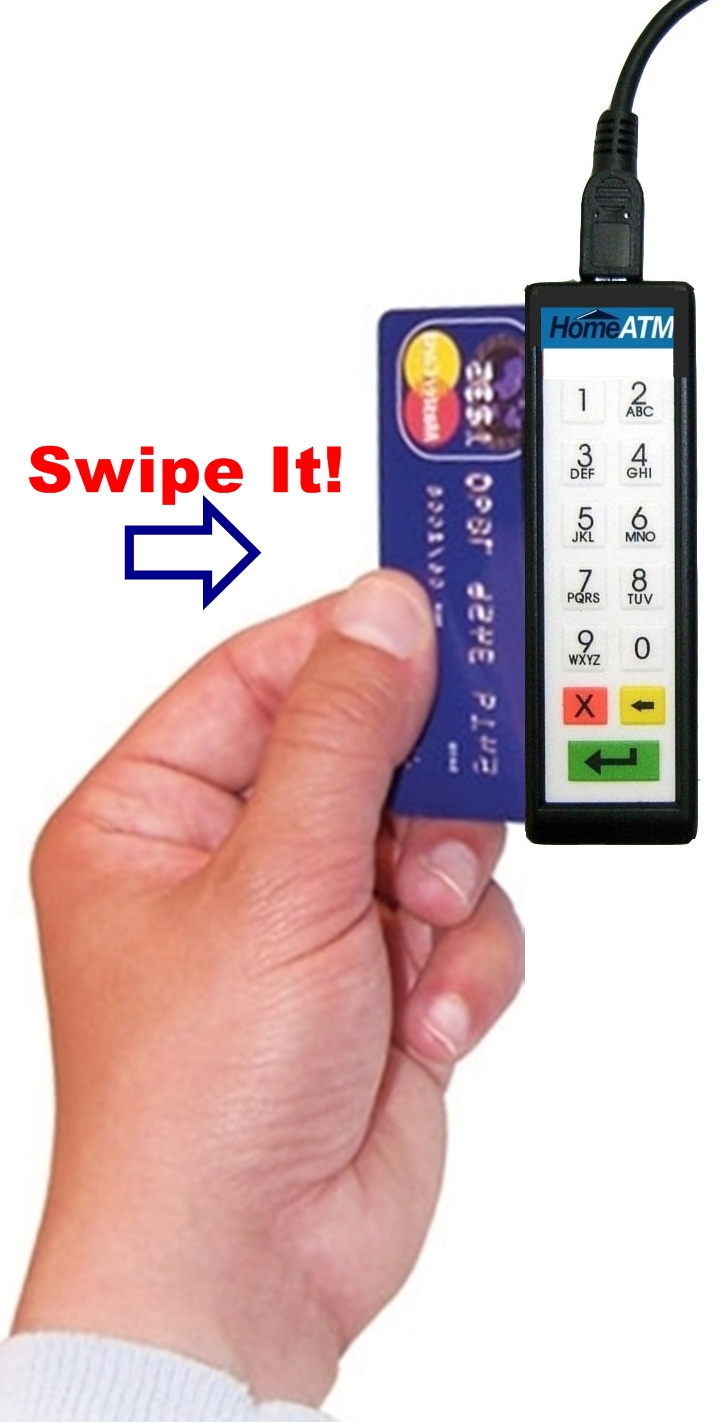
Start Swiping, Stop Typing and Phishing is Eliminated
About the APWG:
The APWG, founded in 2003 as the Anti-Phishing Working Group, is a global industry, law enforcement, and government coalition focused on eliminating the identity theft and fraud that result from the growing problem of phishing, email spoofing, and crimeware. Membership is open to qualified financial institutions, online retailers, ISPs, the law enforcement community and solutions providers. There are more than 1,800 companies, government agencies and NGOs participating in the APWG and more than 3,300 members. The APWG's Web site offers the public and industry information about phishing and email fraud, including identification and promotion of pragmatic technical solutions that provide immediate protection. APWG's corporate sponsors are as follows:
AT&T(T), Able NV, Afilias Ltd., AhnLab, AVG Technologies, BillMeLater, BBN Technologies, Blue Coat, BlueStreak, BrandMail, BrandProtect, Bsecure Technologies, Check Point Software Technologies, Cisco (CSCO), Clear Search, Cloudmark, Cyveillance, DigiCert, DigitalEnvoy, DigitalResolve, Digital River, Easy Solutions, eBay/PayPal (EBAY), Entrust (ENTU), eEye, Fortinet, FraudWatch International, FrontPorch, F-Secure, Goodmail Systems, GeoTrust, GlobalSign, GoDaddy, Goodmail Systems, GuardID Systems, HomeAway, IronPort, HitachiJoHo, ING Bank, Iconix, Internet Identity, Internet Security Systems, Intuit, IOvation, IronPort, IS3, IT Matrix, Kaspersky Labs, Kindsight, Lenos Software, LightSpeed Systems, MailFrontier, MailShell, MarkMonitor, Marshall8e6, McAfee (MFE), MasterCard, MessageLevel, Microsoft (MSFT), MicroWorld, Mirapoint, MySpace (NWS), MyPW, MX Logic, NameProtect, National Australia Bank (ASX: NAB) Netcraft, NetStar, Network Solutions, NeuStar, Nominum, Panda Software, Phoenix Technologies Inc. (PTEC), Phishme.com, Phorm, Prevx, The Planet, SIDN, SalesForce, Radialpoint, RSA Security (EMC), RuleSpace, SecureBrain, Secure Computing (SCUR), S21sec, Sigaba, SoftForum, SOPHOS, SquareTrade, SurfControl, SunTrust, Symantec (SYMC), TDS Telecom, Telefonica (TEF), Trend Micro (TMIC), Tricerion, TriCipher, TrustedID, Tumbleweed Communications (TMWD), Vasco (VDSI), VeriSign (VRSN), Visa, Wal-Mart (WMT), Websense Inc. (WBSN) and Yahoo! (YHOO).

Contacts

APWG

Peter Cassidy, 617-669-1123

pcassidy@antiphishing.org

http://www.antiphishing.org

or

Afilias

Heather D. Read, 215-706-5777

hread@afilias.info

http://www.afilias.info

or

Internet Identity

pr@internetidentity.com

253-590-4100

http://www.internetidentity.com
Permalink: http://www.businesswire.com/news/home/20100512005973/en/APWG-Report-Finds-Single-Electronic-Crime-Syndicate

APWG Report Finds a Single Electronic Crime Syndicate Responsible for Most Phishing Attacks in Second Half of 2009


SAO PAULO, Brazil--(BUSINESS WIRE)--A single electronic crime syndicate employing advanced malware was responsible for two-thirds of all the phishing attacks detected in the second half of 2009 -- and was responsible for the overall increase in phishing attacks recorded across the Internet, according to a report released today by the Anti-Phishing Working Group (APWG).
“Avalanche's relentless activities led to the development of some very effective counter-measures.”
The report authors found that the Avalanche phishing gang was responsible for some 66 percent of all phishing attacks launched in 2H2009. Avalanche successfully targeted some 40 banks and online service providers, and vulnerable or non-responsive domain name registrars and registries.
"Avalanche's impact was unprecedented," said Greg Aaron, Director of Key Account Management and Domain Security at Afilias and co-author of the study. "This one criminal group was responsible for two-thirds of the world's phishing, and also combined it with sophisticated crimeware distribution. The losses by banks and individual Internet users were staggering."
"Avalanche" is the name given to the world's most prolific phishing gang, and to the infrastructure it uses to host phishing sites. This criminal enterprise perfected a system for deploying mass-produced phishing sites, and for distributing malware that gives the gang additional capabilities for theft.
Rod Rasmussen, founder and CTO of Internet Identity and co-author of the study, said, "Avalanche's relentless activities led to the development of some very effective counter-measures." Rasmussen explained, "The data shows that the anti-phishing community -- including the target institutions, security responders, and domain name registries and registrars -- got very good at identifying and shutting down Avalanche's attacks on a day-to-day basis. Further, a coordinated action against Avalanche's infrastructure in November has led to an ongoing, significant reduction in attacks through April 2010."
Aaron and Rasmussen are reporting their findings today at the APWG's fourth annual Counter eCrime Operations Summit, an international conference for industry and law enforcement professionals who respond to electronic crime and protect consumers and businesses from electronic crime.
The new report also contains analysis of other phishing trends. Key findings and highlights include:
  • Phishing uptimes have dropped by a third since 2008. Uptimes are a vital measure of how damaging phishing attacks are, and the drop indicates the success of mitigation efforts.

  • The amount of Internet domain names and numbers used for phishing has remained fairly steady over the past two-and-one-half years, a period in which the number of registered domain names in the world has grown.

  • The great majority of phishing continued to be concentrated in certain name spaces -- just five top-level domains (TLDs).

The study is available at:


Start Swiping, Stop Typing and Phishing is Eliminated
About the APWG:
The APWG, founded in 2003 as the Anti-Phishing Working Group, is a global industry, law enforcement, and government coalition focused on eliminating the identity theft and fraud that result from the growing problem of phishing, email spoofing, and crimeware. Membership is open to qualified financial institutions, online retailers, ISPs, the law enforcement community and solutions providers. There are more than 1,800 companies, government agencies and NGOs participating in the APWG and more than 3,300 members. The APWG's Web site offers the public and industry information about phishing and email fraud, including identification and promotion of pragmatic technical solutions that provide immediate protection. APWG's corporate sponsors are as follows:
AT&T(T), Able NV, Afilias Ltd., AhnLab, AVG Technologies, BillMeLater, BBN Technologies, Blue Coat, BlueStreak, BrandMail, BrandProtect, Bsecure Technologies, Check Point Software Technologies, Cisco (CSCO), Clear Search, Cloudmark, Cyveillance, DigiCert, DigitalEnvoy, DigitalResolve, Digital River, Easy Solutions, eBay/PayPal (EBAY), Entrust (ENTU), eEye, Fortinet, FraudWatch International, FrontPorch, F-Secure, Goodmail Systems, GeoTrust, GlobalSign, GoDaddy, Goodmail Systems, GuardID Systems, HomeAway, IronPort, HitachiJoHo, ING Bank, Iconix, Internet Identity, Internet Security Systems, Intuit, IOvation, IronPort, IS3, IT Matrix, Kaspersky Labs, Kindsight, Lenos Software, LightSpeed Systems, MailFrontier, MailShell, MarkMonitor, Marshall8e6, McAfee (MFE), MasterCard, MessageLevel, Microsoft (MSFT), MicroWorld, Mirapoint, MySpace (NWS), MyPW, MX Logic, NameProtect, National Australia Bank (ASX: NAB) Netcraft, NetStar, Network Solutions, NeuStar, Nominum, Panda Software, Phoenix Technologies Inc. (PTEC), Phishme.com, Phorm, Prevx, The Planet, SIDN, SalesForce, Radialpoint, RSA Security (EMC), RuleSpace, SecureBrain, Secure Computing (SCUR), S21sec, Sigaba, SoftForum, SOPHOS, SquareTrade, SurfControl, SunTrust, Symantec (SYMC), TDS Telecom, Telefonica (TEF), Trend Micro (TMIC), Tricerion, TriCipher, TrustedID, Tumbleweed Communications (TMWD), Vasco (VDSI), VeriSign (VRSN), Visa, Wal-Mart (WMT), Websense Inc. (WBSN) and Yahoo! (YHOO).

Contacts

APWG

Peter Cassidy, 617-669-1123

pcassidy@antiphishing.org

http://www.antiphishing.org

or

Afilias

Heather D. Read, 215-706-5777

hread@afilias.info

http://www.afilias.info

or

Internet Identity

pr@internetidentity.com

253-590-4100

http://www.internetidentity.com
Permalink: http://www.businesswire.com/news/home/20100512005973/en/APWG-Report-Finds-Single-Electronic-Crime-Syndicate

Wednesday, March 10, 2010

No Brand is Safe from Phishing/Hijacking

Bank Info Security musings on the recent APWG report...


Online fraud schemes and malware are casting an even wider net, far beyond the large national banks and well-known retailers, as phishers seek new victims.


This is the word from the Anti-Phishing Working Group (APWG), which has just issued its latest quarterly report on phishing trends.


According to the APWG's fourth quarter 2009 report, the number of hijacked brands hit a record 356 in October, compared to the previous record month of 341 in August 2009.


Continue Reading

Friday, March 5, 2010

APWG Report: More Brands Subject to Criminal Exploitation than Ever, with Record High in Q4, 2009


http://www.antiphishing.orgIncreasing reports of customized, focused phishing attacks against high-value targets point to troubling trend


LOS ALTOS, Calif. & CAMBRIDGE, Mass.--(EON: Enhanced Online News)--The APWG’s Q4, 2009 Phishing Activity Trends Report reveals that eCrime syndicates are expanding the base of brands they exploit for online fraud far beyond major financial institutions and online merchants, with the number of hijacked brands reaching a record 356 in October, up nearly 4.4 percent from the previous record of 341 in August 2009.


APWG Secretary General Peter Cassidy said, “No brand is safe from the threat of spoofing for the purposes of online fraud. Once, only the largest banks were targeted. Now, every kind of enterprise from banks and credit unions of all sizes to charities to, in a recent case, a hardware manufacturer, are now seeing their brands exploited in all manner of fraud scheme.”


While the number of unique phishing reports submitted to the APWG in Q4 declined nearly 29 percent from the all-time high of 40,621 in August, dropping to 28,897 reports in December, the statistics obscure a more troubling trend. Member reports to APWG and research reviews in Q3 and Q4, however, reveal a substantial increase in phishing focused on high-value targets such as personnel with treasury authority.


APWG Chairman Dave Jevans said, “Spear-phishing and whale-phishing, where targeted individuals inside of corporations, or of high net worth, appears to be increasing.


“Phishers and malware attackers are sending emails to individuals in a highly targeted fashion, attempting to gain access to corporate online banking systems, corporate VPN networks, and other online resources. These attacks do not contribute significantly to the overall number of unique phishing emails that are sent, as they are not using broad-based spam. Rather, the attackers customize their email messages to target individual users,” Jevans said.


The report is available here: http://www.antiphishing.org/reports/apwg_report_Q4_2009.pdf


The APWG Q4, 2009 Trends Report, combining data from APWG members MarkMonitor, Websense and Panda Security with the APWG’s own statistics, also reported:


● October’s high of 46,522 unique phishing websites detected by the APWG was down 18 percent from the August, 2009 record high of 56,362

● The number of unique brand-domain pairs rose to a quarter high of 23,380 in October, still down 4 percent from the all-time high of 24,438 in August, 2009

● There was an increase in rogueware variations of 36 percent in Q4 (252,025), up from Q3 (158,980)

● The total number of infected computers dropped to 10,305,805 in Q4, representing more than 47.8% percent of the total sample of scanned computers, the lowest infection rate recorded in 2009


The results of the Q4 report are of grave concern to the global membership of the APWG and the research centers, treaty organizations, law enforcement agencies, government agencies and industry associations with which the APWG corresponds.

Those members, correspondents and researchers from around the world will be considering the results of this Trends report and other eCrime research at the fourth annual Counter-eCrime Operations Summit (CeCOS) in Sao Paulo, Brazil on May 11-13. CeCOS IV is a three-day event that examines the eCrime phenomenon from the point of view of the responder or manager who has to engage eCrime on a workaday basis. The conference is sponsored by EasySolutions and MarkMonitor and co-hosted by CERT.br.


The conference agenda is here:

http://www.antiphishing.org/events/2010_opSummit.html


About the APWG


The APWG, founded in 2003 as the Anti-Phishing Working Group, is a global industry, law enforcement, and government coalition focused on eliminating the identity theft and fraud that result from the growing problem of phishing, email spoofing, and crimeware. Membership is open to qualified financial institutions, online retailers, ISPs, the law enforcement community and solutions providers. There are more than 1,800 companies, government agencies and NGOs participating in the APWG and more than 3,500 members. The APWG's Web site offers the public and industry information about phishing and email fraud, including identification and promotion of pragmatic technical solutions that provide immediate protection.


Thanks for Visiting - Bookmark us or Add to your Favorites and Find Out What's Going on Tomorrow in the Payments Industry

Disqus for ePayment News