Prosper, a company who was at FinovateStartup09 along with HomeATM has announced that it is temporarily ceasing operations...again. Here's a blurb:
Prosper stops its operations again
Prosper US, a person-to-person loan exchanger, has shut down its operations again, just a couple of weeks after coming out of an enforced six month spell on the sidelines. Like competitor outfits Lending Club and Loanio, Prosper was forced to close its doors to new loans last year as it looked to register its business with the Securities and Exchange Commission. But last month it received an intra-state exemption from the California Department of Corporations. This meant Californian residents and businesses could make loans, with anyone in the US able to borrow.
However, SEC registration was not completed and the company has now "decided to voluntarily shut down" operations until this is done. "As a result, due to regulatory concerns, and in the interest of working toward getting our registration statement effective as soon as possible, we are discontinuing our California intrastate offering at this time," – said the representative of the company. Existing lenders and borrowers will not suffer.
There was no explanation provided by the company for the quick U-turn or guidance on when it expects to start business again, saying only this will be "in the hopefully not too distant future".
The Heartland Fallout continues. The Boston Globe reports today that Tens of Thousands of credit and debit cards had to be reissued in Massachusetts due to the sniffer program that infiltrated Heartland Payments Systems. At $200 plus per card, the bill keeps getting bigger. Will Heartland survive? Why did their stock go up from $4 to $9? Sell Sell Sell!
Data breach ensnares many in Mass.
Credit and debit card numbers compromised
By Todd Wallack | Globe Staff / May 13, 2009
Tens of thousands of Massachusetts consumers have been forced to get new credit or debit cards after cyber thieves hacked one of the nation's largest payment processors and accessed consumers' account information.
Since the security breach at Heartland Payment Systems Inc. was disclosed four months ago, 17 Massachusetts banks have reported that the thieves potentially gained access to many of their customers' credit or debit card numbers and other personal information, according to documents the companies submitted to state regulators; each of the banks said the incidents affected more than 1,000 customers.
For instance, Rockland Trust Co. told the state it was forced to reissue nearly 19,000 MasterCard debit cards and 64 Visa credit cards to customers this spring, while East Boston Savings Bank said it replaced the debit cards for as many as 7,600 customers. Salem Five Cents Sav ings Bank said the debit cards for 7,200 of its customers, mostly Massachusetts residents, were "compromised" by the breach and issued new cards to customers with active accounts earlier this year.
While most banks gave customers new cards to prevent potential fraud, a few others said they were instead monitoring customer accounts. The banks also notified customers of the breach, as required by state law.
So far, though, officials said there have been few reports of outright theft from customers.
Rockland Trust told the state it had tallied $33,000 in fraudulent purchases in accounts affected by the breach as of February. The bank did not provide more details and declined to comment on the breach.
Meanwhile, two other banks, Newburyport Five Cents Savings Bank and Webster Five Cents Savings Bank in Auburn, each told the state they had not detected any theft linked to the incident. A Salem Five spokesman declined to comment, while East Boston Savings Bank did not return a call seeking comment.
"Anecdotally, we've seen only small amounts of fraud," said Jason Maloni, a Heartland spokesman.
Maloni said the breach exposed credit and debit card numbers and expiration dates, and in some cases customer names, but not social security numbers, addresses, and other personal information, which may limit the impact of the theft. Heartland, based in Princeton, N.J., said it doesn't know how many customers were affected in Massachusetts.
However, Heartland was hit with a multimillion-dollar fine by MasterCard for "allegedly not taking appropriate action" after being notified of the security breach. Heartland said it is appealing that fine.
Meanwhile, the company is also under investigation by numerous federal agencies, including the Securities and Exchange Commission and the US attorney in New Jersey for how it handled the breach, as well as alleged stock trades made by company officers in the days after it discovered the intrusion. Heartland shares dropped sharply after the company disclosed the breach Jan. 20. The company's stock, which peaked at more than $18 per share in early January, fell rapidly in the days after the disclosure, going as low as $4 in March. It closed yesterday at $9.04. (Editor's Note: ???? is it all the end-to-end encryption propaganda? I don't see how they could possibly survive. Massachusetts had to issue tens of thousands of cards. The cost for each one is estimated at $202.00. There's 49 other states and the breach is not limited to the USA. Bermuda, Guam etc. have all been affected. Continue Reading at the Boston Globe
Pirated Windows 7 OS Comes With Trojan, Builds A Botnet At its peak, the Trojan-infested counterfeit version of Microsoft's prerelease version of Windows 7 was infecting more than 200 PCs an hour
By Kelly Jackson Higgins | DarkReading
A pirated version of the new Windows 7 operating system release candidate that has been circulating around the Internet is also building out a botnet.
The rogue OS, which is rigged with a Trojan downloader, at one point had around 27,000 bots in its control as of May 10, when researchers took over the command and control (C&C) server that communicated with the bots and served them additional malware. At the height of the botnet buildup, the botmaster was recruiting more than 200 machines an hour, says Tripp Cox, vice president of engineering for Damballa. The victims initially downloaded the pirated OS via popular bootlegged software sites and online forums. Continue DarkReading
MasterCard announced today that they are pleased to announce that they can do mobile money transfers.
PURCHASE, N.Y., May 13, 2009 /PRNewswire-FirstCall via COMTEX/ -- MasterCard (MA) today announced that their fully-integrated, on-demand person-to-person (P2P) mobile payment platform for issuers in the United States is set to go live later this month. With this new platform, MasterCard participating bank customers will be able to offer Mobile MasterCard MoneySend(TM) P2P payments to their customers.
Mobile MoneySend is the breakthrough consumer payment platform that provides a better way to send and receive funds via SMS-text, mobile browser, mobile applet or an Internet PC. Initially, consumers will be able to use MoneySend with a MasterCard prepaid card issued by The Bancorp Bank and then link it to their mobile phone number to send or receive money.
Editor's Note: If MasterCard's Mobile MoneySend is the "breakthrough" consumer payment platform and it's limited...(can "initially" only be used with a MasterCard prepaid card issued by The Bancorp), then HomeATM must have the "quantum leap/transilient version of a P2P money transfer application. Why? Because our version can only be "initially" used with "ANY US Bankcard"...on ANY web device!
With HomeATM you need only to swipe your card and enter your PIN "ONE-TIME" ...henceforth HomeATM securely stores your encrypted card data in our HSM located at our Network Operations Center.
What does that mean? It means that your mobile phone is forever enabled to 3DES DUKPT "securely" send or receive money...to anyone. Let's review: ANY Bankcard via ANY Web Enabled Device to ANYbody. ANY questions?
As additional issuers enroll for the platform, their customers will be able to use MoneySend with their everyday accounts, including MasterCard debit, credit, prepaid or checking, as determined by their issuer. Once registered for MoneySend, consumers have the flexibility of directly, easily and securely transferring funds to and from family and friends through their mobile phone, eliminating the need to write or cash checks, visit ATMs, or wire money domestically.
Senders initiate transfers to any domestic mobile phone number via SMS message, mobile web browser or a downloadable MoneySend application.
Upon initiation of the transfer, the sender approves the request by entering the MoneySend mobile PIN which only the accountholder knows. Then the recipient receives a text message confirmation of the transfer (for pre-registered users) or that the transfer is pending (for yet to be registered users). The funds can then be accessed by the recipient through an account designated during the registration process. Initially, this will be a prepaid account with The Bancorp Bank. These funds are then available for access through the mobile phone. If the consumer has a MasterCard card associated with the account the funds can also be accessed at traditional points of interaction, including ATMs, over-the-counter at a bank branch, or at the point-of-sale.
"Our existing MoneySend platform and Obopay's connectivity to mobile networks has allowed us to bring a simple solution for mobile P2P payments to consumers in the U.S. in partnership with our customer banks," said Art Kranzley, Chief Emerging Technology Officer, MasterCard Worldwide. "We know that consumers are now constantly connected, whether in front of their computer screens or on the go with their mobile phones that are always there and always on. Since the MoneySend platform supports P2P payments through any PC or mobile device, we are able to offer a consistent transaction experience in both online and mobile channels for consumers in the U.S.
A credit card with a built-in display is being tested by Visa with the aim of reducing online fraud. The Emue Card generates and displays a unique code each time it is used. Developers say that the new technology would make it very hard for fraudsters, as any transaction would require the PIN to generate the code. Watch Video
The new technology comes against a growing backdrop of fraud. While chip and pin technology has helped reduce crime at the tills, when it comes to phone, internet, and mail order fraud - known in the industry as card-not-present or CNP fraud - the figures are growing every year and now make up more than 50% of all credit card fraud.
These transactions ask for the 16-digit code on the front of the card, and expiry date and some also ask for the three digit security card on the back. All of these details are available to a criminal who has a stolen card.
The new code technology could reduce so-called 'card not present' fraud According to figures from the Association for Payment Clearing Services (Apacs) - the trade forum for banks, building societies, and credit card firms - CNP fraud accounted for more than £328.4 million in 2008, a rise of 13% from the previous year.
Michelle Whiteman, a spokesperson for Apacs, said there were a number of problems in tackling CNP fraud.
"Firstly, you aren't able to check the card's physical security measures, such as the hologram or signature. "Then, at present, there is no form of chip and pin security. "And finally, because of the anonymous nature of internet transactions, there fraudsters have a much lower chance of getting caught, which probably encourages some people who might otherwise not commit a crime," she said.
Visa say the new Emue system could help combat this by adding an additional layer of security. While the three-figure security code would remain, an additional four figure code - generated by the card - would also be required before a transaction could go through.
Backwards compatible
Sandra Alzetta, head of innovation at Visa, said that the card was bringing the principles of chip and pin technology to the online world. "The card needs to be globally compatible: that means embossed characters for mechanical swipes, a magnetic strip for systems that require a signature, the fixed three digit security code and now the unique four figure code.
Yesterday 4 Romanians were charged in a $1.8 million skim scam and another $500,000 was stolen from Staten Island ATM users (see today's posts) and now a new report from Actimize says that financial institutions expect ATM fraud to grow. No surprises there. Here's the Press Release announcing the Actimize Card Fraud Report: To get access to the full report you may click here.
New reports says U.S. FIs expect debit, ATM fraud to grow in 2009
Half of financial institutions experienced fraud complaints as a result of major data breaches
Research Highlights Include:
• Responses from over 110 financial services representatives •Only 35 percent use analytics to predict when to reissue cards;excessive card replacements due to lack of effective risk managementtools • Seventy-four percent lack real-time ATM-Debit fraud prevention capabilities
NEW YORK - May 12, 2009 - Actimize, a leadingprovider of transactional risk management software for the financialservices industry and a NICE Systems company, today announced theresults of an independent Actimize peer-review survey examining masscompromise and ATM/debit card fraud. Of the financial servicesrepresentatives polled in the Card Fraud and Mass Compromise study, 45percent believe they have seen mass compromised data used in fraudattacks against their institutions. Mass compromise impact Masscompromise of client card information is negatively impacting the cardindustry on several levels: excessive card replacement, increased callcenter and operational costs and damage to customer confidence. •Approximately 80 percent of respondents somewhat or strongly agreedthat mass compromise events can decrease consumer confidence in theATM/debit card channel. • Fifty-seven percent said mass compromise events increase overall costs for financial institutions. • Twenty percent estimated an increase of at least 10 percent in call center traffic after a single mass compromise incident. •While most respondents expect less than one percent of exposed accountsactually to experience fraud, 15 percent reissued cards to over 20percent of their cardholder population. ATM/Debit card fraud on the rise •Seventy percent of respondents saw an increase in fraud claims in 2008as compared to 2007, of those with increased fraud claims, 58 percentexperienced double digit growth. • Over 80 percent expectATM/debit card fraud attempts to increase in 2009 as compared to 2008,with 35 percent predicting a 10 to 14 percent growth rate this year. •Fifty-five percent of respondents expect US card fraud levels toincrease or dramatically increase once Canada adopts Chip and PIN(EMV), which is expected to reach critical mass by 2010. This isbecause fraudsters migrate to the path of least resistance. • Forty-nine percent expect first party fraud to increase in 2009.
"Customer and card data are compromised daily and it is our beliefthat more and more accounts will end up being exposed," said Amir Orad,EVP and CMO at Actimize. "Based on this research, too many banks lacksophisticated risk management tools when dealing with mass compromisesand end up excessively re-issuing cards - this is not a cost effectiveor long-term solution. These attacks have the potential for extremelyhigh losses to the banking industry, and they will continue. Actimizebelieves it is vital that financial institutions prepare to counterthese threats properly." Real-time prevention - a major gap and opportunity When asked about the ability to analyze and stop fraudulent transactions in real time: • Only 26 percent of respondents have that capability. •Of those without, 38 percent of respondents believe they can save 20percent or more of current losses by implementing real-timetechnologies.
"Real-time analysis and blocking has historically been verychallenging, and either didn't work or resulted in a high falsepositive rate due to technology limitations," added Orad. "It iscertainly our own experience, and the belief of the researchrespondents, that today's modern fraud solutions can be very efficientat real-time prevention and can provide a major performance lift."
The Actimize Card Fraud and Mass Compromise study was managed byInfosurv, and independent research company. Survey participantsincluded 113 financial services representatives within the card andpayments and banking industry. Respondents were primarily located inNorth America and Europe, with the remainder in Asia Pacific andAustralia. To access the full report, go to www.actimize.com/cardfraudreport. About Actimize Mitigating transactional riskacross enterprise silos, Actimize is a leading provider of softwaresolutions for anti-money laundering, brokerage compliance and fraudprevention. Built on a patented, scalable and extensible analyticsplatform, Actimize solutions enable financial institutions to increasetheir insight into real-time customer behavior and improve risk andcompliance performance. Actimize technology processes billions oftransactions a day for many of the world's top banks and brokerages.Actimize, a NICE Systems company, has offices in New York, Israel,London and Tokyo. For more information, go to www.actimize.com.
PULSE signs with MoneyPass for surcharge-free ATM access
AUSTIN,Texas — Doug Miraglia says 2009 will be the year of the surcharge-freeATM network. The president and founder of the MoneyPass Network saysthe timing is right. The economic recession, coupled with financialinstitutions’ need to get back to basics and focus on their corecompetencies, has created the perfect storm for change.
“I see surcharge-free networksreally taking off. Banks and credit unions have done a great jobeducating their customers about using our ATMs, and consumers get it,”Miraglia said. “On-us transactions, while nice, are not necessarily thebest way to go these days. By working with a surcharge-free network,the bank or credit union immediately has a larger footprint withouthaving to invest in more ATMs.”
PULSE announced the deal yesterdayduring its Debit ReDefined conference in Austin, Texas, when itannounced the launch of its PULSE Select surcharge-free ATM network.The alliance with the MoneyPass Network, which is owned by U.S. Bank/Elan Financial Services, gives PULSE and MoneyPass surcharge-free ATM access to more than 16,000 ATMs throughout the United States.
“In today’s economic environment,consumers are looking for ways to cut costs, while maintainingconvenient access to their money,” said Judith McGuire, PULSE’s seniorvice president of product management. “In response, the PULSESelect/MoneyPass network provides financial institutions with aneconomical solution, while driving customer loyalty and creating acompetitive advantage to help participants attract new cardholders.”
FIs participating in the PULSE Select/MoneyPass network are immediately able to provide the network to their cardholders.
“We saved our cardholders $30million in 2008 in waived surcharge fees,” Miraglia said. “So thisoffers an excellent opportunity for PULSE, since they don’t have tobuild their own surcharge-free network organically. It’s a win-win.They get access to MoneyPass and we get to build on the excellentreputation PULSE has with banks and credit unions.”
The two companies have been in talkssince last year. MoneyPass has a similar deal with the NYCE network,though PULSE and MoneyPass have agreed to actively cross-promote theunion through logos and ATM promotions. Both NYCE and PULSE havereseller agreements with MoneyPass.
Four Eastern Europeans charged in $1.8 million ATM scam
• 12 May 2009
Syracuse.com: Four men who were living in Florida allegedly made trips to Cicero, Rochester and New York City to install skimming devices on ATMs. The men targeted the drive-up ATM of a Chase bank while visiting Central New York to see an acquaintance. Chase employees discovered the skimming device and notified the Secret Service. Since the investigation began, police determined that the suspects were at the Cicero bank on at least five occasions in November, stealing about $40,000 from customers. The total amount they scammed was $1.8 million, and most of it was wired to Eastern Europe.
SIX Card Solutions moves into Austria with First Data deal
Swiss payments outfit SIX Card Solutions (formerly Telekurs Card Solutions) is to take over parts of First Data's Austrian processing business in a two-year phased transfer of staff and bank card transactions commencing in 2010.
Close to 130 former First Data employees will transfer to SIX Card Solutions, along with those parts of the Austrian business relating to the processing of card transactions for PayLife Bank and other customers currently serviced out of First Data's Austrian data center. Continue Reading at Finextra
Australian consumers are being warned about a scam email promising a $500 Myergift card, which may actually conceal a virus designed to access theirbank details.
NSW Fair Trading Minister Virginia Judge says thescam email from 'Shoppers Saving Centre' asks people to participate ina survey in return for the gift card.
The Fair Trading department has received reports that people who took part in the survey never received the gift card. 'Thisappears to be a phishing scam designed to obtain consumer's internetprovider addresses so that an embedded virus can access their bankingdetails,' Ms Judge said in a statement on Tuesday.
Myer has told the department it has no association with 'Shoppers Saving Centre'. Ms Judge says anyone who receives the email should delete it immediately.
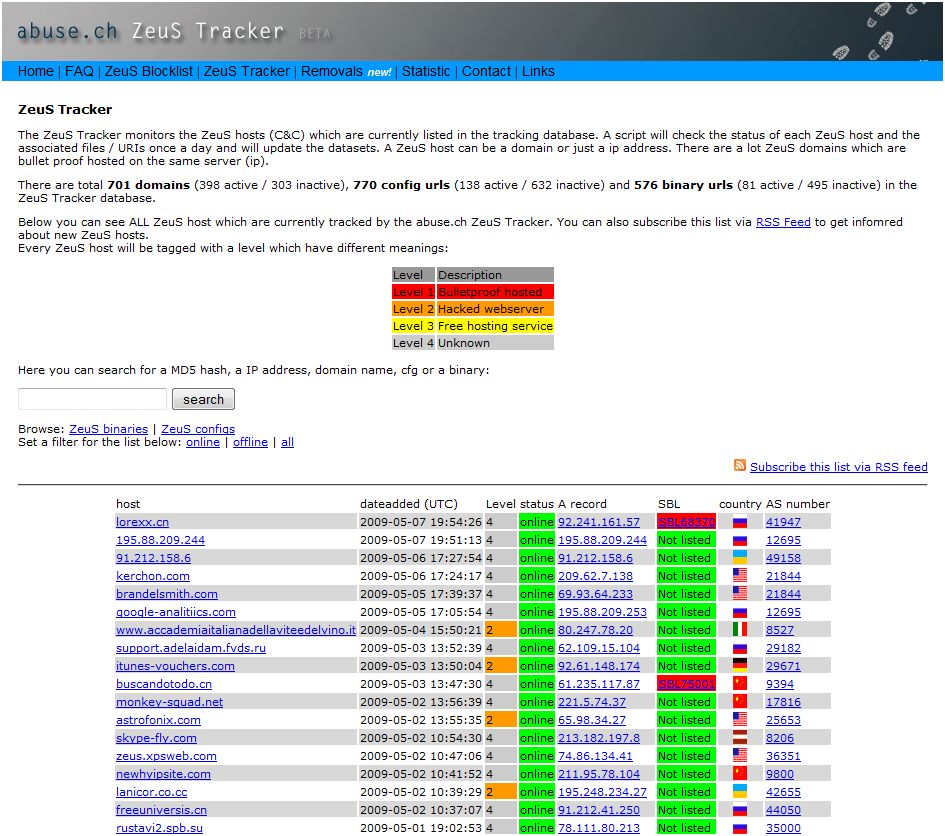
Computer viruses seem to be getting more destructive, in part because criminals are trying to make it harder for people to spot account takeovers Brian Krebs, who blogs for the Washington Post in his "Security Fix" columns writes about the Zeus Tracker, a botnet which recently was responsible for flicking the "kill switch" on 100,000 PC's. Here's an excerpt from his article:
"One of the scarier realities about malicious software is that these programs leave ultimate control over victim machines in the hands of the attacker, who could simply decide to order all of the infected machines to self-destruct.
Most security experts will tell you that while this so-called "nuclear option" is an available feature in some malware, it is hardly ever used. Disabling infected systems is counterproductive for attackers, who generally focus on hoovering as much personal and financial data as they can from the PCs they control. But try telling that to Roman Hüssy, a 21-year-old Swiss information technology expert, who last month witnessed a collection of more than 100,000 hacked Microsoft Windows systems tearing themselves apart at the command of their cyber criminal overlords. Hüssy oversees Zeustracker, a Web site listing Internet servers that use Zeus, a kit sold for about $700 on shadowy cyber criminal forums to harvest data from computers infected with a password stealing Trojan horse program. One of Zeus's distinguishing features is a tool that helps each installation on a victim PC look radically different from the next as a means to evade detection by anti-virus tools. According to Hüssy, among Zeus's many features is the "kos" option, which stands for "kill operating system." The help file distributed with Zeus kits includes the following Google-translated explanation of this feature:
kos - incapacitate OS, namely grip branches HKEY_CURRENT_USER registry and / or HKEY_LOCAL_MACHINE. If you have sufficient privileges - fly to "blue screen", in other cases creates the brakes. Following these steps, loading OS will not be possible!
In early April, Hüssy began tracking a Zeus control server used to receive data stolen from a botnet of more than 100,000 infected systems, mostly located in Poland and Spain. While investigating this newfound Zeus control server, he noticed something unusual: the "kill operating system" had just been issued to all 100,000 infected systems. Hüssy said he has no idea why the botnet was destroyed. "Maybe the botnet was hijacked by another crime group," he offered in an online chat with Security Fix. Then again, maybe the individuals in control over that ill-fated botnet simply didn't understand what they were doing. "Many cyber criminals...using the Zeus crimeware kit aren't very skilled," Hüssy said. Researchers at the S21sec blog have their own theory: that maybe attackers wield the nuclear option to buy themselves more time to use the stolen data. "The point more probably for a phisher is to earn time," writes S21's Jozef Gegeny. "Taking the victim away from Internet connection - before the unwanted money transfer is realized and further actions could be taken."
As one might imagine, bad guys who control these Zeus crimeware servers aren't always too happy about having their networks called out. Since my interview with Hüssy on Wednesday, his site has come under a fairly massive distributed denial of service (DDoS) attack, no doubt from systems under the control of Zeus botmasters. "
Listed below are just a "few" of the risks when you shop online without HomeATM's PCI 2.0 Certified PED
Shopping online without a HomeATM PCI 2.0 Certified SafeTPIN leaves you vulnerable to cyberthieves. There are many ways in which hackers can steal your sensitiveinformation without you knowing it. Here is a list of some of thepotential threats you face when shopping online without our SafeTPIN: Privacy-invasive software – This is software thatmonitors your computer with the intent of stealing sensitiveinformation and is often of a commercial nature.
Spyware – Softwarethat could be on your computer without you knowing it. Not only canSpyware monitor what you are doing (including watching you type in yourcredit card number), but it can actually change how you interact withyour computer. Crimeware – Softwaredesigned specifically for the purposes of identity theft so theattacker can access your online banking or online shopping accounts.
Man-in-the-middle attack (MITM) – An attacker sitsbetween your computer and the computer you are trying to communicatewith (the shopping site), intercepting, and even changing, theinformation. Trojan – You install software that apparentlyperforms a useful function, but it actually has a hidden agenda. Onceinside, the attacker can watch your screen, save their files to yourcomputer and even control your computer. | Keystroke logging – A method of recording yourkeystrokes. This is a very common way to monitor mouse operations andobtain screen shots or monitor what is typed on your keyboard. Phishing – You get an official looking email froma trustworthy source (like a bank or PayPal) asking for information ofsome kind (usually passwords, SIN numbers, credit card numbers etc.).Of course, the email is actually from a fraudster posing as someonelegitimate. Memory sniffing – A program that effectively “sniffs” out your memory, revealing passwords, credit card data and other such information. Exploits – Software or a sequence of commands that take advantage of a bug or vulnerability on your computer to take over your computer.
Description: An outbreak of bank-related data theft trojans was observed during the first quarter of 2009. These outbreaks were traced to the Zeus botnet which was implicated in a $6 million dollar commercial account heist on 20 European banks in the summer of 2008.
In March 2009, the Zeus botnet began employing an exploit toolkit known as Luckysploit, which uses an asymmetric key algorithm (standard RSA public/private key cryptography) to encrypt the communication session with the browser. The exact origin of the Luckysploit toolkit is unknown, although the Zeus botnet is believed to be controlled by Russian cybercriminals.
Description: A sophisticated band of thieves managed to steal personal information and more than half a million dollars from hundreds of New York City bank customers by rigging ATMs in what police say is further evidence of the continued assault on personal data by identity thieves.
Police said the identity thieves installed devices on ATM machines at Sovereign Bank branches in Staten Island that enabled them to collect account and PIN numbers, the New York Daily News reported Monday.
First they placed skimmers on the slots where customers inserted their bank card that could read and store the information. Then a tiny camera was hidden in the lighted sign on the ATM that filmed customers typing in PIN codes, the Daily News reported.
"This crew is sophisticated," Deputy Inspector Gregory Antonsen, head of the NYPD's special investigations division, told the Daily News. "And they are coming up with new ways to steal your identity every day."
The ATM-riggers managed to steal more than $500,000 from more than 250 victims. They also created fake ATM cards with the same magnetic codes as the victims and used the cards at different banks, police said.
I heard (or read, don't remember which) that it's common place to send a text message to one's boy or girlfriend telling them it's time to move on...apparently Twitter is the today's new vehicle used to tell people when it's time to move on to another job.
Last week, Brian Hartzer, CEO of ANZ's Australian operations announced his resignation on Twitter. Hartzer said: "Folks, this is my last tweet as I've resigned to pursue an overseas opportunity. Thanks for your continued support for ANZ. All the best."
"The smart money says Hartzer is joining RBS as its retail operations chief, taking over from Gordon Pell. It's a key position that would put him in the running as a potential heir apparent to current CEO Stephen Hester.
"Will Hartzer's appointment usher in a new era of Twitter-inspired transparency at RBS?
Let's hope so. After the Fred Goodwin saga, RBS needs all the goodwill it can get."
HomeATM was one of the companies that participated in FinovateStartup09 on April 28th.
We arrived just a bit concerned on account of how Acculynk, our semi-competitor (they don't do TRUE PIN Debit) was preselected as demo company whereas we had not been one of the pre-selected companies to perform a live 7 minute demo.
However, we were aware of the fact that after the lunch break, attendees would be enabled to vote for 3 companies whom they wanted to see perform a live demo. So at least available to us the potential opportunity to do so.
Meanwhile, our booth downstairs in the exhibitor hall was lined with our PCI 2.0 personal swiping devices, including one attached to the USB port on a laptop in order to perform live demo's to interested parties who dropped by our booth during the 90 minute lunch break.
It was a busy 90 minutes to say the least. We performed live (in real-time) person to person money transfer demo's for several interested parties including, but certainly not limited to: Amazon Payments, Wells Fargo and several very interested key representatives from PayPal.
You see, what makes our offerinig unique is that we eliminate third party products. We move money from any bank card to any bank card. There's no need for a PayPal debit card or a Amazon reloadable card. We use the bank-issued card along with the bank-issued PIN to transfer money to and from ANY US bankcard. As a reviewer states below, it's prettty slick.
Anyway, the lunch break, which provided time for attendees to visit booths and find out more information about participating companies, ended and it was time for them to select the companies they wanted to see demo.
The votes were tablulated and first up to perform a live demo was...HomeATM. Our COO Mitch Cobrin thanked the attendees for choosing HomeATM and we performed our 7 minute (alloted-time) demo in 6:59.
Fincision live blogged the event. I've included two posts on his reaction to the demo's, one on Acculynk and one on HomeATM below. To see his entire post on FinovateStartup09, click the following link: http://fincision.com/2009/04/live-from-finovate-startup-2009/
10:31 PM mikelinskey - Acculynk are up next; hope they’re a bit clearer than the last presenter! Here’s another debit card play. Acculynk demo is a bit cumbersome. Very slow & painful. Still have no idea what this is all about. Aaaah, here it comes. Ajax window appears over the shopping cart and a pin pad appears. Entering a pin, and the pin pad re-scrambles after each digit is input. “That’s it”. Uh? I just don’t get this. What is the point? How is this any better than ‘Verified by VISA’?
11:38 PMmikelinskey -HomeATM are on. This is all about real time money transfer. A small company with a big technology, they have a secured patent for their PIN-related technology. It involves swiping your debit card in a USB-connected hardware device on which you also enter your PIN. This looks very slick. They haven’t mentioned their business model. Interesting, though.
Mobile phone technology that can locate a person and determine if a credit card transaction is fraudulent has been developed by Ericsson IPX.
Following incidents where members of the IPX team had been victims of credit card fraud and had their cards blocked due to ‘unusual activity', IPX has developed the technology that can determine where a user is geographically in around two seconds.
Donya Ekstrand, head of marketing for IPX, claimed that she was called by her credit card provider and told that her card had been used in Tokyo while she was in Stockholm, and the card continued to be used for 30-35 minutes even after the activity was detected, with the criminal spending around €3,200.
Ekstrand said: “I started to think how can this happen? This is a global solution, we can reach any credit card owner in the world and we can reach about 96 per cent of the world's mobiles. It takes two seconds to check where a mobile is – it is an easy query.”
Peter Garside, IPX UK and Ireland director, claimed that the technology allows the location of which country the users' mobile phone is in, and guess the probability of where the person is.
Garside said: “Generally everyone who has a credit card has a mobile phone, so it is easy to marry the two to a bank to say that the subscriber is ‘here'. The technology in the phone is available on a raw level; it is an application that we are exploiting.”
Ekstrand further claimed that there is the potential for an SMS message to be sent to the user once a suspicious action has been made, and it would be more popular with customers as an SMS is a lot less intrusive than a call.
“We have talked to banks on how to use SMS, this is the first time it has been used globally and we need to make sure that it works with the infrastructure”, said Ekstrand.
Microsoft (Nasdaq: MSFT) Save 50% on Microsoft Office for Mac 2008. Click here to learn more. More about Microsoft priced a US$3.75 billion debt offering on Monday, a first for the world's largest software maker. Microsoft said in a Securities and Exchange Commission More about SEC filing that it is offering five-, 10- and 30-year senior unsecured notes.
In a press release, the company said it will sell $2 billion of 2.95 percent notes due June 1, 2014; $1 billion of 4.20 percent notes due June 1, 2019; and $750 million of 5.20 percent notes due June 1, 2039. The software maker said it will use proceeds from the sale for general corporate purposes, including possible acquisitions and stock buybacks. Authorized Before Rate Hike
Last September, Microsoft's board authorized it to take on up to $6 billion in debt. Standard & Poor's Rating Services gave Microsoft an "AAA" corporate credit rating. The authorization came just before interest rates soared. Microsoft, which is sitting on more than $25 billion in cash, could afford to wait until rates came down to make a move.
Mass compromise of merchant networks and card processors is viewed as the main cause of payment-card fraud, according to a survey of 113 financial services firms, which was published Tuesday.
In contrast, online attacks -- such as phishing -- are seen as a far less-significant cause of card fraud by the survey's respondents, who are management executives and antifraud or security managers at financial institutions in the United States, Europe and Asia. According to the survey, sponsored by security firm Actimize, 94% of the 113 financial-services firms could trace some percentage of payment-card fraud they experienced directly back to mass compromises of networks. In the survey, several examples of mass compromise events were given, including those known to have occurred at Heartland Payment Systems, grocery retailer Hannaford Brothers, retail-store chain TJX, as well as HNRC. RBS, BJs, DSW and Countrywide.
When asked the question: "Do you believe you have seen stolen data from the mass-compromise events used in fraud attacks?", 55% of the respondents answered "none", but the remainder pointed most frequently to TJX and Heartland.
About 85% of the respondents said they decided to reissue payment cards to between 1% to more than 20% of their cardholder population in response to news of a mass compromise although there was no immediate indication of fraud losses. In contrast, online scams are seen as having much more minimal impact in terms of card fraud. About 36% of the survey respondents said that less than 1% of card fraud they experienced was due to online scams such as phishing. About 40% blamed online card scams for 1% to 4% of card fraud they witnessed, and only 1.67% blamed online scams for more than 20% of the card fraud they experienced.
The survey also asked about ATM/debit card fraud claims specifically. More than 69% of survey respondents said their organizations had seen an increase in ATM/debit-card fraud last year in comparison to the prior year, with the majority citing between 5% to 49% increase.
In addition, more than 73% of the financial institutions indicated they had no technology in place to stop fraudulent transaction in real time. The amount of losses in 2008 due to ATM fraud cited by institutions ranged from $744,321 to $12 million.
Description: Firms like Symantec, Quick Heal and Trend Micro are looking at riding the growth in the IT security sector as more and more enterprises are turning to these firms for solutions in view of increasing Web attacks.
India's IT security market, in the enterprise segment, is pegged at about USD 130 million, and research firm Frost and Sullivan (F&S) has estimated that it would grow at a CAGR of 19.21 per cent over the next few years.
Linkbee.com, the pioneer in monetizing short URL's has added photo sharing functionality for Twitter users.
San Francisco, CA (PRWEB) May 12, 2009 -- With Twitter.com becoming popular around the globe, Linkbee.com has been a pioneer in allowing users to monetize their Twitter accounts. Linkbee started off by offering users multiple options to monetize short URL's and has paid out over $25,000 since its inception back in 2008. As of today, Linkbee has happily announced the launch of Twitter Photo Sharing directly on Linkbee.com.
"Competitors such as Bit.ly have experienced solid recent growth mainly because of Twitter, so it's no coincidence that we are targeting Twitter users with our latest developments," says Aleks Dugonjic, co-founder of Linkbee.com.
Linkbee's Photo Sharing technology allows users to post photos to their Twitter accounts directly on the Linkbee.com website. In addition, Linkbee has given users two options in monetizing these photos; first being the standard interstitial before the photo page loads, and the second allows users to place their Google Adsense code directly on the page where the photo resides.
"We are moving into an age where webmasters, bloggers and even tweeters need to be rewarded for their work. The user is our concern and it only makes sense that they get a piece of the pie," says Chris Pavlovski co-founder of Linkbee.com.
The photo page holds two ad spots, a 468x60 banner above the main photo and a 300x250 rectangle beside the photo. The user gets the banner spot using Google Adsense while Linkbee will use the rectangle spot for handling their costs. In order to maintain the integrity of the photo sharing program, Linkbee will not allow both interstitials and banner sharing simultaneously.
Linkbee.com was developed by JMG - Jolt Media Group and founded by both Chris Pavlovski and Aleks Dugonjic. The website receives over 1 million hits daily and is the pioneer in monetizing short URL's and photos for Twitter.
This is really a desperate act. Both Visa and MasterCard have already stated that Bobo's (Bob O.Carr) Heartland Payment Systems was NOT PCI compliant when the breach occurred and Bobo waited until he could unload a bunch of stock before he announced the breach under the cover of BO's inauguration. From Finextra:
Heartland Payment Systems says a fine of over $6 million imposed on it by MasterCard in relation to the massive data breach it suffered last year is illegal and will be contested.
Reporting first quarter results, the firm revealed it incurred $12.6 million in expenses and accruals attributable to the massive data breach, which saw malicious software in the firm's processing system potentially compromising the card data of millions of people. The costs contributed to a first quarter Gaap net loss of $2.5 million. In an earnings call, Heartland CEO Robert Carr says over 50% of the $12.6 million expense relates to a fine MasterCard assessed against the processor's sponsor banks.
The fine was imposed because of an alleged failure by Heartland to take appropriate action once it learned that its systems may have been breached.
Carr says the company responded appropriately and "upon discovering the intrusion it took immediate and extraordinary action to address the intrusion" and also "fully co-operated" with MasterCard's investigation into the breach. Editor's Note: Bullcrappola! BobO waited until he could sell as much stock as possible and announced the hack on the day Barrack Obamo was inaugurated. That's neither immediate, nor extraordinary action. Once again the room permeates with the smell of "my shit don't stink-iness." Wait until you get the results of the SEC investigation BobO.
"Heartland therefore considers the MasterCard fine to be in direct violation of both the MasterCard rules and applicable law and it intends and is prepared to vigorously contest and it has recommended to its sponsor banks that they vigorously contest, through all means available including litigation if necessary any liability that may be asserted or imposed upon Heartland or its sponsor banks by reason of this fine," says Carr.
Description: For full details, Whois, Header, website screenshots etc.; see the PDF in the E-Secure-IT database.
Target: Global Notes: This may be a phishing scam, although the attached file ( MTCN_INVOICE.zip) is most likely downloading a Trojan. Subject: Western Union Transfer MTCN: 2704897818 From: "Western Union" <apppz@gmail.com>
Dear customer!
The money transfer you have sent on the 5th of March hasn't been collected by the recipient. Due to the Western Union regulation the transfers which are not received in 30 business days are to be returned to sender. To collect your cash you need to print the invoice attached to this email and visit the nearest Western Union office.
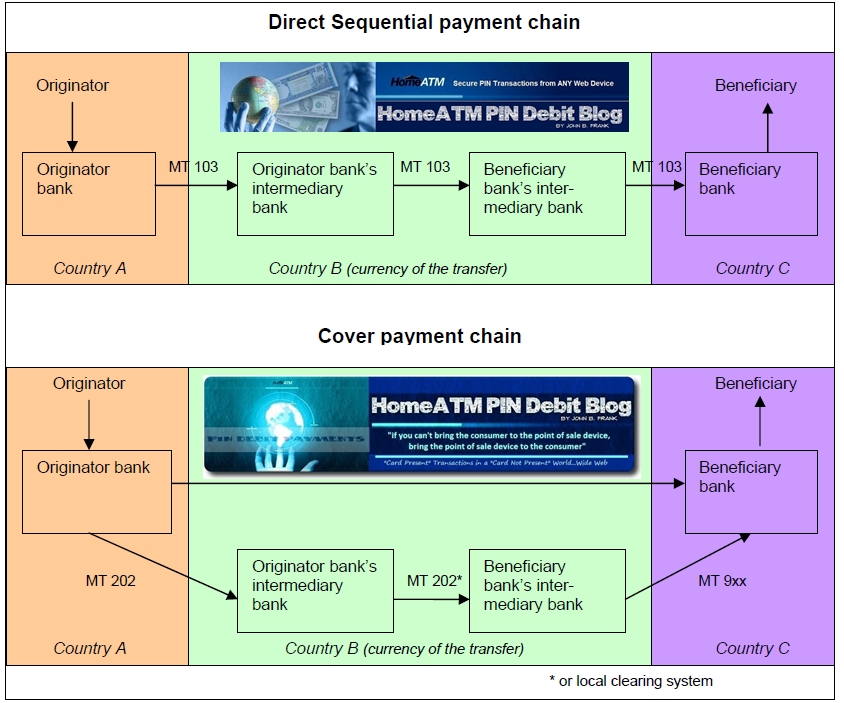
TheBank for International Settlements has provided final guidance (PDF) on duediligence and transparency regarding cover payment messages incross-border wire transfers.
The new rules are intended to clampdown on the use of cover payments to hide the identities of wiretransfer recipients in support of regulatory initiatives on anti-moneylaundering and terrorism financing.
In January Lloyds TSB wasslapped with a $350 million penalty by the US Justice department fordeliberately falsifying wire transfers destined for countries orindividuals on US sanctions lists.
According to court documents,Lloyds deliberately removed material information - such as customernames, bank names and addresses - from payment messages so that thewire transfers would pass undetected through filters at US financialinstitutions.
The stripping of information allowed more than$350 million in transactions to be processed by US correspondent banksthat might have otherwise been blocked or rejected due to sanctionsregulations or for internal bank policy reasons.

 Prosper, a company who was at FinovateStartup09 along with HomeATM has announced that it is temporarily ceasing operations...again. Here's a blurb:


 The Heartland Fallout continues. The Boston Globe reports today that Tens of Thousands of credit and debit cards had to be reissued in Massachusetts due to the sniffer program that infiltrated Heartland Payments Systems. At $200 plus per card, the bill keeps getting bigger. Will Heartland survive? Why did their stock go up from $4 to $9? Sell Sell Sell!

![Reblog this post [with Zemanta]](https://lh3.googleusercontent.com/blogger_img_proxy/AEn0k_s-m8ePpZbTb9_l5q8h4k71BzX4AvU4jGGIgbqjSUFUR7Kt-8su3qbMARw6HYCFVl-lL0yG2Mvvw1mq2Oy63Jgi98KofLgoNAouhhqj5LsdsNENgBgePdbvD56OK1IVQcSuM0yeBxgTgukpRqQ90vlv=s0-d)
 MasterCard announced today that they are pleased to announce that they can do mobile money transfers.
![Reblog this post [with Zemanta]](https://lh3.googleusercontent.com/blogger_img_proxy/AEn0k_uSQSI6lG8Ib_APRdzDplkdRcTgH4cOLeNhHUqqKTYMVvJFtgzcSWzmqBksibGryb23LkQ0mCkM9YkzZ_MWW5Y8_DBFVpso2ja98KmSnZl7nSh6-nB16DxZdmOZA5MvLOLqmg-_0NX7Fu3OgjOnA1xr=s0-d)
 A credit card with a built-in display is being tested by Visa with the aim of reducing online fraud. The Emue Card generates and displays a unique code each time it is used. Developers say that the new technology would make it very hard for fraudsters, as any transaction would require the PIN to generate the code.

![Reblog this post [with Zemanta]](https://lh3.googleusercontent.com/blogger_img_proxy/AEn0k_sWJlX1NvGJ5XGIK855ae1fv_xZGTIaxZZH1XTMJdQakBOH4NYYJ2Pm-iFTl6vsdXYhgwQ9gD_ptBHmYDGx6M58FbVj_n8Gu1zE84a1pdzFSxTz4x4cJef9q8x2sVYkTqpkduAG1_cM7RyMf4FUNdtg=s0-d)

![Reblog this post [with Zemanta]](https://lh3.googleusercontent.com/blogger_img_proxy/AEn0k_vX5gt8f5lMushT0QLSglKs_qB16E3-9XieSijWacMZ02KQ_npcm7IVYf5BoASSxSgZoMjpTSArY43HG5HQ7WQCLIbBCG-x_-b5eSs1NpT6hhpijP3AYVXGKZIT1fvKhKlGVjt43i3cvjBs-LugzJp7=s0-d)
 Four Eastern Europeans charged in $1.8 million ATM scam
![Reblog this post [with Zemanta]](https://lh3.googleusercontent.com/blogger_img_proxy/AEn0k_uILWOS0-t-IWeoo4-5Y-UT5zKdPOx_E97pET5BAIFBm2QCatBz8e1Hvsw2hNj047-drly66Xrb-ENkMXBcQrNuRBAH6cK5xemY6rI_jj1qimilZbcMI-vTl1JWUYCz45JreATbXqV2bbDLuenolol7=s0-d)
 SIX Card Solutions moves into Austria with First Data deal

![Reblog this post [with Zemanta]](https://lh3.googleusercontent.com/blogger_img_proxy/AEn0k_vtm_qad0ZNw060PXQvnE5RjnRerCpIsYZ-QD6EbCBJ87yzT3HcBRWP9jWCCXQ2pMMXfb7ZgI3F2uxq4RFi4otfqJqrpcoKfsj1izPUUINhxHgKGLuJ3tmbV_qxRK2amWnq2Pb3-jm33B9oidnlIuvA=s0-d)

![Reblog this post [with Zemanta]](https://lh3.googleusercontent.com/blogger_img_proxy/AEn0k_sJg9bEF13cikMssp-rU0vZPY1SEmneOPlJoluudXu2mEzmu4KIGMUQrcpH_4R7HRATW-dPzrEGhKnZvlSBJfLxjLrBVcAgidOJTLqgvGIhHDzOXuFNSAA_lmKw_SengL4RpxSfPSlgf3Lxh-JVC3BE=s0-d)


![Reblog this post [with Zemanta]](https://lh3.googleusercontent.com/blogger_img_proxy/AEn0k_uXLXOUoqG33B-GFyq8k6bhID-sBVeX9TG8OuTuXOm21dhQy9hkjyBB8bLDbFUHjWG6d5hR2QUhm9J0rkX2UDvRhfzChpEO3oSMnAf95J_y-S383wJo6eADLLOcuhZri4eEuzku84AVfKdL5lkZ4dJe=s0-d)

 According to
 ![Reblog this post [with Zemanta]](https://lh3.googleusercontent.com/blogger_img_proxy/AEn0k_uH-DSwomJxAVJ7OKLGhYLkrNfbvyc-5bGNXm04-EkWlLWRSTCY3Y4k5LKSpp2PethWeU-u-TsAs0fvn74gudHanfJfVVgFjgJkE1no9G_qNXiBj_gdRxRBGtCMTATQsWZoHe8y3TSTOagBqAwyDhHk=s0-d)


![Reblog this post [with Zemanta]](https://lh3.googleusercontent.com/blogger_img_proxy/AEn0k_srczymXleT0cp59JaS5CCAkqS9QGhPa_EDhQWHTbJOiuH0GmHNlKAA5pNVCY_VcZCGk4X4nr-kLDfO_OIfaum3MwiTmF2jaogCMVBYNE9XfQ7_L0d36Pwk1wKgfFhXlIo_6guNjnNTAj2ISnxReGPF=s0-d)
 Mobile phone technology developed to cut down credit card fraud - SC Magazine UK
 Following incidents where members of the IPX team had been victims of credit card fraud and had their cards blocked due to ‘unusual activity', IPX has developed the technology that can determine where a user is geographically in around two seconds.


![Reblog this post [with Zemanta]](https://lh3.googleusercontent.com/blogger_img_proxy/AEn0k_v3ujeQLBVGSqll6Scw0fG-th-SjTk7Y0n5kopgbcEaKvRBw3PBRQ9i7-90wMOUmDhn6yHxhDPQiSHKR6UmjoNfV4YLiB5_XJVF1Kf4awL7f2NYhiMhuxYyHWSGOtBiGvLvdgRJ5qNUgW-eun7oNt-9=s0-d)
 Linkbee.com Adds Twitter Photo Sharing
 This is really a desperate act. Both Visa and MasterCard have already stated that Bobo's (Bob O.Carr) Heartland Payment Systems was NOT PCI compliant when the breach occurred and Bobo waited until he could unload a bunch of stock before he announced the breach under the cover of BO's inauguration. From Finextra:

![Reblog this post [with Zemanta]](https://lh3.googleusercontent.com/blogger_img_proxy/AEn0k_sxmGo2w-LE8hrCPD15H2SAEoMpdlLVelrw2qO1W0UHQAC0SuBtVG0n4-NaXOBuGLM3AzuIay5IqCKb76mKMkKe3YcRQkP90mQeQnRF9nOK3Mx7cIn5uJW-JyO5yR26uoxhpUlY21I-7v1KMWfN1D0e=s0-d)