Tuesday, February 23, 2010

Mocapay Unveils Secure Mobile Payments at Merchant POS

Newly-Patented Technology Creates Single Solution to Conduct Secure Mobile Transactions in a Multi-Channel Environment


DENVER--(BUSINESS WIRE)--Mocapay, a mobile experience platform, today, introduced the only mobile solution in the marketplace that enables secure, hardware infrastructure agnostic, mobile payments regardless of tender type and transaction location.


“Our mobile payments platform ensures true anywhere, anytime mobile payments acceptance regardless of where the consumer wants to make a purchase or with which tender type the consumer chooses to use.”


Mocapay’s “dynamic cryptogram” architecture, which recently received a U.S. patent, ensures every mobile payment transaction is executed simply and securely with a one-time use and perishable authorization code. Mocapay’s transaction-level, token-based, mobile payments solution ensures that no customer sensitive information is stored on a mobile handset or passed to the merchant point-of-sale (POS).


The company was issued patent US 7,657,489 B2 on February 2, 2010 for this solution.


“Security and merchant acceptance is a critical component of mobile payments and one of the seminal reasons behind the limited adoption of mobile payments in the United States,” said Kevin Grieve, CEO, Mocapay. “Our mobile payments platform ensures true anywhere, anytime mobile payments acceptance regardless of where the consumer wants to make a purchase or with which tender type the consumer chooses to use.”


Mocapay offers its end-to-end mobile platform solution to merchant issuers of closed-loop loyalty, gift, and private-label credit, as well as financial institutions that issue open-loop prepaid, debit, and credit.


The company provides issuers three methods to utilize its patented mobile payments solution: out-of-the-box, Software-as-a-Service (SaaS) platform, or white-label, issuer-branded wallet and SaaS platform, or technology licensing giving issuers various solutions to match their business needs.


Mocapay’s platform simplifies deployment and support by offering a single solution for multi-channel and multi-location mobile payment acceptance. The company offers issuers, depending upon tender type, three-modes of mobile connectivity: SMS/text, Internet/browser enabled phones (WAP), and handset Apps (iPhone, Android, and soon-to-be-released Blackberry). The solution can also be deployed by merchants for their own merchant-branded mobile loyalty and gift programs and used to accept funds from financial institutions that issue mobile open-loop tender.


Mocapay works with all the major U.S. carriers further extending its consumer reach and has integrated its product with most of the major POS vendors.


As a mobile SaaS solution, Mocapay is downloaded onto the merchant’s existing POS system preserving the merchant’s current in-store, POS hardware and providing forward compatibility with future POS configurations. The Mocapay platform also has an embedded messaging engine enabling issuers to communicate to their consumers before, during, and after a payment transaction.


About Mocapay


Mocapay is an end-to-end, mobile payments and experience platform for innovative issuers. The platform addresses merchants’ need for a new channel that will broaden their loyalty and gift programs by mobilizing sales and marketing to reach customers anytime, not just at the point of sale, encourage purchases and build a stronger brand affinity. For innovative financial institution issuers, Mocapay reduces the implementation time, support complexity and costs associated with secure mobile payments increasing and accelerating consumer and merchant adoption. Based in Denver, Mocapay is a privately held, venture funded company founded in 2006. For more information, visit www.mocapay.com.


.


UBS Rolls Out IBM's ZTIC Online Banking "Hardware"

The trend towards using "hardware" to protect online banking and online banking transactions is gaining momentum.  Now UBS has announced it is rolling out IBM's ZTIC Hardware Device for online banking.  Europe saw a 31% increase (from 22% to 29% see chart below) in the number of customers who use a card reader for online banking authentication. 


HomeATM provides the only PCI 2.0 Certified PIN Entry Device designed for both online banking authentication AND conducting secure online transactions.  In addition our device enables real-time P2P money transfers.  (ANY bankcard to ANY bankcard)  Below is a YouTube Video of the ZTIC (Zone Trusted Information Channel) hardware device.  HomeATM uses a trusted channel as well.  The Existing Bank Rails. 


IronKey Unveils Trusted Access Solution to Protect Corporate Banking Customers Against Sophisticated Fraud and Malware Attacks

IronKey Extends Trusted Virtual Computing Platform to Protect Corporate Banking Customers


LOS ALTOS, Calif., Feb. 23 /PRNewswire/ -- To help address the serious dangers posed by ever more sophisticated malicious software ("malware") that is infecting the computers of users of corporate online banking services, IronKey, the leader in secure and managed portable computing solutions, today announced its Trusted Access for Banking solution. This new product is an application and services suite that leverages the capabilities of IronKey's Trusted Computing Environment platform to allow banks to provide identity protection, strong authentication and fraud protection at the endpoint for corporate banking customers.


The computer security industry is discovering increased numbers of malicious software variants that are designed to steal identity credentials and perform fraudulent transactions from the computers of infected banking users. A recent Symantec report states there are 70,330 unique variants of the Zeus banking Trojan malware, with the true absolute figure to be much higher, making it hard to detect, and one of the top risks to users of online corporate banking services.


"Organized cyber crime rings have begun to shift away from massive phishing attacks against individual commercial banking customers, and instead are targeting bigger players including corporate banks," said David Jevans, CEO of IronKey. "We are committed to helping our corporate banking customers protect their customers against these threats. The IronKey solution isolates access to the online corporate banking system from the host PC, creating a trusted virtual computing environment and protecting commercial banking customers from current and next-generation malware and fraud schemes."


IronKey Trusted Access for Banking is a purpose-built application of the IronKey multifunction security device. Corporate banking customers simply plug it into a computer, and enter their device password. Once the IronKey device is successfully unlocked, its virtualized operating system automatically runs, and a secure Web browser launches and goes directly to the bank's website. It incorporates a locked down Web browser that is protected against malware from the host PC, and may also be configured to allow users to visit only specific websites.


Zeus/Zbot is different than other Trojans because it gives hackers the ability to alter a Web input rendered by the victim's browser to display its own content, mimicking a bank's Web page form as a legitimate bank website. When the unsuspecting user completes the additional fields on the form, these private credentials are sent directly to the criminal. It can even be customized to steal information from banks in a specific geographic region.


IronKey prevents these types of man-in-the-browser attacks, and enables a trusted virtualized environment protected from malware-infected host computers. The IronKey system conducts an anti-malware scan of the host computer before enabling the secure environment, and even provides the option to boot a host operating system from the IronKey device to protect against threats on infected host computers. The IronKey solution is available with an integrated RSA SecurID® software token that generates one-time passwords, and as a result, provides a single device that serves as both a secure banking platform and a mechanism for two-factor authentication. IronKey Trusted Access for Banking has a SaaS or software centralized management capabilities for policy control and reporting.


"Corporate resources are at very high risk as fraudsters combine increasingly sophisticated malware and manipulative attack vectors with an evolving ability to monetize stolen information," said Tom Corn, vice president of product marketing at RSA, The Security Division of EMC. "It has come to the point where we advise organizations that are taking additional measures to prevent online threats to first assume that all of their computers are compromised. By teaming up with IronKey, we can provide these organizations with increased layers of protection that not only reduce complexity but also increase confidence that identities, information and infrastructure are better protected."


The IronKey Trusted Access for Banking solution is available in March and can be seen in action at the RSA show March, 1-5 in San Francisco, CA, in the IronKey booth #2333.

Social Media Destinations and Resources:


About IronKey:

IronKey is the global leader in providing secure and managed portable storage, authentication, and trusted virtual computing solutions for mobile workers. IronKey multifunction portable security devices, management software and associated services are designed to meet the security, performance, and privacy standards of the most demanding enterprise and government customers. IronKey solutions range from IronKey Basic, the world's most secure USB flash drive, to the IronKey Enterprise Virtual Desktop solution for carrying a secure operating system and virtual desktop environment on a pocket-sized device. IronKey works with industry leaders in virtualization, storage and security, including Lockheed Martin, McAfee, MokaFive, RSA, RingCube and VeriSign to extend the applications of its secure mobile computing platform. IronKey products are FIPS 140-2, Level 3 validated. Thousands of customers use IronKey, including Fortune 500 companies, enterprise organizations in financial services, healthcare and legal markets, as well as government agencies, including FEMA, NATO and DHS. For more information, please visit www.IronKey.com.

RSA and SecurID are either registered trademarks or trademarks of RSA Security, Inc. in the U.S. and/or other countries. EMC is a registered trademark of EMC Corporation. All other trade names and trademarks are the property of their respective holders.


SOURCE IronKey

.


Accertify Expands into UK/EU Market

Industry's Most Complete Solution for Combating Online Fraud and Transaction Risk Now Available to UK and European Merchants


Leading U.S. Fraud Prevention Service Provider Expands into UK/EU Market Filling Much Needed Void in Previously Offered Tools


CHICAGO and LONDON, Feb. 23 /PRNewswire/ -- Accertify, a leading provider of enterprise-wide transaction screening solutions, today announced that its industry-leading Interceptas platform is now available in the United Kingdom and European Union. Fraud and business development experts Andy Lee and Neil Caldwell have joined Accertify, based in the U.K.


In the U.S., Interceptas® is setting the industry standard as the most comprehensive transaction screening solution available. The platform is flexible enough to screen any type of payment transaction or other account activity through web, call center, point-of-sale and mobile channels.


In a matter of months, Accertify clients have experienced reductions in fraud of as much as 73 percent, reductions in manual reviews of 50 percent and improvements in customer service and customer service costs.


"Accertify has quickly become the premier provider of transaction screening and online fraud prevention solutions in the U.S. We've now signed a large, U.K.-based customer and aim to accomplish the same goal here by helping merchants combat the growing fraud challenge," Lee said. "Based on my 10 years of experience in fighting fraud, Accertify's platform is the best solution available worldwide. Its comprehensive, integrated approach, coupled with its advanced data management capabilities and flexible design, gives it a real edge in the European market."


After more than doubling its client base last year, Accertify protects a growing array of industry leaders and global brand names in the airline, retail, social networking, event ticketing, electronics, online gaming, digital downloads, money transfer and other industries.


"Accertify is growing exponentially in the U.S. and it's very exciting to be launching Interceptas into the European market," Caldwell said.


"Managing online fraud continues to be a significant and growing cost for European merchants and the introduction of Chip and PIN has driven more fraud to the web. But until now, European merchants have had few choices available for online fraud prevention," Caldwell said. "With Accertify's expansion here, they now have access to the industry's most advanced and effective fraud-fighting platform. They are going to be amazed when they see what Accertify has to offer."


Lee, European Director of Professional Services, is a skilled KYC and fraud specialist with expertise in the end-to-end process design and management of Pan European KYC and fraud management strategies, including prevention, detection, investigation and analysis. His experience spans the retail, telecommunications and banking sectors. He has developed and directed fraud prevention departments for online retailers and financial services organizations, including Ivobank and Lastminute.com, where he designed the KYC and fraud and risk strategy and led high-performance teams.


Caldwell, European Business Development Director, has broad experience in financial services, e-wallet functionality, prepaid programs, Pan-European product launches, international business development, KYC, anti money laundering and fraud/risk decisioning.

For more information or to schedule a demonstration, merchants should contact Andy Lee at
alee@accertify.com or Neil Caldwell at +447940 429559 or ncaldwell@accertify.com .


About Accertify
®

Accertify Inc. is a leader in providing e-commerce companies with software, tools and strategies for preventing online fraud and mitigating enterprise-wide risks.  Our Interceptas platform integrates every component of fraud prevention, applies state-of-the-art automation to each step in process and offers advanced capabilities for managing fraud data.  Built with a merchant's perspective, Interceptas delivers unparalleled flexibility in preventing various types of criminal behavior, including fraud related to card-not-present purchases, online scams and policy abuse, merchandise returns and exchanges and other data management challenges.  Accertify is committed to providing online companies with the most cost-effective solution to fraud available.  For more information, visit www.accertify.com.

SOURCE Accertify

.


New Overdraft Rules for Debit and ATM Cards


New Federal Reserve rules give debit and ATM card users additional options regarding overdrafts. In the coming months, banks, credit unions, and other financial institutions must offer you the ability to make decisions about overdraft services for transactions made with your debit or ATM cards.


Expect your bank to send you an explanation of its overdraft services; here is an example (38 KB PDF). Here are some key things you need to consider when reading the notice:

The basic facts

Types of overdraft services. An overdraft occurs when you make a purchase or ATM transaction but don't have enough money in your account to pay for it. For a fee, your bank's overdraft services will cover you when you become overdrawn. This fee can apply to each time you overdraw your account.

Generally, there are two types of overdraft services:

  • Standard overdraft services. Your bank will cover your transaction for a flat fee of about $20-30 each time you overdraw your account. For example, if you make a purchase with your debit card for $150 but only have $100 in your account, your account will be overdrawn by $50 and your bank will charge you a fee. If you then make an ATM withdrawal for $50, your account will be overdrawn by $100 and you will be charged another fee. In this example, if the fee your bank charges for overdraft services is $30, you will pay a total of $60 in fees.

  • Overdraft protection plans. Your bank may offer a line of credit or a link to your savings account to cover transactions when you overdraw your account. Banks typically charge a fee each time you overdraw your account, but overdraft protection plans may be less expensive than standard overdraft services.

The new rules

  • You choose. In the past, some banks automatically enrolled you in their standard overdraft services for all types of transactions when you opened an account. Under the new rules, your bank must first get your permission to apply these services to everyday debit card and ATM transactions before you can be charged overdraft fees. To grant this permission, you will need to respond to the notice and opt in (agree).

  • Existing accounts. If you do not opt in (agree), beginning August 15, 2010, your bank's standard overdraft services won't apply to your everyday debit card and ATM transactions. These transactions typically will be declined when you don't have enough money in your account, but you will not be charged overdraft fees.

  • New accounts. If you open a new account on or after July 1, 2010, your bank cannot charge you overdraft fees for everyday debit card and ATM transactions unless you opt in. If you open a new account before July 1, 2010, your bank will treat you as an existing account holder: you will receive a notice about your bank's overdraft services and will have to decide if you want them for everyday debit card and ATM transactions.

  • Flexibility. Whatever your decision, the new overdraft rules give you flexibility. If you opt in, you can cancel at any time. If you do not opt in, you can do so later.

  • Checks and automatic bill payments. The new rules do not cover checks or automatic bill payments that you may have set up for paying bills such as your mortgage, rent, or utilities. Your bank may still automatically enroll you in their standard overdraft services for these types of transactions. If you do not want your bank's standard overdraft services in these instances, talk to your bank; you may or may not have the option to cancel.

Useful terms...

  • everyday debit card transactions

    purchases made with your debit card on a day-to-day basis (excludes all checks and automatic bill payments)

  • overdraft

    an overdraft occurs when you write a check, make an ATM transaction, use your debit card to make a purchase, or make an automatic bill payment or other electronic payment for an amount greater than the balance in your checking account

  • opt in

    giving your bank permission to include you in a particular service

  • opt out

    declining a particular service offered by your bank

Other Resources..

More of this series..

.


Tapping into Transaction Data for Cost Effective Debit Rewards Systems

Cardlytics President, IDC Financial Insights Practice Director Lead BAI Webinar On Tapping into Transaction Data for Cost Effective Debit Rewards Systems

What: Consumers are moving away from the “buy now, pay later mentality” and towards increased savings and fiscal responsibility. This trend, combined with tightened credit availability with increasing rates results in vast numbers of bank customers who are putting down their credit cards and making everyday purchases with debit cards.

However, the thin profit margins that banks earn from shrinking debit interchange fees lead financial institutions to view their debit programs as cost centers. The result is rewards that underperform when compared to similar programs for credit cards, limiting their impact on customer loyalty and retention.


Who:
Lynne Laube, president of Atlanta-based Cardlytics and Aaron McPherson, practice director at IDC Financial Insights will host a Bank Administration Institute (BAI) Webinar that discusses the tactics and strategies of utilizing transaction data to enable institutions of all sizes to turn their debit programs into profit centers.


Before joining Cardlytics, Laube held numerous leadership positions at McLean, Va.-based Capital One. Laube established the company’s payments business, which launched decoupled debit and prepaid product lines that are used by nearly every institution that offers debit services. Throughout her 13 years at Capital One, Laube developed and executed formation growth strategies for the company’s domestic and international operations as well as its core U.S. credit card business.


McPherson is responsible for the strategic direction of research in payments and security. In this role, he writes and consults with clients on a wide array of subjects, including the future development of payment systems along with security and fraud. McPherson is particularly well versed in the areas of enterprise payments, rewards programs, financial supply chain management, check image exchange and information security.


When:
The Webinar will take place on Thursday, Feb. 25, from 2pm until 3pm EST.


Contact:
To speak with Laube or McPherson, contact Alex Shorter at 678-781-7207 or alex@williammills.com. Visit BAI’s Web site at http://www.bai.org to register for the event.


About Cardlytics


Through a highly relevant, "market-of-one" approach, Cardlytics unites banks and merchants to provide rich rewards to customers based on their individual purchase behavior. Its technology tracks consumers’ actual purchases, providing the first digital channel that can guarantee offline sales and help consumers realize savings of hundreds of dollars per year on the products they purchase every day. The rewards improve consumers’ banking behavior by increasing usage, reducing attrition and strengthening engagement with online banking. Cardlytics’ multi-channel approach includes online banking, SMS, e-mail, mobile, online-mall and social networks. For more information about Cardlytics, visit www.cardlytics.com.


About IDC Financial Insights


IDC Financial Insights provides independent research, custom consulting, and detailed multiclient studies on the technology issues and challenges facing the financial services industry. Its global research covers topics of strategic importance to corporate and retail banks, insurance carriers, and asset management, securities, and brokerage firms. In addition to the United States, local practices in Asia/Pacific, Canada, Europe, and Latin America add in-depth regional viewpoints. IDC Financial Insights is headquartered in Framingham, Massachusetts, USA. IDC is the premier global provider of market intelligence, advisory services, and events for the information technology market. IDC is a subsidiary of IDG, the world’s leading technology, media, research, and events company. For more information, please visit www.idc-fi.com, email info@idc-fi.com.


Monday, February 22, 2010

Financial Times Cyber Expert: Online Banking isn't Safe

Financial Times cyber security expert, Joseph Menn, doesn't pull any punches when it comes to his thoughts regarding the safety of online banking. 


A couple weeks back, FT's Paul Murphy stated that "Every major bank in the Western world, is covering up the fact that online fraud - both sophisticated and unsophisticated - is running at EPIDEMIC LEVELS. 


There is a simple solution.  Stop "TYPING" and move online banking to a 3DES DUKPT secure environment with the only eCommerce PCI 2.0 Certified PED.  Only from HomeATM. 


Doing so would provide secure two-factor (what you have/bankcard and what you know/PIN) authentication.  It would also instantly eliminate the threats posed from phishing and keystroke logging


Banks trust this process to dispense $200 from an ATM, a thousand miles away at 2:00 AM.  Surely, the same system (without the threats of skimmers/hidden camera's) can be trusted to authenticate the online banking session. 


So is online banking safe?  Ask your bank...but remember, according to Joesph Menn, the answer will be a flat out lie.


WASHINGTON - Ask your bank how safe it is to do business online and it may tell you it's more secure than traditional banking. But cyber security experts would disagree.


"That's a lie," says Joseph Menn, who reports on cyber security for the Financial Times.


"The banks are stuck because they've been telling people it's safe, and the fraud they're on the hook for has gone up four-fold in six months," Menn says.


"The banks have been kidding people about all this because they save money when people bank online." Menn says the Internet was not designed with security in mind. He says it's fine for YouTube.


"But anything financial, anything commercial, anything government needs to be on a different network.


Read More


Customer vs. Bank: Who is Liable for Fraud Losses?

Bank Information Security's Linda McGlasson writes the upcoming court case, involving Comerica Bank and Michigan based Experi-Metal, Inc will ultimately decide who is liable for losses stemming from phishing attacks. 


As far as I'm concerned, this is truly a No-Win situation for Comerica and online banking as a whole. 


I have to ask...instead of fixing the blame on who is responsible for a phishing attack, why not take another angle.  How about fixing what "causes" the problem.  Eliminate typing and it would eliminate phishing altogether.  That's what the bad guys are phishing phor...the information "you type" into a box in browser.  Authentication has to be done outside the browser.  Why not use the banks existing ATM rails to two-factor authenticate the online banking session?


If online customers, both business and consumers alike, swiped their bank issued card and securely entered their bank issued PIN, then there would be nothing to phish phor.  HomeATM's PCI 2.0 Certified PIN Entry Device 3DES DUKPT encrypts the data inside the box at the magnetic head.  When the device is attached to the online banking customers computer, HomeATM's API, which can be easily downloaded by any banking institution in less than an afternoon, recognizes it and requests the consumer to "Swipe their Card" and "Enter their PIN."  No more "typing" in online banking credentials.  So stop fixing to blame someone and start fixing the security gaffes involved with typing vs. swiping. 


Comerica/EMI Case Raises Key Questions About Responsibility, Security


February 22, 2010 - Linda McGlasson, Managing Editor


At first this court case was a curiosity: Experi-Metal Inc. (EMI), a Michigan-based metal supply company, sued Comerica Bank, claiming that the bank exposed its customers to phishing attacks.+

But now this story shapes up as a significant test case for the banking industry, raising several key questions that must be answered about fraud and responsibility.


"It will establish who is liable in the U.S. - the bank or the customer - for fraud losses that result from phishing," says Tom Wills, Senior Analyst, Security, Fraud & Compliance, Javelin Strategy & Research.
Continue Reading at BankInfoSecurity.com


Discover Introduces New Resources to Help Consumers Better Understand Credit

“Straight Talk” Articles and Video Explain Credit Card Terms and CARD Act Changes in Easy-to-Understand Language


RIVERWOODS, Ill.--(BUSINESS WIRE)--Discover Financial Services (NYSE: DFS) today announced the launch of “Straight Talk,” an online video and series of articles designed to help consumers more easily understand how credit cards work, including changes from the Credit Card Accountability Responsibility and Disclosure (CARD) Act, which went into effect today. Discover “Straight Talk” is part of the company's long-standing commitment to providing products, services and resources that help its cardmembers spend smarter, manage debt better and save more.


The “Straight Talk” series consists of articles that explain in clear terms how credit card companies determine annual percentage rates (APRs) and credit card limits, why fees are charged, and what changes consumers can expect to see as a result of CARD Act. The online video explains changes to fees, payment allocation and APRs resulting from the legislation and offers tips to help consumers manage their finances.


“Over the years, we’ve listened to our cardmembers and know that they want ‘straight talk’ from their credit card company and our goal is to provide that to them,” said Carlos Minetti, executive vice president of Cardmember Services and Consumer Banking at Discover. “These online resources will help them better understand credit, while empowering them to achieve brighter financial futures.”


The “Straight Talk” video and articles can be found on Discover’s Financial Education Resources page: http://www.discoverfinancial.com/financialeducation/straighttalk.shtml


In addition to the new video and articles, Discover offers a variety of tools and resources to help cardmembers manage their credit:


Free Online Tools that Help Cardmembers Make Smart Financial Decisions

  • The Spend Analyzer: The Spend Analyzer offers cardmembers a clear, visual way to track and compare their card spending so they can make informed spending choices.

  • The Paydown Planner: The Paydown Planner helps cardmembers create a simple plan to pay down their balance.

  • The Purchase Planner: The Purchase Planner helps cardmembers understand how a large purchase may affect their account.

  • Email Alerts and Reminders: Email alerts and reminders help cardmembers make payments on time, avoid unnecessary fees and stay safely within their credit line.

Online Resources to Educate and Inform

  • Financial Education: This online resource, found at www.discoverfinancial.com, helps cardmembers understand the basics of credit management with clear and easy-to-understand articles.

  • Student Center: Discover’s Student Center, located at www.discover.com/student-center, is dedicated to providing students with tools and resources to better manage and understand credit.

  • DebitFacts.org: This online resource provides guidance on managing money through debit card usage.

Services and Resources that Help Cardmembers Manage Difficulties with Payments

  • Payment Programs: Discover has special payment programs to help cardmembers who are experiencing financial difficulties and need help bringing their account up to date. Last year, Discover assisted more than one million cardmembers who were experiencing financial hardship.

  • Customer Service that Puts Cardmembers First: Cardmembers having trouble keeping up with their payments can reach a knowledgeable customer service representative on the phone typically within 60 seconds, 24 hours a day, seven days a week.

  • Debt Management and Credit Counseling Agencies: Discover supports www.helpwithmycredit.org, an industry effort to assist and educate people struggling to make their payments, as well as the National Foundation for Credit Counseling, the nation’s largest and longest-serving national nonprofit credit counseling network.

About Discover

Discover Financial Services (NYSE: DFS) is a direct banking and payment services company with one of the most recognized brands in U.S. financial services. Since its inception in 1986, the company has become one of the largest card issuers in the United States. The company operates the Discover card, America's cash rewards pioneer, and offers personal and student loans, online savings accounts, certificates of deposit and money market accounts through its Discover Bank subsidiary. Its payment businesses consist of Discover Network, with millions of merchant and cash access locations; PULSE, one of the nation's leading ATM/debit networks; and Diners Club International, a global payments network with acceptance in more than 185 countries and territories. For more information, visit www.discoverfinancial.com.

.


New Rights for Credit Cardholders

Consumer Action and American Express announce the update of their free, popular multilingual consumer education series, “Credit Cards: What You Need to Know”


WASHINGTON--(BUSINESS WIRE)--Consumer Action in partnership with American Express announce a revised version of the multilingual consumer education series “Credit Cards: What You Need to Know” to help consumers understand their new credit card rights and what they mean for credit cardholders.


Through the new federal rules, cardholders have gained the right to restrict interest rates on balances. Consumers can now say no to future rate hikes and over-the-limit fees. These and other new federal consumer protections for cardholders take full effect today.


Starting today, consumers can find the “Credit Cards: What You Need to Know” brochure updated to reflect new federal rules at www.consumer-action.org or www.americanexpress.com/consumerresources. The complete module, including brochures available in Chinese, Spanish, Korean and Vietnamese, will be available over the next few months on Consumer Action’s website.


“Credit Cards: What You Need to Know”
has become a perennial favorite since we created the joint education campaign in 2005, alerting consumers to the ‘real deal’ on credit card terms and conditions,” said Ken McEldowney of Consumer Action. “We have distributed more than 286,600 of our education and training modules to 1,538 community-based organizations in 50 states. In addition, close to 200,000 visitors have viewed the brochure in one of five languages on our website to learn how to compare credit card offers, read and understand credit card terms and conditions, and avoid penalties and fees.”


“As consumers are making choices about credit cards, they need to know their rights and have them presented in a clear and concise way,” said Ralph Andretta, executive vice president and general manager, Consumer Services group, American Express. “In addition to our redesigned credit card agreements and enhanced online consumer resource tools, we are pleased to continue our work with Consumer Action to educate consumers on making smart, informed choices about credit cards.”


Five important new rights for credit card holders
 
1. 
No changes in terms or rates in the first year of a new card, except
When a promotional rate ends
If your variable rate adjusts
If you pay more than 60 days late
 
2. 
No rate hikes on existing balances
Interest rate increases generally apply only to new transactions
45 days advance notice of any significant changes
Right to decline the change, close card and pay off balance over time
 
3. 
More time to plan for and make payments
Same due date every month
Bills sent 21 days in advance
Payments received by 5 p.m. must be credited that day.
 
4. 
Control and choice on over-limit fees
Cardholder can control and avoid fees
Over-limit fees cannot be charged unless customer “opts in”
 
5. 
New information on your bill
Length of time to pay off your current balance if you make only minimum payments.
How to pay off your current balance in three years.
What will happen if your payment is late


For the last five years, Consumer Action and American Express have held regional train–the-trainer meetings in seven cities and trained 337 representatives of more than 250 community-based organizations, using these comprehensive materials.


Consumer Action (www.consumer-action.org) is a non-profit 501(c)(3) advocacy and education organization, with offices in San Francisco, Los Angeles and Washington, DC that has served consumers since 1971. Consumer Action distributes two million free educational brochures annually on consumer financial services and other issues, through its national network of more than 8,000 community-based organizations. Consumer Action has been conducting surveys of credit card rates and terms since the 1980s, to track trends in the industry and assist consumers in comparing cards and understanding their rights when using credit.


American Express Company (www.americanexpress.com) is a diversified worldwide travel, financial and network services company founded in 1850. It is a world leader in charge and credit cards, Travelers Cheques, travel, business services and international banking..


Online Resources and PeoplesBank Launch iPhone Application

PeoplesBank is Early Mover for Banking through the Most Popular U.S. Mobile Device


CHANTILLY, Va.--(BUSINESS WIRE)--Online Resources Corporation (Nasdaq: ORCC), a leading provider of online financial services, today announced that it has launched a downloadable application enabling customers of client PeoplesBank to access mobile banking and payment services through the iPhone®. The Massachusetts-based $1.5 billion asset bank is now one of fewer than 50 U.S. financial institutions that currently offer the iPhone application through the App Store or iTunes®.


“PeoplesBank chose to be a frontrunner in providing mobile access because it views the online channel, and the convenience it provides customers, as critical to their success”


PeoplesBank has used Online Resources’ full suite of retail and business Internet banking and bill payment services since 1999. An extension of these online services, the new iPhone application allows users to view account balances, transaction history, schedule same day transfers, pay bills, and send and receive secure in-session messages. PeoplesBank customers simply register online for mobile access and download the iPhone application, which also works on iPad® and iPod® touch devices.


“Mobile access for online banking furthers PeoplesBank’s goal to provide our customers highly convenient services,” said Karen Buell, Internet Branch Officer for PeoplesBank. “Online Resources has played a crucial role in our mobile strategy, from development to marketing to customer care. This is the latest example of continued innovation we have come to expect from an online channel specialist and trusted partner.”


“PeoplesBank chose to be a frontrunner in providing mobile access because it views the online channel, and the convenience it provides customers, as critical to their success,” said Ron Bergamesca, executive vice president and general manager of Community Bank and Credit Union Services for Online Resources. “It was our priority to enable PeoplesBank’s customers with an iPhone app that optimizes their mobile banking experience, and we are pleased to provide the necessary technology, operation and marketing support required for this highly sought after service.”


About Online Resources


Online Resources (Nasdaq: ORCC) specializes in powering financial interactions between millions of consumers and the company’s financial institution and biller clients, including 12 of the top 13 U.S. retail banks and 13 of the top 20 U.S. card issuers. Backed by its proprietary payments gateway that links banks directly with billers, the company provides web and phone-based financial services, electronic payments and marketing services to drive consumer adoption. Founded in 1989, Online Resources has been recognized for its high growth and product innovation. It is the largest financial technology provider dedicated to the online channel. For more information, visit www.orcc.com. .


Mobile Person-to-Person Payments Good Prospect for Developing but Not Developed Markets: ABI Research Survey Finding

NEW YORK--(BUSINESS WIRE)--A consumer survey conducted by ABI Research in November 2009 in seven countries on three continents has found consistently low levels of interest in making person-to-person payments via the mobile phone. The survey polled subscribers, equally divided by gender, in Germany, France, the UK, the US, Japan, Taiwan, and South Korea. About 200 respondents participated from each country.

“In parts of Africa, Asia, and Latin America which generally lack good tools for convenient P2P transactions other than face-to-face, mobile payment methods will be huge.”
While there were differences across age groups and between countries, the overall results showed that only 16% of Western Europeans surveyed considered themselves “extremely” or “very” interested in mobile P2P payments, while in the United States, the percentage was only 9%. Consumers in the three Asia Pacific countries showed much greater interest – 34%.


According to senior analyst Mark Beccue, “It’s tough to make a convincing case for mobile P2P in most developed markets. This survey confirms ABI Research’s assessment of mobile P2P’s potential in the United States and Europe. We believe it will have minimum impact in these markets because some forms of electronic P2P such as PayPal have operated there for several years with relatively low market penetration; and because these markets boast extensive ATM and banking networks, giving consumers easy access to cash to conveniently conduct P2P transactions.”


If a similar survey were to be conducted in developing markets the results would likely be very different, says Beccue. “In parts of Africa, Asia, and Latin America which generally lack good tools for convenient P2P transactions other than face-to-face, mobile payment methods will be huge.”


The survey results are summarized in chart form and interpreted in a new ABI Research Brief, “Mobile Person-to-Person Payments” (http://www.abiresearch.com/research/1004866).


It is part of the firm’s Mobile Money Research Service (http://www.abiresearch.com/products/service/SE-MOMO) which also includes other Research Briefs, Research Reports, Market Data, ABI Insights, ABI Vendor Matrices, and analyst inquiry support. ABI Research provides in-depth analysis and quantitative forecasting of trends in global connectivity and other emerging technologies. From offices in North America, Europe and Asia, ABI Research’s worldwide team of experts advise thousands of decision makers through 28 research and advisory services. Est. 1990. For more information visit www.abiresearch.com,


From the February Issued of Digital Transaction News


Reblog this post [with Zemanta]

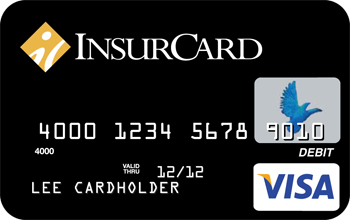
InsurCard Visa® Prepaid Card Issued by The Bancorp Bank Named Winner in Fourth Annual Paybefore Awards

http://www.thebancorp.com
WILMINGTON, Del.--(BUSINESS WIRE)--The Bancorp Bank Payment Solutions Group, a division of The Bancorp Bank (“Bancorp”), a wholly owned subsidiary of The Bancorp, Inc. (Nasdaq: TBBK), is pleased to announce that Paybefore has chosen the InsurCard Visa Prepaid Card, which is issued by The Bancorp Bank in collaboration with InsurCard, as a Paybefore Awards winner in the Best Business/Corporate-Funded Program: B2B.


“Paybefore applauds the leaders in our industry who are applying the flexibility and appeal of prepaid to innovate on behalf of consumers, governments and businesses”


Paybefore Awards, now in its fourth year, is the most prestigious recognition of excellence in the prepaid industry. The awards are presented annually by Prepaid Media, whose Paybefore publications are the leading source of industry information for the global prepaid community.


“We are honored to receive the Paybefore Award for the innovation of the InsurCard Visa Prepaid Card,” said John Barbella, Senior Vice President, The Bancorp Bank. "We believe that prepaid cards will revolutionize the way the insurance industry makes payments as insurers seek ways to control payments and drive cost savings while providing enhanced customer care. We are very excited about the InsurCard program and we are anticipating rapid growth in this space."


InsurCard was selected by a panel of five industry experts who served as judges for this year’s competition. A record number of entries from around the world were received.


“Paybefore applauds the leaders in our industry who are applying the flexibility and appeal of prepaid to innovate on behalf of consumers, governments and businesses,” said Marilyn Bochicchio, Paybefore CEO and chair of the judging panel. “InsurCard has distinguished itself in a tough field of competition,” she continued. “We are proud to recognize its contributions to advancing the use of prepaid products.”


Issuing checks has become cumbersome in the world of electronic payments. The InsurCard offers great benefits for an injured worker or a displaced homeowner because they can begin using the funds immediately anywhere that Visa debit cards are accepted.


InsurCard, which has already been approved for use in workers compensation claims in 38 states, will vie for best-in-category distinction, which will be announced during the Paybefore Awards ceremony on Feb. 22 at the Prepaid Expo USA (www.prepaidexpousa.com).


InsurCard Visa Prepaid Card is issued by The Bancorp Bank pursuant to a license from Visa U.S.A. Inc. The Bancorp Bank; Member FDIC.


About The Bancorp Payment Solutions Group


The Bancorp Payment Solutions Group, a division of The Bancorp Bank, a wholly owned subsidiary of The Bancorp, Inc. (Nasdaq: TBBK), offers secure, creative and innovative payment solutions to the prepaid card industry. As a leading issuer of prepaid cards, The Bancorp Payment Solutions Group develops cutting-edge prepaid card programs that meet the rapidly changing needs of the prepaid industry. Through long-standing relationships with the card networks, leading program managers and processors, The Bancorp Payment Solutions Group designs compliant, innovative and flexible prepaid card programs which deliver outstanding results. For more information about The Bancorp Payment Solutions Group please visit www.thebancorppsg.com.


About InsurCard


InsurCard is a wholly owned subsidiary of Service Network Design, LLC (SND), a management consulting firm with corporate financial clients in both the insurance and prepaid card industries. InsurCard Prepaid Cards evolved from SND’s experience in these industries where the need for new claim payment solutions was recognized. The InsurCard Prepaid Card was specifically designed to meet the stringent requirements of both the insurance and prepaid card industries. For more information about InsurCard, please visit www.insurcard.com.


Disqus for ePayment News